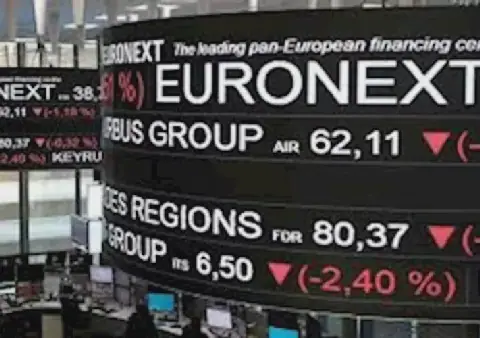
In today's digital age, investors have unprecedented access to real-time market information, financial news, and expert commentary. With just a few taps on a smartphone, they can monitor their portfolios, track market movements, and stay up-to-date on the latest developments. While this accessibility is a significant advantage, it also has a downside. Many investors feel more anxious and uncertain than ever, despite having more information at their fingertips.
The problem lies in the fact that access to more information doesn't automatically make one a better investor. In practice, it often leads to a heightened awareness of short-term market fluctuations, which can be distracting and even detrimental to long-term investment goals. Markets are constantly digesting new information, and prices move daily in response to various events, such as interest rate changes, elections, and company performance reports. However, most of these events have little bearing on an investor's long-term plan.
The challenge for investors is to distinguish between relevant and irrelevant information. With financial media outlets competing for attention, dramatic headlines often dominate the news, making it difficult for investors to separate noise from valuable insights. This can create a paradox, where closely watching daily market trends heightens the temptation to act, often based on emotions rather than a well-thought-out strategy. As a result, investors may delay investments, chase recent top performers, or abandon a sound strategy at the wrong moment.
According to Warren Buffett, the stock market is a device for transferring money from the impatient to the patient. This observation highlights the importance of patience and restraint in successful investing. Long-term wealth is rarely built by reacting to every market development or trying to outsmart the market. Instead, it comes from staying invested, remaining disciplined, and giving time and compounding room to work. History has shown that markets recover from periods of uncertainty, and it's often investors' abandonment of their plans that causes the most damage.
Successful investing requires a combination of patience, restraint, and self-control. While investors can't control market returns, inflation, interest rates, or political events, they can control how much they save, how consistently they invest, and how they respond to market turbulence. These factors tend to shape long-term outcomes more than any single piece of breaking news. By focusing on what they can control, investors can make more informed decisions and avoid costly mistakes.
Staying informed is still essential, but it's crucial to recognize the difference between information that improves decision-making and information that's mostly noise. Not every market movement or headline requires a response or portfolio adjustment. In investing, knowing what to ignore is a superpower. By being selective and focusing on relevant information, investors can avoid unnecessary stress and make more informed decisions.
Ultimately, long-term wealth is often the result of a disciplined plan, sensible diversification, and the patience to stay the course when short-term events make it difficult. When faced with a market alert or news headline, investors should ask themselves a simple question: does this genuinely change my long-term financial objectives? In most cases, the answer will be no. By adopting this mindset, investors can avoid the pitfalls of constant market monitoring and focus on what truly matters – achieving their long-term financial goals.
Key points
- Constant access to market information can lead to anxiety and poor investment decisions.
- Successful investing requires patience, restraint, and self-control.
- Knowing what to ignore is a superpower in investing.