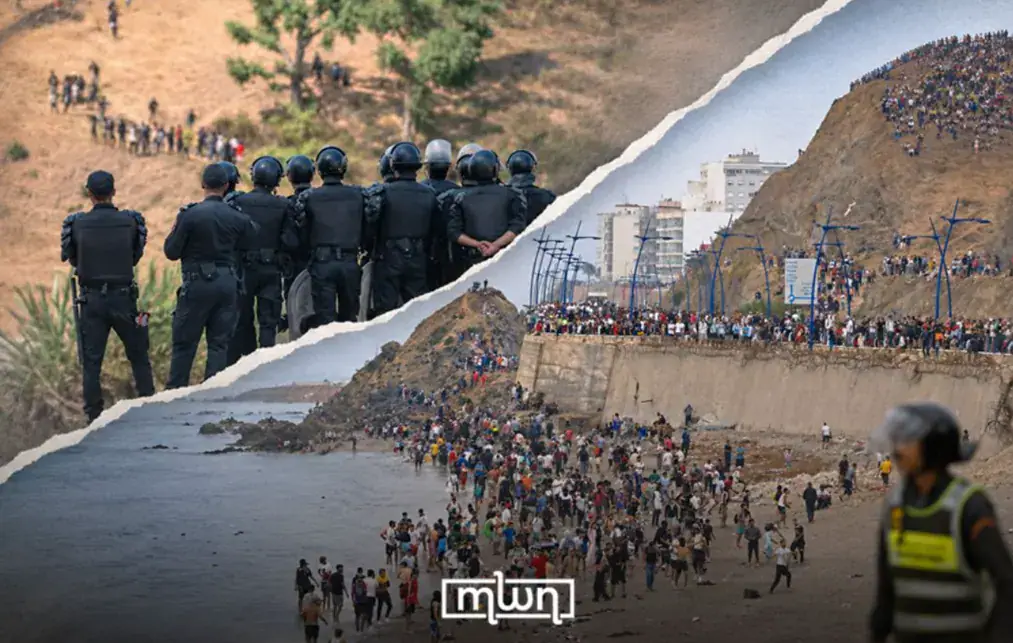
Spain's Interior Ministry reported that Morocco's Royal Gendarmerie arrested two individuals on August 6 for operating a WhatsApp group that encouraged irregular migration to Ceuta. The arrests were made in Fnideq, a region near the border with Ceuta. The suspects, identified as Y.Ch. and M.M., face charges of inciting young people to travel to the area and attempt to reach Ceuta irregularly.
The WhatsApp group, created and administered by Y.Ch., allegedly published and distributed messages targeting young people, encouraging them to travel to the Fnideq area and attempt to reach Ceuta irregularly. The messages included explicit references to attempts to enter by swimming. M.M. is accused of participating in the administration of the group. The investigation is ongoing to determine the degree of involvement of each individual and the actual size of the group.
The arrests are part of Morocco's efforts to tackle the migration crisis, not only through physical arrests but also through digital investigations to crack down on groups inciting irregular migration. Morocco's judicial efforts in cases related to the Ceuta crisis have been acknowledged by Spain's Interior Ministry. A court in Tetouan has already handed down sentences against several people for their involvement in organizing or inciting collective crossings.
The case dates back to July 2026, when tens of thousands of young people crossed into occupied Ceuta, sparking one of the largest migration crises in the region. The crisis triggered new waves of anti-Moroccan rhetoric from far-right and other politicians, who exploited the situation to advance their electoral agendas. The far right has been targeting Morocco, accusing it of blackmail and waging hybrid warfare.
Morocco responded to campaigns targeting its efforts, emphasizing its importance as an ally and recognized partner in tackling irregular migration and combating human trafficking. Morocco stressed that cooperation to tackle irregular migration is based on its commitment and should be grounded in shared responsibility. The North African kingdom also emphasized that its role in tackling migration is based on a sovereign choice and is not subject to blackmail or pressure.
The current model for tackling migration crises has been acknowledged as outdated by Morocco. The country's efforts to tackle migration through digital investigations have been recognized by Spain's Interior Ministry. The investigation into the WhatsApp group and its administrators is ongoing, with Moroccan courts handling proceedings related to the events.
The arrests and ongoing investigations demonstrate Morocco's commitment to addressing irregular migration and its causes. The country's cooperation with Spain and other partners is crucial in tackling the complex issue of migration. The efforts of Morocco's Royal Gendarmerie and judicial authorities have been acknowledged as key in disrupting networks inciting irregular migration.
Key points
- Morocco arrests two suspects for inciting irregular migration to Ceuta via WhatsApp.
- The arrests are part of Morocco's efforts to tackle the migration crisis through digital investigations.
- The case highlights the complexities of addressing irregular migration and the need for cooperation between countries.