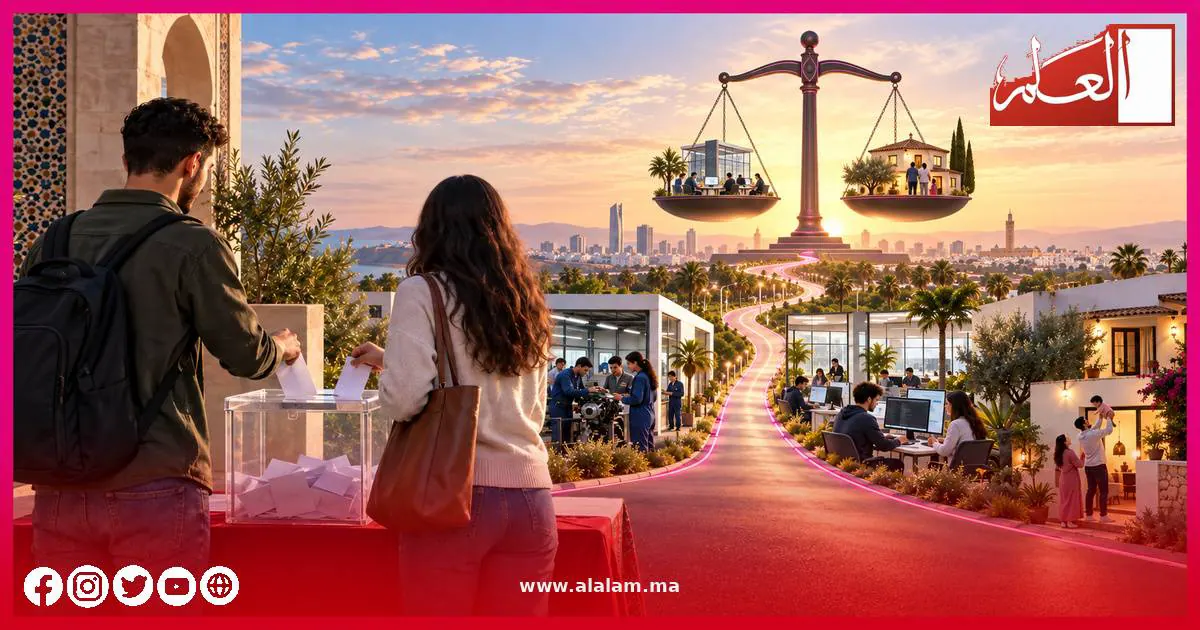
As the Moroccan legislative elections approach on September 23, 2026, the focus is on the country's youth, who represent a crucial demographic and a key test of the parties' ability to deliver practical solutions to pressing issues such as employment, training, housing, and stability. With many young Moroccans eager for more than just campaign slogans, parties are under pressure to present concrete programs that address their concerns.
According to the High Commission for Planning, 2.9 million young Moroccans aged 15-29 are neither employed, in education, nor in training, with 72% of them being women. Moreover, nearly three-quarters of this group lack a diploma. These statistics highlight the significant challenge of integrating young people into Moroccan society and the economy. The issue is not limited to a single party but is a complex problem that requires a comprehensive approach.
In response to these challenges, the Istiqlal Party has launched a national program called "Watan.. Mustaqbali" (Homeland... My Future), which prioritizes the needs of young Moroccans. The program aims to link training, employment, economic independence, and family stability, rather than addressing each issue in isolation. One of the key initiatives is the "Afaq" program, which guarantees that no young person will be left without education, training, or employment for more than six months.
The Istiqlal Party's program also includes the "100,000 Digital Talents" initiative, which aims to train and qualify 100,000 young Moroccans in high-demand digital professions, such as programming, artificial intelligence, and cybersecurity. This program seeks to integrate young people into the digital economy and enable them to export services from Morocco to international markets. By providing quality training and support, the initiative aims to open up new opportunities for young people in urban and rural areas.
The Istiqlal Party's program also addresses the issue of family stability, with proposals to support young couples, including a financial assistance of up to 5,000 dirhams for marriage and a "family launch grant" to help with the costs of housing and basic equipment. By linking these initiatives, the party aims to help young people transition from a state of waiting to stability.
While the Istiqlal Party's program has distinct features, its success will depend on the clarity of its timelines, funding sources, and implementation mechanisms. The party's ability to translate its commitments into public policy and deliver tangible results will be crucial in restoring young people's trust in politics.
Ultimately, the real test of the Istiqlal Party's program will be its impact on the lives of young Moroccans. If successful, it could serve as a model for other parties and help to address the country's pressing social and economic challenges. As the election campaign enters its final hours, the party's offer to young people will be closely watched.
Key points
- The Istiqlal Party's program prioritizes the needs of young Moroccans, linking training, employment, economic independence, and family stability.
- The "Afaq" program guarantees that no young person will be left without education, training, or employment for more than six months.
- The "100,000 Digital Talents" initiative aims to train and qualify 100,000 young Moroccans in high-demand digital professions.