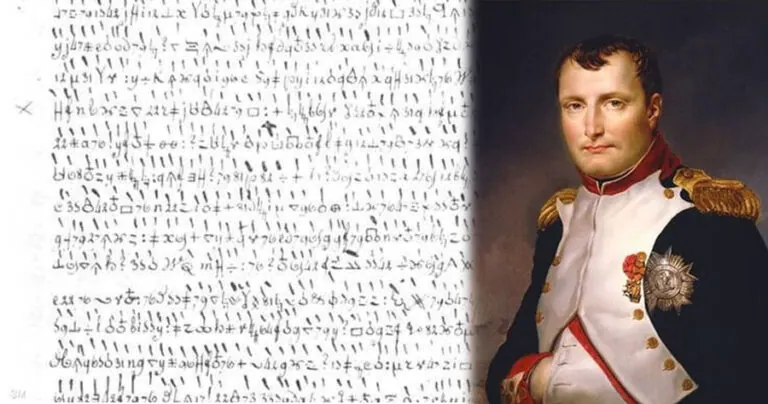
In a groundbreaking achievement, a team utilizing artificial intelligence (AI) has successfully deciphered a 217-year-old encrypted military message from the Napoleonic era. The message, dated back to 1809, was penned during the reign of Napoleon Bonaparte and was intended for French General Auguste de Marmont. Comprising 175 hand-drawn symbols, the coded communication had stumped researchers for centuries, but the AI model cracked it in a mere six hours.
The encrypted message was not written by Napoleon himself but originated from the headquarters of Eugène de Beauharnais, the then-Viceroy of Italy. It contained crucial military instructions that remained undeciphered until the AI intervention. By analyzing the document image, identifying recurring symbols, and decoding the encryption method, the AI was able to produce the necessary codes to reveal the original text.
Historical verification of the decoded message confirmed its accuracy, providing valuable insights into the military deployments of French, Bavarian, and Polish forces at the time. The message specifically mentioned that the Army of Friuli consisted of 80,000 soldiers and warned of an impending Austrian attack. By cross-referencing officer names, unit locations, and troop numbers, researchers were able to pinpoint the message's composition to late March 1809, just two weeks before the Austrian assault.
This remarkable breakthrough demonstrates the potential of AI in unlocking historical secrets that have long remained inaccessible. The deciphered message offers a unique window into the strategic planning and military movements during Napoleon's reign, shedding new light on this pivotal period in European history. The use of AI in this context has proven to be a game-changer, enabling researchers to bypass traditional methods that had previously failed to yield results.
The AI model's success can be attributed to its ability to analyze complex patterns and identify relationships within the encrypted text. By leveraging machine learning algorithms, the team was able to automate the decryption process, which would have been a painstaking and time-consuming task for human researchers. This achievement underscores the growing importance of AI in various fields, including historical research and cryptography.
The deciphering of this 217-year-old message has sparked interest among historians and cryptography enthusiasts alike. As researchers continue to explore the applications of AI in historical research, it is likely that more secrets will be uncovered, providing fresh insights into the past. The intersection of technology and history has opened up new avenues for investigation, allowing scholars to reexamine existing knowledge and challenge prevailing narratives.
As the use of AI in historical research becomes more prevalent, it is essential to acknowledge the potential limitations and challenges associated with this approach. While AI has proven to be a powerful tool in deciphering encrypted texts, it is crucial to verify the accuracy of the results through rigorous historical analysis. By combining AI-driven insights with traditional research methods, scholars can ensure that their findings are both accurate and meaningful.
Key points
- AI model deciphered a 217-year-old encrypted message from Napoleon's era in just 6 hours
- The message provided insights into military deployments and warned of an Austrian attack
- This achievement demonstrates the potential of AI in unlocking historical secrets