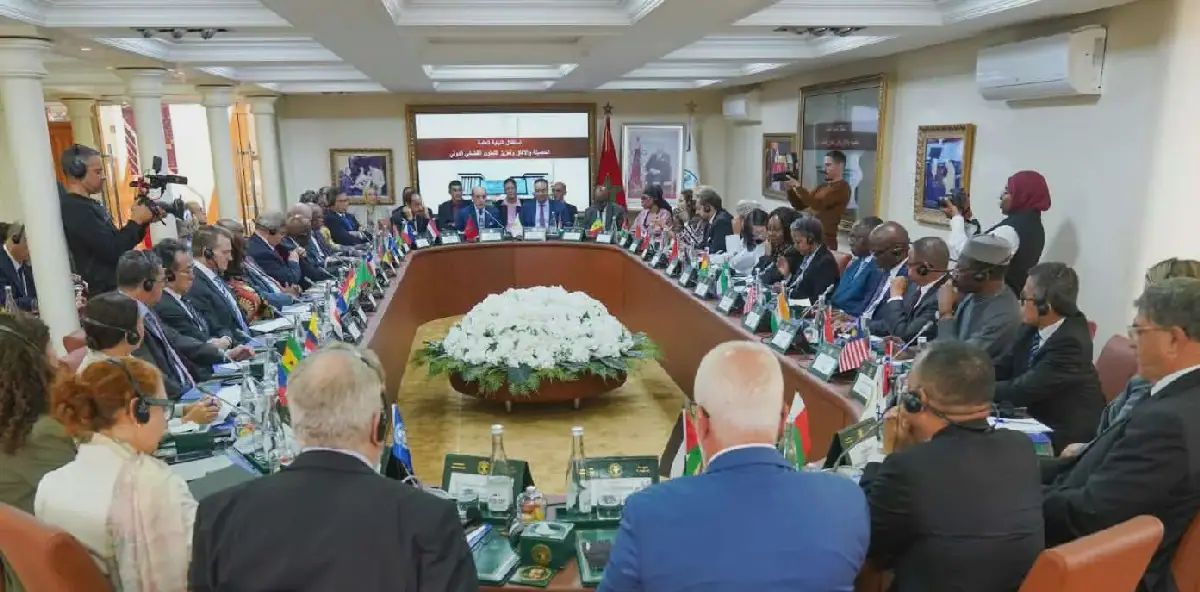
On November 2, 2026, Hicham El Ballawi, Prosecutor General of Morocco, presented the achievements of his institution since the independence of the Public Prosecution was established on October 7, 2017. The presentation took place at the Diplomatic Institute in Rabat, in the presence of several ambassadors and representatives of diplomatic missions accredited in Morocco. El Ballawi highlighted the significant progress made in the development of institutional structures, modernization of working methods, and the enhancement of protection of rights and freedoms.
El Ballawi emphasized that the independence of the Public Prosecution has enabled the institution to exercise its powers and responsibilities in accordance with the principles of independence, responsibility, and commitment to the proper application of the law. He reviewed the achievements in the development of organizational structures, modernization of working methods, and the enhancement of protection of rights and freedoms. The Prosecutor General also highlighted the efforts made to combat various forms of crime and corruption, and to improve the effectiveness of the implementation of the criminal policy.
In the social field, El Ballawi revealed that his institution has contributed to the reinstatement of 29,221 students, of whom 37% are girls, to their studies. He also mentioned that 2,493 children have been registered in the civil status registers, and 9,783 requests for authorization for child marriage have been rejected, following the intervention of the Public Prosecution. These efforts aim to protect children and ensure their basic rights.
Regarding the priorities for the next period, El Ballawi explained that the strategic orientations of the Public Prosecution for 2026-2028 focus on managing by objectives and developing mechanisms for implementing the criminal policy. This includes rationalizing the use of pre-trial detention, supporting the activation of alternative penalties, and automatic reduction of sentences in accordance with legal provisions. He also mentioned the expansion of restorative justice through mediation and reconciliation mechanisms.
In the field of digital transformation, El Ballawi highlighted that the project of electronic exchange of documents has saved one million dirhams per year in Moroccan courts. He also mentioned the development of electronic platforms for processing complaints and the sending of over two million text messages to inform litigants about the outcome of judicial proceedings. The Prosecutor General also mentioned the integration of artificial intelligence techniques to improve services, including the creation of an interactive robot.
On the international cooperation front, El Ballawi emphasized that the fight against transnational crime requires strengthening coordination between the Public Prosecution and judicial authorities in different countries. He highlighted Morocco's role in supporting African judicial cooperation, including hosting the headquarters of the African Association of Prosecutors General in Rabat. El Ballawi also mentioned Morocco's membership in the International Association of Prosecutors General and the Arab Association of Prosecutors General.
Finally, El Ballawi's presentation was followed by a discussion with the diplomatic community, during which the participants expressed their interest in the Moroccan experience in the field of judicial reform. The meeting provided an opportunity to exchange views on the Moroccan judicial system and explore opportunities for cooperation with international judicial institutions.
Key points
- The Moroccan Public Prosecution has contributed to the reinstatement of 29,221 students to their studies and rejected 9,783 requests for authorization for child marriage.
- The institution has also made significant progress in the development of institutional structures, modernization of working methods, and the enhancement of protection of rights and freedoms.
- The strategic orientations of the Public Prosecution for 2026-2028 focus on managing by objectives and developing mechanisms for implementing the criminal policy.