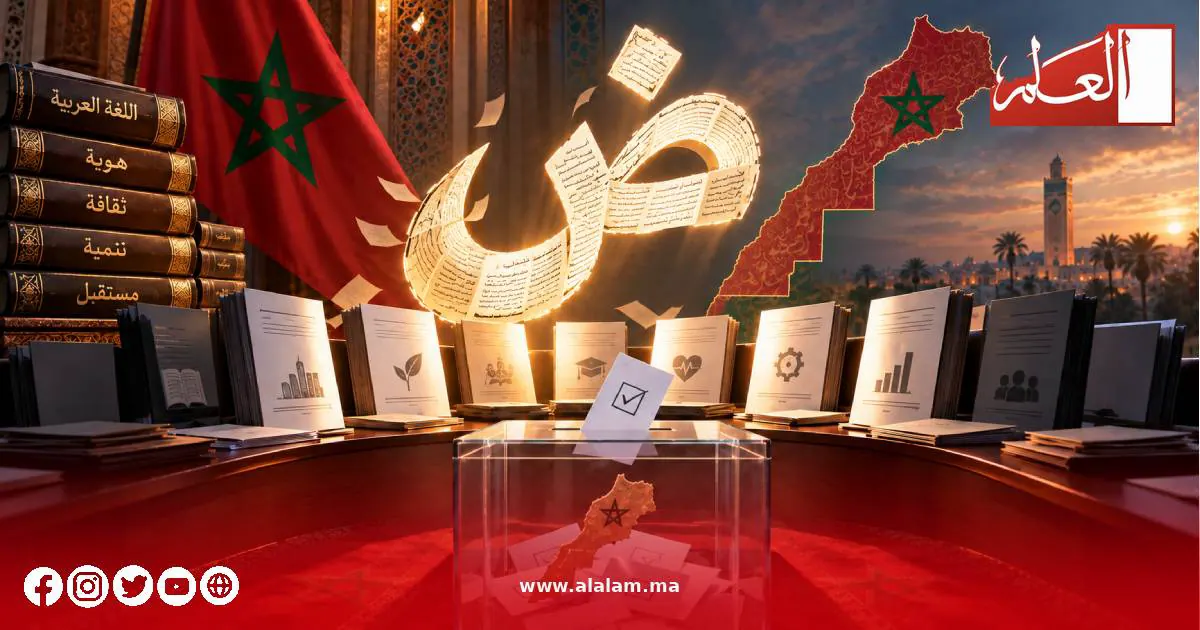
Moroccan political parties have presented their electoral programs, showcasing their diverse approaches to the Arabic language. The programs reveal a mixed approach, with some parties prioritizing the language as a cornerstone of Moroccan identity, while others have relegated it to the background. The Arabic language has been a focal point in the electoral programs of several parties, reflecting its significance in Moroccan society.
The National Rally of Independents and the Justice and Development Party have made significant commitments to promoting the Arabic language. The National Rally of Independents has emphasized the importance of preserving Moroccan identity and promoting the Arabic language, along with other languages such as Amazigh. The Justice and Development Party has also highlighted the need to promote the Arabic language, citing its role in preserving Moroccan identity and promoting social cohesion.
In contrast, some parties have taken a more nuanced approach to the Arabic language. The Socialist Union of Popular Forces has mentioned the importance of promoting the Arabic language, but also emphasizes the need to teach foreign languages. The party's program highlights the importance of preserving Moroccan identity, but also recognizes the value of linguistic diversity.
The Popular Movement party has also emphasized the importance of promoting the Arabic language, along with Amazigh and foreign languages. The party's program highlights the need to create a balanced linguistic system that promotes the use of Arabic and Amazigh, while also providing opportunities for Moroccans to learn foreign languages.
However, some parties have been criticized for their approach to the Arabic language. The Authenticity and Modernity Party has been accused of marginalizing the Arabic language in its program, prioritizing instead the promotion of Amazigh. Similarly, the Progress and Socialism Party has been criticized for its lack of clear commitment to promoting the Arabic language.
The mixed approach to the Arabic language in Moroccan electoral programs reflects the complex and multifaceted nature of Moroccan society. While some parties prioritize the language as a cornerstone of Moroccan identity, others recognize the value of linguistic diversity and promote a more nuanced approach.
Ultimately, the approach to the Arabic language in Moroccan electoral programs will have significant implications for the country's linguistic and cultural landscape. As Morocco continues to navigate its complex identity and cultural heritage, the role of the Arabic language will remain a critical issue in the country's politics and society.
Key points
- Moroccan parties have varying approaches to the Arabic language in their electoral programs.
- Some parties prioritize the Arabic language as a cornerstone of Moroccan identity.
- Others promote a more nuanced approach, recognizing the value of linguistic diversity.