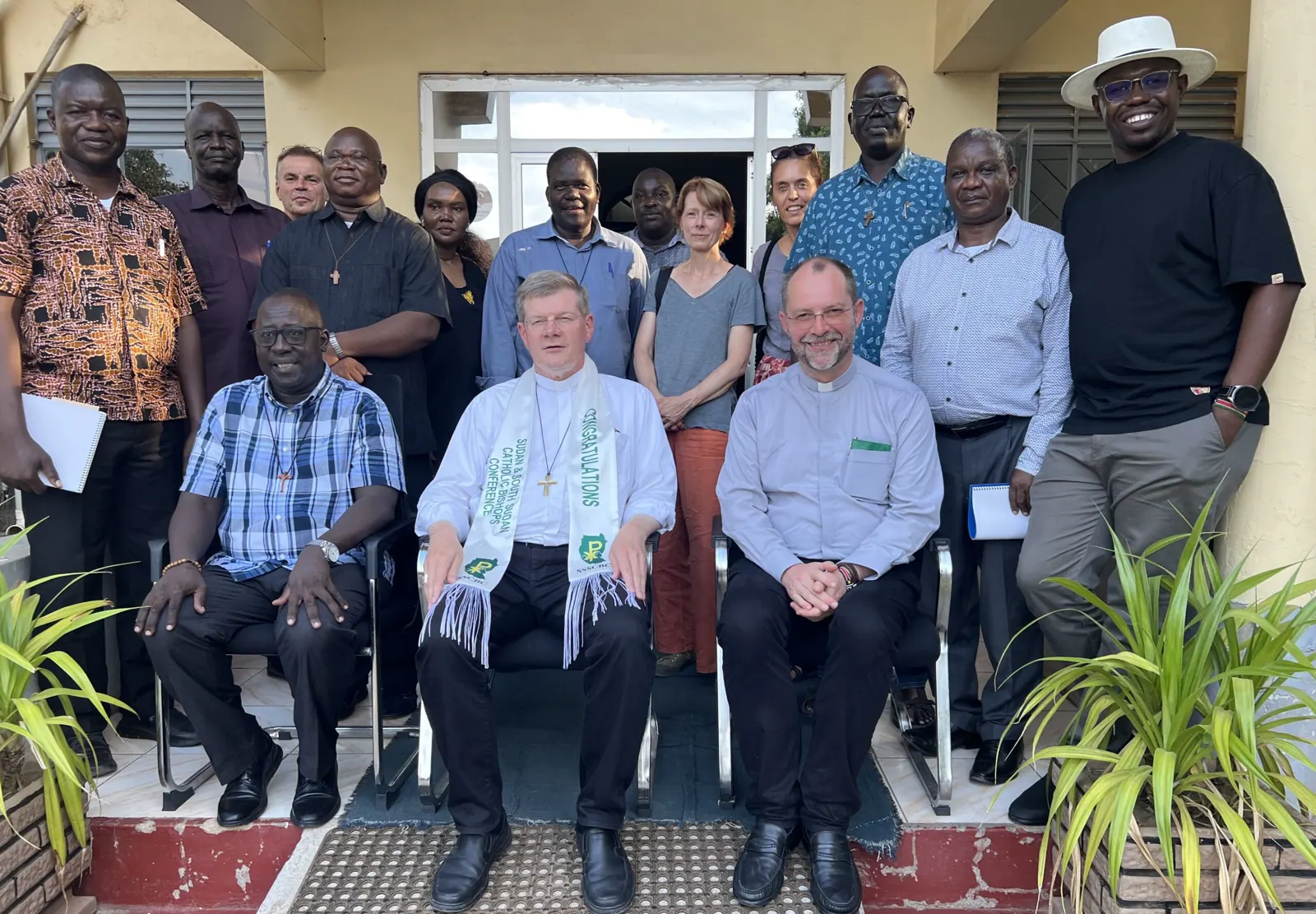
The Sudan and South Sudan Catholic Bishops' Conference (SSSCBC) and German-based Misereor have reaffirmed their commitment to solidarity and continued support for communities affected by conflict and humanitarian challenges in South Sudan. This commitment was expressed during a meeting in Juba between the SSSCBC Secretary General, heads of institutions within the Conference, and the Misereor delegation. The meeting aimed to strengthen cooperation and sustain support for vulnerable communities in South Sudan.
The SSSCBC Secretary General, Fr. Martin Ochaya Lino, explained that the Bishops' Conference brings together two dioceses in Sudan and eight in South Sudan, highlighting the unity of the Church despite the two countries' political separation. He mentioned that the Church continues to serve people through various programs, including pastoral work, education, healthcare, humanitarian assistance, and peacebuilding. The Secretary General described South Sudan as being at a critical political crossroads, with several provisions of the 2018 peace agreement remaining incompletely implemented.
Fr. Lino cited challenges involving security reforms, the return of displaced people, and other transitional processes. He also cautioned that although elections are important to end the transitional period, conducting them without adequate preparations could create further instability. The Secretary General warned that poorly conducted elections could be a recipe for another war. This highlights the need for careful planning and implementation of elections in South Sudan.
The Misereor delegation, led by Archbishop Stefan Burger and Director General Dr. Andreas Frick, expressed their commitment to working with the Church in South Sudan. Dr. Frick said the delegation's seven-day visit had provided a deeper understanding of the realities facing South Sudan and the important role played by the Catholic Church. He acknowledged the financial constraints facing Misereor but emphasized the organization's commitment to supporting communities in need.
Archbishop Stefan Burger, who led the delegation, said seeing the situation firsthand had changed their understanding of the challenges facing South Sudan. He praised the courage of Church workers and communities, saying the delegation would take their experiences and message of gratitude back to Germany. Archbishop Burger emphasized that continued partnership should not be measured only by financial assistance but also through mutual solidarity and prayer.
The meeting concluded with a shared commitment to strengthen cooperation and sustain support for vulnerable communities in South Sudan. Dr. Frick called for strong management, communication, and cooperation among partners to ensure support reaches communities most in need. Misereor's commitment to working with the Church in South Sudan is a testament to the organization's dedication to supporting communities affected by conflict and humanitarian challenges.
The solidarity and support from SSSCBC and Misereor are crucial in addressing the humanitarian challenges facing South Sudan. The country's prolonged insecurity and incomplete implementation of the 2018 peace agreement have created a critical situation that requires continued support from partners like Misereor. The Church's role in serving people through various programs has been acknowledged, and the need for mutual solidarity and prayer has been emphasized.
Key points
- SSSCBC and Misereor reaffirm commitment to solidarity and support for South Sudan's communities affected by conflict and humanitarian challenges.
- The Church continues to serve people through various programs, including pastoral work, education, healthcare, humanitarian assistance, and peacebuilding.
- Misereor emphasizes the need for strong management, communication, and cooperation among partners to ensure support reaches communities most in need.