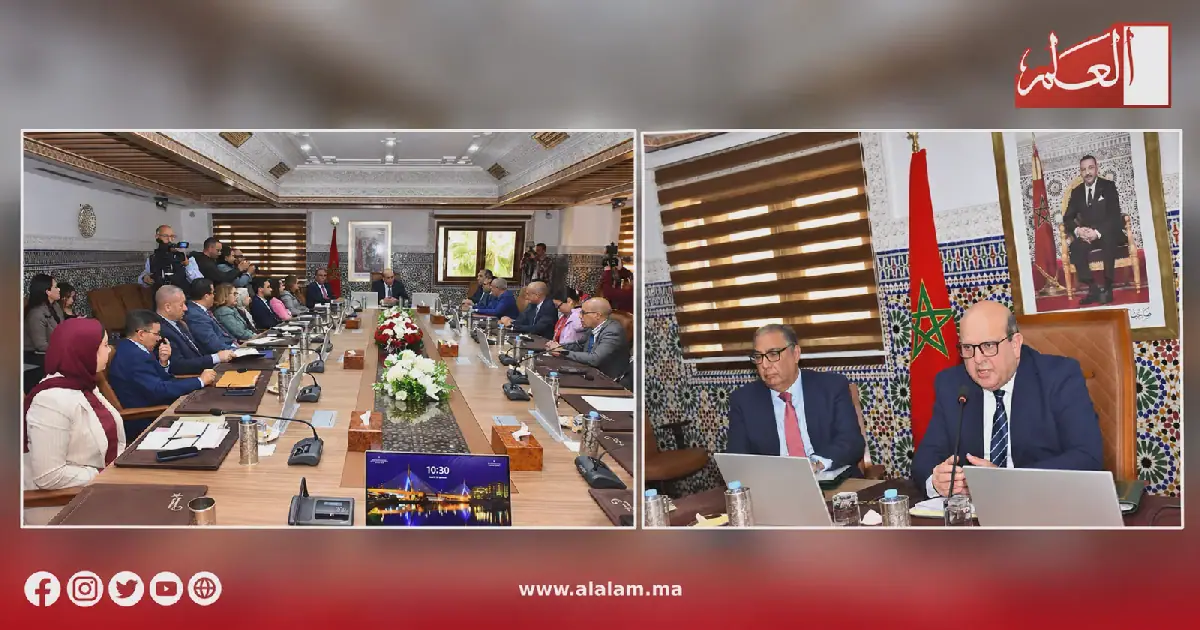
Moroccan Minister of Traditional Industry and Social Economy, Abdeljabbar Rshidi, held a meeting in Rabat with heads of traditional industry chambers and their union to discuss ways to accelerate reform and development in the sector. The meeting focused on enhancing institutional partnerships to improve support for traditional artisans and manufacturers. Rshidi emphasized the importance of collaboration between the ministry and professional chambers to drive growth and development in the sector.
The meeting reviewed progress on priority programs and projects, and explored mechanisms to accelerate their implementation and maximize their impact on professionals. Key topics included the national registry of traditional industries, professional certification, and social protection for artisans. Rshidi highlighted the need to modernize the sector while preserving its cultural heritage. The minister also stressed the importance of providing artisans with the necessary tools and resources to compete in local and international markets.
Rshidi and the chamber heads discussed the implementation of the royal project to generalize healthcare coverage and enhance social protection for professionals. This initiative aims to improve working conditions and dignity for artisans, while supporting their continued contribution to preserving Morocco's cultural heritage. The meeting also touched on the importance of protecting traditional crafts and promoting innovation in the sector.
The discussion also covered reforming and strengthening traditional industry chambers, establishing craft associations, and activating the National Council for Traditional Industry. Additionally, the meeting focused on developing a new strategy to promote the sector and address the expectations of its workers. Rshidi emphasized the need for a comprehensive approach that balances preservation of traditional crafts with modernization and innovation.
The meeting highlighted the importance of vocational training in integrating young people into traditional crafts and ensuring the transfer of knowledge and skills between generations. The need to develop continuous training programs and recognize professional qualifications was also emphasized. Protecting endangered crafts and promoting women's participation in traditional industries, particularly in rural areas, were also key topics.
Rshidi stressed the need to enhance the role of traditional industry chambers in mobilization, organization, and monitoring. He also emphasized the importance of developing a contractual framework that outlines the commitments of both the ministry and the chambers. The parties agreed to continue their collaboration and develop coordination mechanisms to accelerate reform and development in the sector.
The meeting concluded with an agreement to continue working together to improve the social and economic conditions of traditional artisans. The Moroccan government aims to promote the sector's contribution to national development and employment, while preserving the country's cultural heritage. The minister's efforts to engage with stakeholders and drive growth in the traditional industry sector are seen as crucial to achieving these goals.
Key points
- Moroccan Minister Abdeljabbar Rshidi meets with traditional industry stakeholders to accelerate sector reform and improve conditions for artisans.