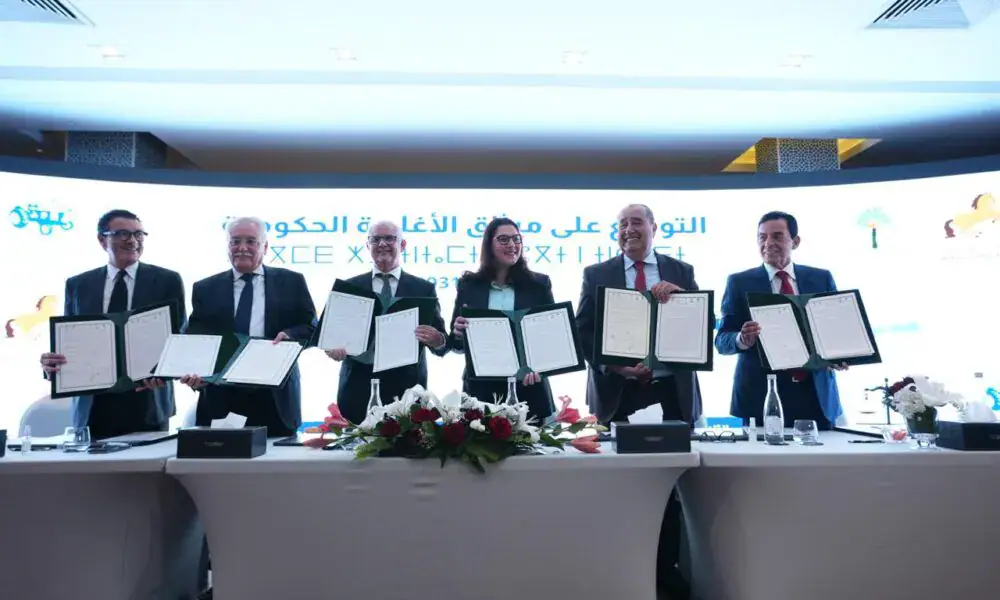
The Moroccan government and its supporting parties have formalized their commitments through a charter that defines the priorities of the coalition and the modalities of coordination of its governmental and parliamentary action. The charter was signed by the leaders of the four parties forming the government, including the Authenticity and Modernity Party (PAM), the Istiqlal Party (PI), the Socialist Forces Union (USFP), and the Progress and Socialism Party (PPS), as well as the general secretaries of the two parties supporting the government, the Constitutional Union (UC) and the Democratic and Social Movement (MDS).
The charter aims to consolidate the democratic process, strengthen trust in elected institutions and political action, and promote good governance, social justice, and spatial equity. It also seeks to ensure the implementation of the government's program, improve the effectiveness of public action, and guarantee concrete results that positively impact citizens' daily lives. The document outlines key objectives, including defending the country's supreme interests, sovereignty, and territorial integrity, particularly the issue of the Moroccan Sahara.
The charter emphasizes the preservation of purchasing power, integration of young people into education, training, and decent employment, and the strengthening of strategic sovereignty and promotion of a strong economy. Prime Minister Fatima Ezzahra El Mansouri stated that the new government team will work to implement and accompany large-scale projects initiated in the country under the leadership of King Mohammed VI. She added that the charter constitutes a reference framework for consolidating the majority's cohesion and ensuring the convergence of its components' actions in implementing the government program.
El Mansouri noted that the government has made a positive start, marked by a dynamic of engagement, mutual trust, and convergence of decisions between its components. She emphasized that these factors constitute a solid foundation for the success of the government experience and the reinforcement of its efficiency. Nizar Baraka, secretary general of the Istiqlal Party, indicated that the charter is a clear roadmap for the government majority, highlighting its political dimension and aiming to implement the government program based on the political commitments made by the majority's components.
Driss Lachgar, first secretary of the USFP, affirmed that the signing of the charter reflects the common will of the majority's components to strengthen the cohesion of their governmental action and ensure the convergence of their visions and positions. He added that this will guarantee effective and harmonious implementation of the government program. Nabil Benabdallah, secretary general of the PPS, highlighted the efforts that led to the formation of a strong and coherent government coalition, capable of translating party commitments into concrete public policies and responding to citizens' expectations and aspirations.
The charter provides for the establishment of several coordination and consultation bodies, including a presidency instance of the majority, a presidency instance of the two Houses of Parliament, and two instances dedicated to the House of Representatives and the House of Councillors. These structures will ensure the follow-up of the government program's implementation, coordination of legislative initiatives and parliamentary control, and reinforcement of consultation between the majority's components, while respecting institutional prerogatives and constructive interaction.
The charter signing marks a significant step towards a more cohesive and effective government, with the aim of improving citizens' living conditions, preserving their purchasing power, and addressing economic and social dysfunctions. The government has committed to translating its engagements into concrete measures that will have a positive impact on the daily lives of Moroccans.
Key points
- The charter outlines key objectives, including defending the country's supreme interests, sovereignty, and territorial integrity.
- The charter emphasizes the preservation of purchasing power and integration of young people into education, training, and decent employment.
- The government has committed to translating its engagements into concrete measures that will have a positive impact on the daily lives of Moroccans.