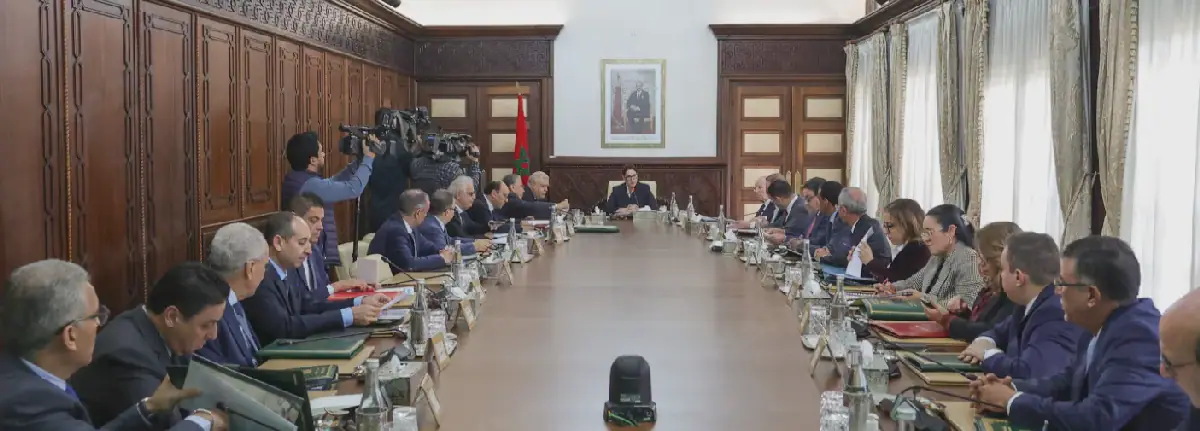
The Moroccan government council convened on Thursday, November 12, in Rabat, and adopted several key measures aimed at enhancing social protection and restructuring strategic public entities. Among the decisions was the approval of a decree to increase direct social aid, transforming the National Airports Office (ONDA) into a public company, and new regulations for the justice ministry personnel. These moves reflect the government's ongoing efforts to improve living standards and optimize public sector performance. The council also adopted a decree concerning Al Quaraouiyine University and approved two high-level nominations.
A significant decision was the approval of a decree modifying the application of the law on direct social aid. This decree, as explained by government spokesperson Samir Belfkih, increases the minimum flat-rate aid from 500 to 600 dirhams, effective January 1, 2027. This 100-dirham increase is the first step in a planned gradual rise, with the goal of reaching 1,000 dirhams by 2031. This measure is part of a broader strategy to strengthen social protection for beneficiary households. However, the government did not provide a detailed schedule for the intermediate increases planned between 2027 and 2031.
The transformation of ONDA into a public company, to be named "Aéroports du Maroc S.A," was another crucial decision. This reform aligns with the framework law on the reform of public establishments and enterprises, as well as the law creating the National Strategic Participation Management and Public Establishment Performance Monitoring Agency (ANGSPE). The change aims to enhance governance of airport infrastructures, addressing challenges in air transport, particularly in safety, efficiency, and competitiveness. The new entity will manage air navigation and public airport domain on behalf of the state, through a concession system allowing for the management and operation of airports by subsidiaries.
The reform of ONDA into "Aéroports du Maroc S.A" includes the creation of a dedicated subsidiary to manage participation titles in various airport subsidiaries. This reorganization is strategic, given the critical role airport infrastructures play in Morocco's economic development, especially in supporting tourism and air traffic growth. The council's decisions reflect a broader effort to modernize and optimize public sector entities in response to evolving economic and social challenges.
In addition to these measures, the council extended the benefit of a performance bonus to personnel in the justice ministry. This move is part of a broader strategy to enhance working conditions and incentivize performance within the public sector. Details of the implementation and impact of this extension were not provided during the council's announcement.
The government council also addressed educational and administrative matters, adopting a decree concerning Al Quaraouiyine University. This institution, one of the oldest in the Islamic world, continues to play a significant role in Moroccan education and culture. The council's approval of two nominations to high-level positions reflects ongoing efforts to ensure effective governance and leadership across various sectors.
The recent decisions by the Moroccan government council underscore a commitment to social enhancement and public sector reform. With a focus on improving social aid, restructuring key entities like ONDA, and regulating personnel in critical sectors, these measures aim to address immediate challenges while laying groundwork for long-term development. The implementation and impact of these decisions will be closely watched as Morocco continues to navigate its economic and social agenda.
Key points
- The Moroccan government has approved a plan to increase direct social aid from 500 to 600 dirhams, effective January 1, 2027, with a goal of reaching 1,000 dirhams by 2031.