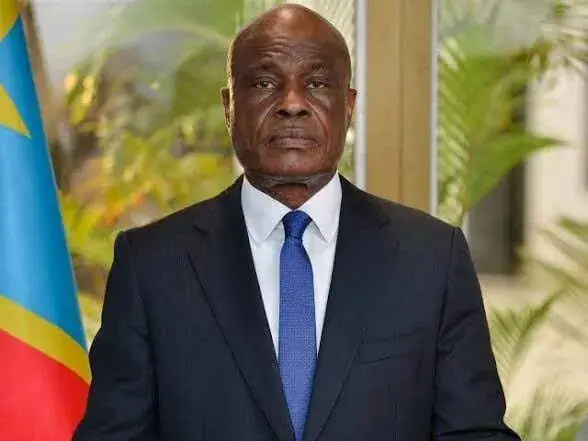
Martin Fayulu, leader of the Lamuka coalition in the Democratic Republic of the Congo, has expressed his concerns about Rwanda's bid to lead the Organisation internationale de la Francophonie (OIF). In a post on social media, Fayulu questioned how a country that has relegated French to second place in favor of English could aspire to lead an organization dedicated to promoting the French language.
Fayulu's comments come as the OIF prepares to select its next secretary general, with Rwanda's Louise Mushikiwabo seeking a third term. The Democratic Republic of the Congo, the second-largest French-speaking country in the world, has its own candidate, Juliana Amato Lumumba. Fayulu also highlighted the tense relations between Kinshasa and Kigali, with the DRC accusing Rwanda of destabilizing its eastern regions.
The candidacy of Rwanda has sparked controversy, given its decision to join the Commonwealth and promote English in its institutions. Fayulu argued that this paradox raises questions about Rwanda's commitment to the Francophonie's mission. He also emphasized that the DRC is open to finding a compromise candidate, with the government recently expressing support for Dacian Cioloș, a former Romanian prime minister.
The selection of the next OIF secretary general is set to take place on November 16 in Phnom Penh, Cambodia. The process has become increasingly complex, with multiple candidates and rivalries between countries. Fayulu's comments reflect the DRC's concerns about Rwanda's bid and its implications for the Francophonie's future.
The Democratic Republic of the Congo has maintained its own candidacy for the OIF leadership, with Lumumba as its nominee. While Kinshasa has expressed openness to a compromise, it has not officially withdrawn its candidacy. The country's diplomatic efforts aim to shift the balance of power within the OIF.
Fayulu's criticism of Rwanda's candidacy also reflects broader tensions between the DRC and Rwanda. The two countries have a history of strained relations, with the DRC accusing Rwanda of supporting rebel groups in its eastern regions. The OIF leadership selection has become a focal point for these tensions.
The Francophonie's future direction will depend on the outcome of the leadership selection process. As the organization prepares to choose its next secretary general, its member states must consider the implications of their decision.
Key points
- Martin Fayulu questions Rwanda's legitimacy to lead the OIF given its reduced use of French.
- The DRC has its own candidate for the OIF leadership, Juliana Amato Lumumba.
- The OIF leadership selection has become a focal point for tensions between the DRC and Rwanda.