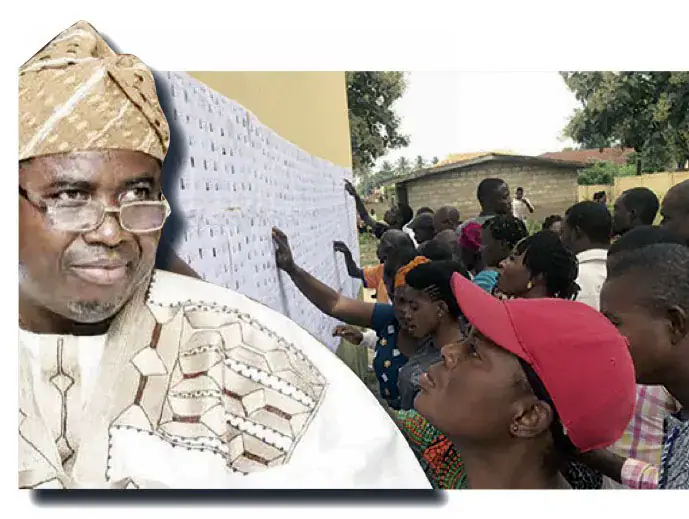
The controversy surrounding Nigeria's Independent National Electoral Commission's (INEC) preliminary register of voters has become a significant challenge ahead of the 2027 general elections. The scandal involves allegations of artificial intelligence-generated photographs, multiple voter registrations, and suspicious identities, including names of deceased persons. This has raised questions about the integrity of the electoral process, the competence of registration officials, and INEC's preparedness for the election.
INEC displayed its preliminary register of voters nationwide between October 9 and 15, 2026, for public scrutiny, claims, and objections. Following the publication of the register online on October 26, Nigerians began drawing attention to suspicious entries. Some records were reportedly traced to registration areas in Edo State, particularly Etsako West and Esan Central. The development generated public outrage, forcing INEC to acknowledge irregularities within its registration system.
INEC's Director of Information and Communication Technology, Lawrence Bayode, admitted that some registration officers had allegedly abused their authorised access to introduce questionable records into the database. The commission announced an investigation into the irregularities and assured Nigerians that the preliminary register was undergoing a comprehensive verification exercise. However, this did little to alleviate public concerns, raising questions about how such entries passed through the registration and verification processes.
On November 9, INEC announced that it had removed 1,608,660 confirmed invalid registrations from the preliminary register following a nationwide clean-up exercise. The commission also disclosed that 873 records belonging to verified deceased persons had been removed separately, bringing the combined number of deleted records to 1,609,553. According to INEC Chairman Professor Joash Amupitan, the commission harvested 11,088,238 records from the 2025/2026 Continuous Voter Registration exercise.
INEC identified 54 persons across 10 states allegedly involved in the registration irregularities and promised administrative disciplinary action and possible prosecution. This disclosure shifted the debate from the existence of questionable voter records to the possibility of deliberate manipulation involving personnel entrusted with protecting the electoral database. Stakeholders are now asking questions about the beneficiaries of the questionable registrations, political interests behind the manipulation, and guarantees that genuine voters will not be disenfranchised.
Professor Tayo Bello emphasised that the issue was not technical but moral, stressing the need for justice, fairness, and equity in the electoral process. He called for transparency in INEC's conduct, including real-time uploading of election results on the IReV portal. Bello warned that the scandal could lead to widespread contestation of the election results if not addressed. The controversy has significant implications for electoral democracy and Nigerians' confidence in INEC.
The voters' register scandal has raised fundamental questions about INEC's capacity to conduct a credible election. The discovery of questionable entries has triggered concerns about the integrity of the list of people qualified to vote, the number of registered voters in each polling unit, and the legitimacy of the electoral mandate produced by the ballot. As the 2027 general elections approach, INEC faces increasing pressure to restore confidence in the electoral process and ensure a transparent and credible election.
Key points
- INEC removed 1.6 million invalid registrations from its preliminary voters' register.
- The scandal has raised questions about the integrity of the electoral process and INEC's preparedness for the 2027 general elections.
- Stakeholders are calling for transparency and accountability in INEC's conduct to restore confidence in the electoral process.