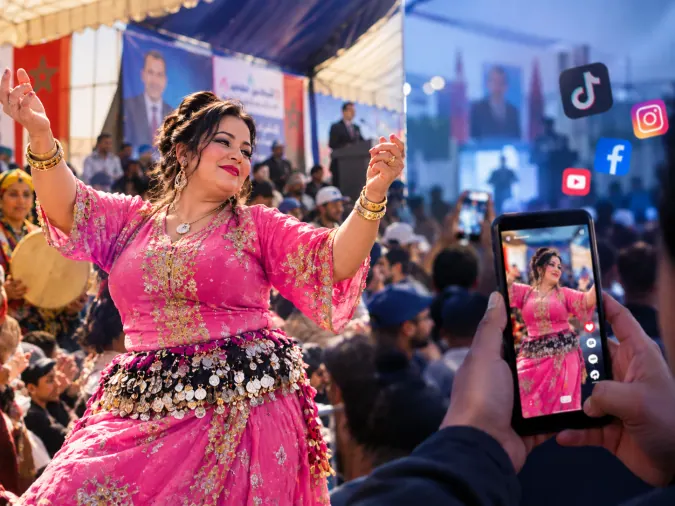
In Morocco, election campaigns have long been accompanied by lively folk music and dance performances. However, in recent years, this tradition has begun to fade. The campaigns have instead shifted towards digital platforms, with candidates opting for online advertising and social media outreach. This change has been driven in part by the rising costs associated with organizing large-scale events and the potential for negative publicity.
According to media observer Mohamed Socrates, the decline of traditional folk music and dance in election campaigns is not merely a coincidence. Rather, it reflects a broader transformation in the way campaigns are run. The costs of organizing large events, including hiring performers, sound equipment, and security, have become prohibitively expensive. As a result, many candidates have begun to focus on digital outreach, which offers a more cost-effective way to reach voters.
The shift towards digital campaigns has been driven in part by changes in the way people consume information. With the rise of social media, candidates can now reach a large audience with relatively little expense. However, this approach also carries risks, as a single misstep can quickly go viral and damage a candidate's reputation. As a result, some candidates have become cautious about engaging with traditional folk music and dance, fearing that it may be perceived as unprofessional or even embarrassing.
The decline of traditional folk music and dance in election campaigns has also been driven by changes in the music industry itself. The cost of hiring popular performers has increased significantly in recent years, making it more difficult for candidates to afford their services. At the same time, the rise of digital platforms has created new opportunities for candidates to reach voters, but it has also changed the way they approach campaigning.
The loss of traditional folk music and dance from election campaigns is not just a matter of aesthetics; it also has implications for the way campaigns are run. These performances played an important role in energizing crowds and creating a festive atmosphere, which in turn helped to mobilize voters. Without them, campaigns may become less engaging and less effective at turning out supporters.
Some observers argue that the decline of traditional folk music and dance in election campaigns reflects a broader shift in Moroccan politics. As the country's electoral landscape continues to evolve, candidates are adapting their strategies to take advantage of new technologies and changing voter behaviors. However, this shift also carries risks, as it may lead to a disconnection between candidates and the communities they seek to serve.
Ultimately, the decline of traditional folk music and dance in Moroccan election campaigns reflects a complex interplay of factors, including changing voter behaviors, rising costs, and the growing importance of digital platforms. As the country's electoral landscape continues to evolve, it remains to be seen how candidates will adapt their strategies to engage with voters and build support.
Key points
- The decline of traditional folk music and dance in Moroccan election campaigns reflects a broader transformation in the way campaigns are run, driven in part by changes in voter behaviors and the rising costs associated with organizing large-scale events.