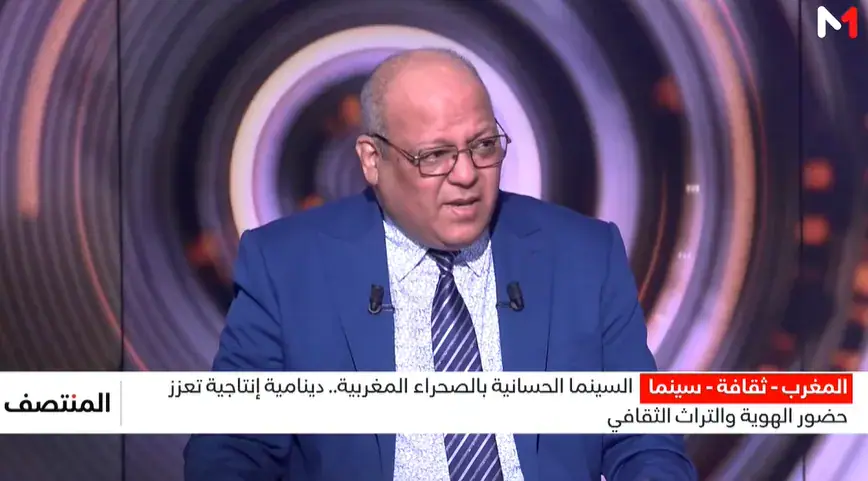
The cinematic production in the southern regions of Morocco has successfully transitioned from its initial stage, driven by institutional support and accumulated filmmaking experiences. According to Dr. Ahmed Daffri, a culture and arts expert, this progress is largely attributed to an annual support of approximately 15 million dirhams for documentary works related to Sahrawi culture, history, and environment. This funding has enabled filmmakers to expand their scope, moving from traditional documentation to more diverse cinematic forms, including narrative films that highlight the specifics of Sahrawi society.
The uniqueness of Sahrawi cinema lies in its close connection to the people and their natural, spiritual, and cultural environment. Documentary films often explore the relationship between the Sahrawi people and their environment, focusing on challenges such as climate fluctuations, sand dunes, and oases. Additionally, these films delve into historical aspects, highlighting figures who resisted colonialism and documenting local memory and societal transformations. Meanwhile, narrative cinema addresses human relationships, social issues, and daily challenges, reflecting the gradual transformation of the Sahrawi community from a traditional to an urban setting.
Several initiatives have contributed to the development of Sahrawi cinema. Dr. Daffri cited the experience of the Sahara Laboratory, led by Moroccan director Hakim Ben Abbas, as a pivotal moment. This laboratory served as a training ground for young filmmakers from the regions of Aïoun and Dakhla, enabling them to develop their skills and transition into filmmaking, ultimately winning awards at various festivals. Other young filmmakers have also achieved international recognition, such as Salem Belal, whose film "سره الصيف" won awards at the Ismailia Festival.
Despite these advancements, challenges persist. The vast geographical area and difficult transportation conditions, coupled with the requirements for filming in desert regions, impose additional costs related to equipment, maintenance, and logistical resources. Consequently, continued institutional and regional support, along with the accompaniment of the Moroccan Cinematographic Center, is crucial to ensure the sustainability of production.
Dr. Daffri emphasized that the development of Sahrawi cinema is no longer solely dependent on financial support but also requires the establishment of comprehensive cinematic infrastructure within the southern regions. This includes training centers, specialized schools, equipped studios, and professional technicians, allowing for the completion of various production stages locally, rather than forcing young directors to travel to Casablanca or Rabat for post-production processes.
Looking ahead, Dr. Daffri sees significant potential in narrative cinema for expanding the cultural influence of Sahrawi heritage, particularly through the valorization of intangible cultural heritage, such as the "Tebraa" poetry associated with women's expression and the "Kaf" poetry prevalent in Sahrawi culture. He believes that transforming these heritage elements into creative cinematic material can contribute to preserving the cultural memory of the southern regions and introducing it on an international scale.
Dr. Daffri concluded that the future of Sahrawi cinema is promising, provided that efforts shift from supporting production to building a comprehensive local cinematic industry capable of nurturing talent, hosting projects, and producing narrative and documentary works that invest in the richness of Sahrawi culture, granting it a broader presence in the national and international cinematic landscape.
Key points
- The cinematic production in Morocco's southern regions has moved beyond its foundational stage, driven by institutional support and accumulated filmmaking experiences.
- Continued institutional and regional support is crucial to ensure the sustainability of Sahrawi cinema production.
- The development of Sahrawi cinema requires the establishment of comprehensive cinematic infrastructure within the southern regions.
Reporting sources
- أحمد الدافري على ميدي 1: السينما الحسانية تتجاوز مرحلة التأسيس وتراهن على تثمين التراث الصحراوي · Al Ahdath Al Maghribia