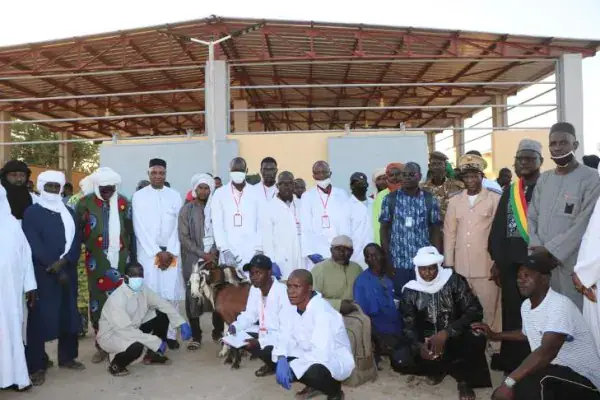
A modern slaughterhouse has been opened in Gao, Mali, to improve the city's meat production and supply. The facility has a daily capacity to slaughter over 30 cattle and 100 small ruminants. This development is expected to enhance the quality and quantity of meat available to the local population. The slaughterhouse was opened to address the city's growing demand for meat products.
The Gao region has been affected by a multidimensional crisis since 2012, which has impacted the local economy and humanitarian situation. The United Nations has been actively involved in assessing the humanitarian needs of the affected populations. Recently, Tom Fletcher, the UN Deputy Secretary-General for Humanitarian Affairs and Emergency Relief Coordinator, visited Gao to evaluate the situation on the ground. His visit highlights the ongoing efforts to address the crisis and provide support to those in need.
In addition to the new slaughterhouse, Gao is home to the Musée du Sahel, which was officially created on February 25, 1984. The museum is located in the heart of the city and represents the cultural identity of the Sahelo-Saharan community. The museum's architecture and exhibits showcase the rich cultural heritage of the region. The museum serves as an important cultural institution, promoting understanding and appreciation of the local culture.
The Gao region has also received support in the form of furniture and office equipment for four prefectures. The distribution ceremony took place in Gao, under the chairmanship of the Regional Governor, General Moussa Moriba Taoré. The equipment is expected to enhance the administrative capacity of the prefectures and improve their ability to deliver services to the local population.
The local community in Gao is also preserving its cultural traditions, including traditional hairstyles. The Songhoy people have a unique tradition of creating hairstyles that reflect their cultural identity, ethnicity, and social status. These hairstyles are often created for special occasions and events, and they play an important role in the community's cultural heritage.
In a separate development, the Collectif pour la défense des militaires (CDM) has launched a road rehabilitation project in Gao. The project aims to repair potholes on several major roads in the city, including the Wabaria-Djidara section of National Route 16. The project is part of the "Mali Nieda Kura" operation, which seeks to improve the city's infrastructure and enhance the quality of life for its residents.
As the city prepares for the upcoming academic year, the Université de Gao is set to launch new programs in January 2027. The university will offer courses in animal husbandry, fisheries, and agriculture. The old Conseil de cercle de Gao building has been designated as the rectorate, marking an important milestone in the development of the university.
Key points
- The modern slaughterhouse in Gao has a daily capacity to slaughter over 30 cattle and 100 small ruminants.
- The Gao region has been affected by a multidimensional crisis since 2012, which has impacted the local economy and humanitarian situation.
- The Université de Gao is set to launch new programs in January 2027, including courses in animal husbandry, fisheries, and agriculture.