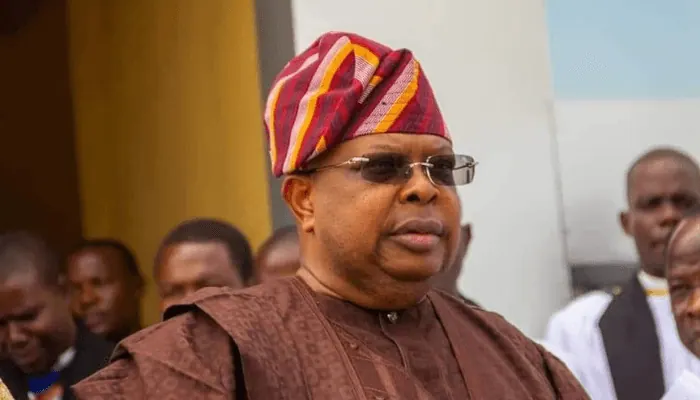
Nigeria's power sector has been grappling with numerous challenges, including high commercial and collection losses by distribution companies for electricity supplied. According to Minister of Power, Joseph Tegbe, arrears owed by ministries, departments, and agencies exceed N100 billion. Speaking during a press briefing in Abuja, Tegbe stated that a diagnosis of the power sector revealed constraints across every segment of the electricity value chain.
The constraints, as identified by the minister, include limited gas supply to power stations due to damaged pipelines and unfavorable commercial terms. Additionally, the generation fleet is heavily dependent on thermal plants with ageing equipment, deferred maintenance, and stalled projects. This has resulted in capacity unable to reach consumers. The sector diagnosis also revealed that only 27% of generation companies' bills were being paid, undermining their ability to maintain plants and pay gas suppliers.
The minister explained that the challenges in the power sector are interconnected and cannot be solved by simply adding new generation capacity. The Tinubu-led administration is working to address the sector's long-standing debt, revenue leakages, metering gaps, and infrastructure constraints. To stabilize supply, the government restored the 375MW Alaoji open-cycle power plant to the national grid after three years offline. Other efforts include commissioning transformers in Lagos, which unlocked 672MW of transmission capacity.
A new 300MVA transformer at Katampe, Abuja, has also unlocked another 240MW. According to the minister, operational records show generation and transmission rising above 5,000MW in the weeks preceding the media parley, compared with between 3,700MW and 4,700MW before June. Generation peaked at 5,330MW in August and September. However, national generation figures do not necessarily reflect the experience of individual communities.
The minister acknowledged that national progress can coexist with an unreliable feeder in a particular community. On the financial side, the government has raised an estimated N1.23 trillion to address part of the N3.3 trillion power-sector debt backlog. Additionally, about 350,000 electricity meters were installed during the first 100 days, taking cumulative installations to 1,004,260 as of August 2026.
The resolution of litigation involving the AMMON metering programme has also unlocked procurement of about 1.4 million smart meters. The minister ruled out any increase in electricity tariffs, noting that the government is focused on improving electricity supply and strengthening the financial and physical foundations of the power sector rather than imposing additional costs on consumers.
The government plans to focus on stabilising transmission corridors, beginning work on a Transmission Super Grid, and improving the utilisation of existing generation and transmission assets. Technical audits have commenced along the Lagos and Abuja corridors to identify weak points and direct investment to interventions with measurable system impact. The next six months will focus on turning ongoing repairs and reforms into more visible improvements in electricity supply.
Key points
- The Minister of Power, Joseph Tegbe, says that ministries, departments, and agencies owe over N100 billion in electricity debts.
- The government has raised an estimated N1.23 trillion to address part of the N3.3 trillion power-sector debt backlog.
- The government has no plan to increase electricity tariffs, focusing instead on improving electricity supply and strengthening the power sector.