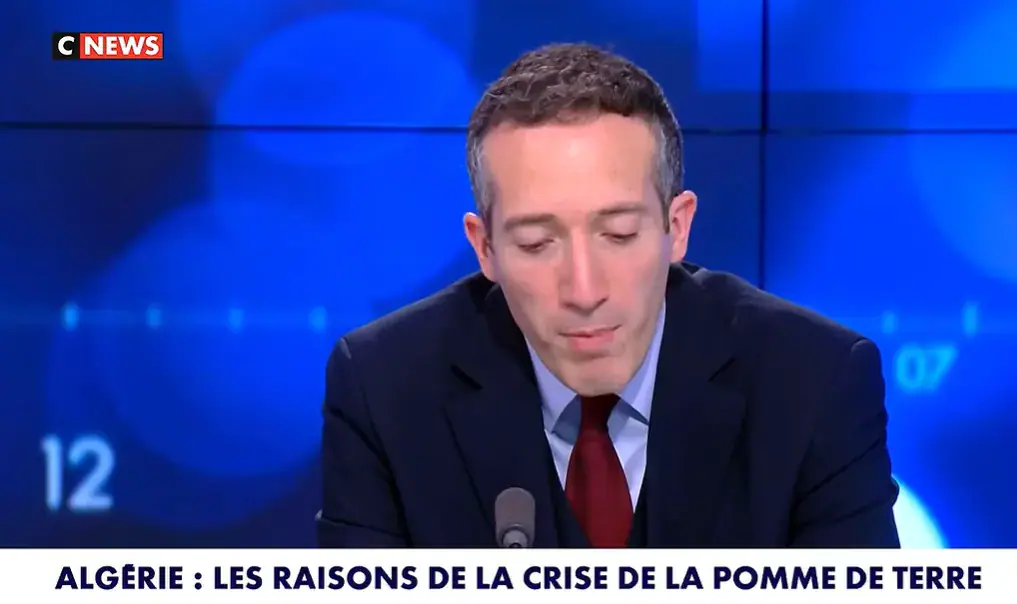
Michel Fayad, a Franco-Lebanese commentator, recently appeared on CNews to discuss Algeria's potato shortage. However, his intervention was met with criticism, as he was accused of lacking expertise on the subject and using the issue to make political attacks on Algeria and its government. Fayad's comments were part of a larger discussion on the country's economic challenges, but many felt that his analysis was oversimplified and biased.
During his appearance on CNews, Fayad attributed the potato shortage to the government's price controls, stating that low prices had discouraged producers from cultivating and stock holders from selling. However, many experts argue that this explanation was incomplete, as it failed to account for other factors such as crop yields, seed costs, and distribution networks. The lack of concrete data and nuanced analysis led to accusations that Fayad was more interested in scoring political points than providing a genuine understanding of the issue.
Fayad's comments took a more controversial turn when he compared Algeria's current agricultural situation to the country's colonial past. He noted that before independence in 1962, Algeria had exported agricultural products such as wine, oranges, and vegetables to France. However, this comparison was widely criticized as being out of context, as the colonial-era agricultural system was characterized by significant inequality and prioritized the interests of the colonial power.
The controversy surrounding Fayad's comments extends beyond his analysis of the potato shortage, with many questioning his credentials as an expert on Algerian affairs. Fayad is primarily known as a specialist in political science and international relations, rather than agriculture or economics. This has led to accusations that he was not qualified to provide authoritative commentary on the subject.
The incident has also raised questions about the role of media outlets such as CNews in shaping public discourse on sensitive topics. Critics argue that the network's emphasis on provocative commentary can create a toxic environment that prioritizes polemic over fact-based analysis. In this case, Fayad's comments were seen as part of a broader narrative that seeks to criticize Algeria and its government, rather than engaging in a constructive discussion about the country's challenges.
The Conseil de déontologie journalistique et de médiation (CDJM) had previously criticized Fayad for making unsubstantiated claims about Palestine during another appearance on CNews. While the CDJM's criticism focused on the network's editorial responsibility, it also highlighted the need for commentators to exercise greater care and verification when making public statements.
Ultimately, the controversy surrounding Fayad's comments serves as a reminder of the importance of nuance and expertise in public discourse. As Algeria continues to grapple with economic challenges, including food shortages and supply chain disruptions, it is essential that discussions about these issues are grounded in fact-based analysis and a deep understanding of the complexities involved.
Key points
- Michel Fayad's comments on Algeria's potato shortage were criticized for lacking expertise and being overly politicized.
- Fayad's analysis was seen as oversimplified and biased, failing to account for key factors such as crop yields and distribution networks.
- The incident has raised questions about the role of media outlets in shaping public discourse on sensitive topics and the need for greater nuance and expertise in commentary.