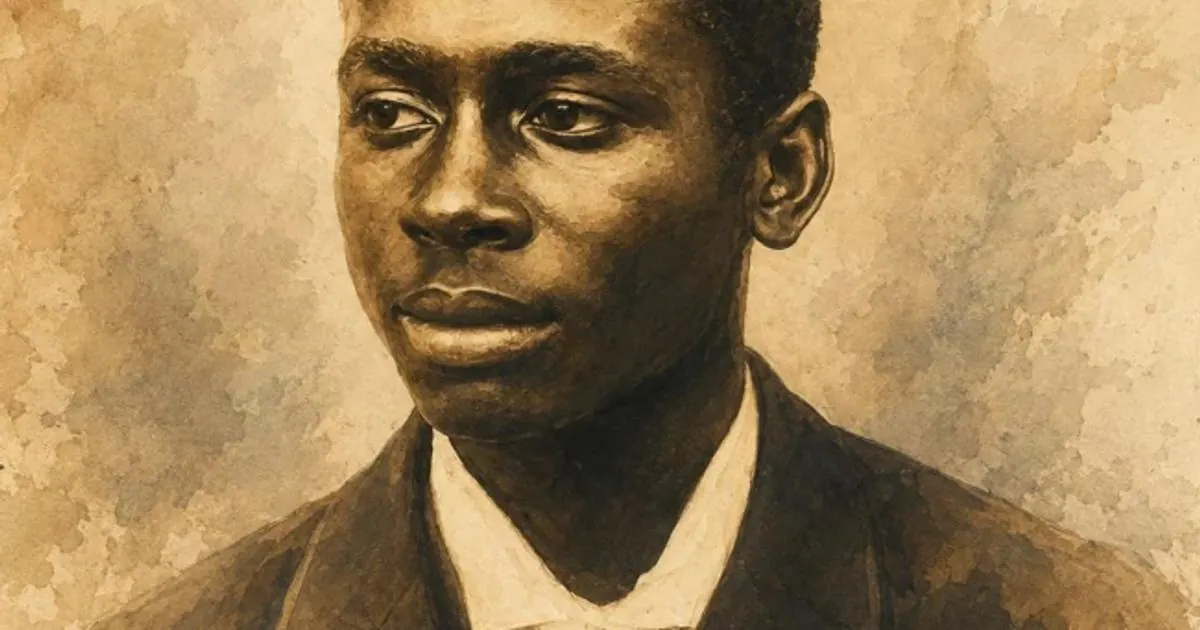
Jonathan Adagogo Green was born in 1873 in Ayama, now known as Peterside in Bonny, Rivers State, Nigeria. He was an Ibani (Ijaw) man who grew up during a period when the Niger Delta was experiencing major political and economic changes. Green's early life was marked by the death of his father, Chief Sunju Okoronkwoye Dublin Green, in 1875. He was then raised by his uncle, Uruasi Dublin Green, who played a major role in his upbringing and education.
Green received Western-style education in Lagos and possibly Sierra Leone, which was one of the major learning centres in colonial West Africa at the time. After gaining photography training, he returned to Nigeria and, at just 18 years old, established a professional photography studio in Bonny in 1891. From there, his career took off, and he worked across Bonny, Opobo, Brass, and Calabar, building a reputation as one of the most skilled photographers in West Africa.
Green's photography studio became a hub for capturing Nigerian chiefs, wealthy merchants, British colonial officers, missionaries, families, ceremonies, buildings, and everyday activities. His camera captured pivotal moments in West African history, providing a unique perspective on colonial Nigeria, African royalty, and everyday life in the Niger Delta. Green's photographs remain important historical records, with some of his works preserved in collections, including the British Museum.
One of Green's most famous works is the photograph of Oba Ovonramwen Nogbaisi of Benin aboard the naval ship SS Ivy in 1897. The image captured the Benin monarch while he was being taken into exile after the British invasion of the Benin Kingdom. The photograph became one of the most recognised visual records of that historic moment, providing a glimpse into Nigeria's complex history.
Green's success can be attributed to his photography skills, professionalism, and ability to produce high-quality images. His name and background also helped him navigate different worlds, as his name sounded British, allowing him to gain acceptance among colonial officials who became some of his major clients. His family's influence and connections also helped him access important opportunities.
Green's photography career lasted only about 14 years, as he died in 1905 at the age of 32. He was buried in Bonny in an all-marble tomb imported from Belgium. After his death, British ethnographer Gwilym Iwan Jones acquired many of Green's photographs and continued reproducing them until the 1990s. Today, some of Green's works are preserved in international collections, including the British Museum.
More than a century after his death, Green's photographs still tell stories about Nigeria's people, culture, and history. He helped Nigeria remember itself by capturing moments that would later become priceless pieces of history. Green's legacy serves as a testament to the power of photography in preserving cultural heritage and promoting understanding of Nigeria's complex past.
Key points
- Jonathan Adagogo Green was Nigeria's first Indigenous professional photographer.
- Green's photographs provide a unique perspective on colonial Nigeria and everyday life in the Niger Delta.
- Green's legacy continues to inspire and educate people about Nigeria's history and culture.