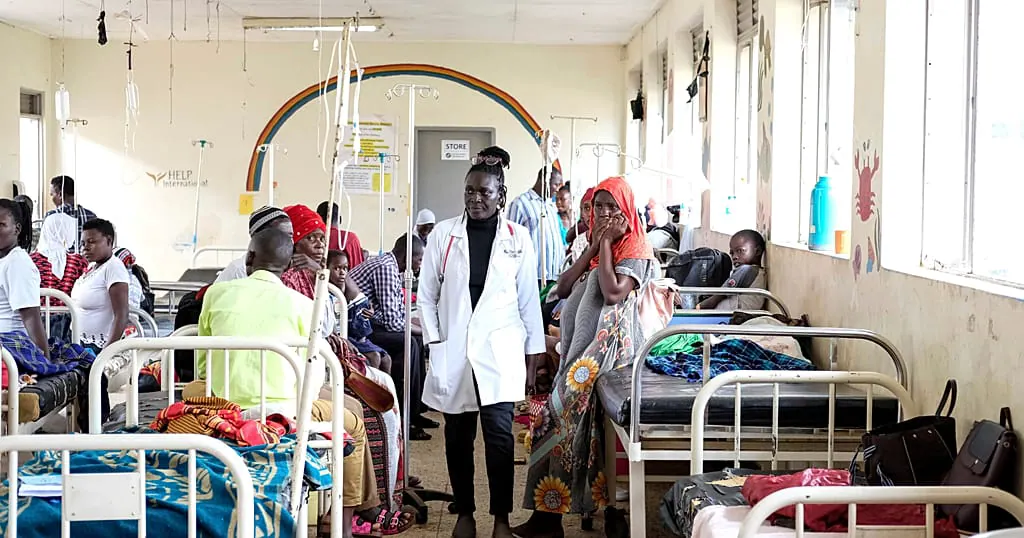
Sickle cell disease continues to pose a significant public health challenge in Uganda, with approximately 20,000 newborns affected every year. The inherited blood disorder results in severe pain and high mortality rates among children, with many dying before their fifth birthday due to late diagnosis. However, efforts to improve access to care and recent scientific breakthroughs are providing hope for a better future.
Irene Nalukwago's 12-year journey to a sickle cell clinic in Kayunga is a testament to the struggles faced by many families affected by the disease. Her daughter was born healthy but started falling sick and becoming anemic at six months old. Despite regular blood transfusions, her condition worsened, and doctors eventually diagnosed her with sickle cell disease. The disease has taken a heavy toll on her health, leaving her paralyzed on one side of her body.
Uganda has made significant progress in scaling up mandatory screening for newborns across the country, enabling early diagnosis and treatment. According to Dr. Isaac Tumusiime, medical officer at Kayunga Referral Hospital, all children are started on hydroxyurea as early as nine months, which lowers the number of painful attacks and the need for blood transfusions. This has led to improved health outcomes for many children.
Medical professionals emphasize the importance of early diagnosis in managing sickle cell disease. By detecting the condition early, healthcare providers can help patients manage their symptoms and prevent life-threatening complications such as strokes. Regular monitoring also enables healthcare workers to detect problems early, reducing pressure on already stretched health services.
The introduction of gene therapy treatment has raised hopes for a potential cure for sickle cell disease. Although this treatment is not yet widely available, medical professionals like Dr. Tumusiime are encouraged by its potential. For now, hydroxyurea remains a crucial treatment option, and efforts to ensure a continuous supply of the medication are underway.
Despite progress, access to care remains a significant challenge for many patients. The cost of treatment, including gene therapy, is currently out of reach for many families. However, healthcare providers and policymakers are working to improve access to care and make treatments more affordable.
Patients at the sickle cell clinic in Kayunga understand the importance of staying on top of routine check-ups to manage their condition and prevent complications. With the support of healthcare providers and access to treatment, many patients are managing their condition and living healthier lives. Key points include:
Key points
- Nearly 20,000 Ugandan newborns are affected by sickle cell disease annually.
- Early diagnosis and treatment with hydroxyurea can significantly improve health outcomes for children with sickle cell disease.
- Gene therapy treatment offers hope for a potential cure, but accessibility and affordability remain significant challenges.