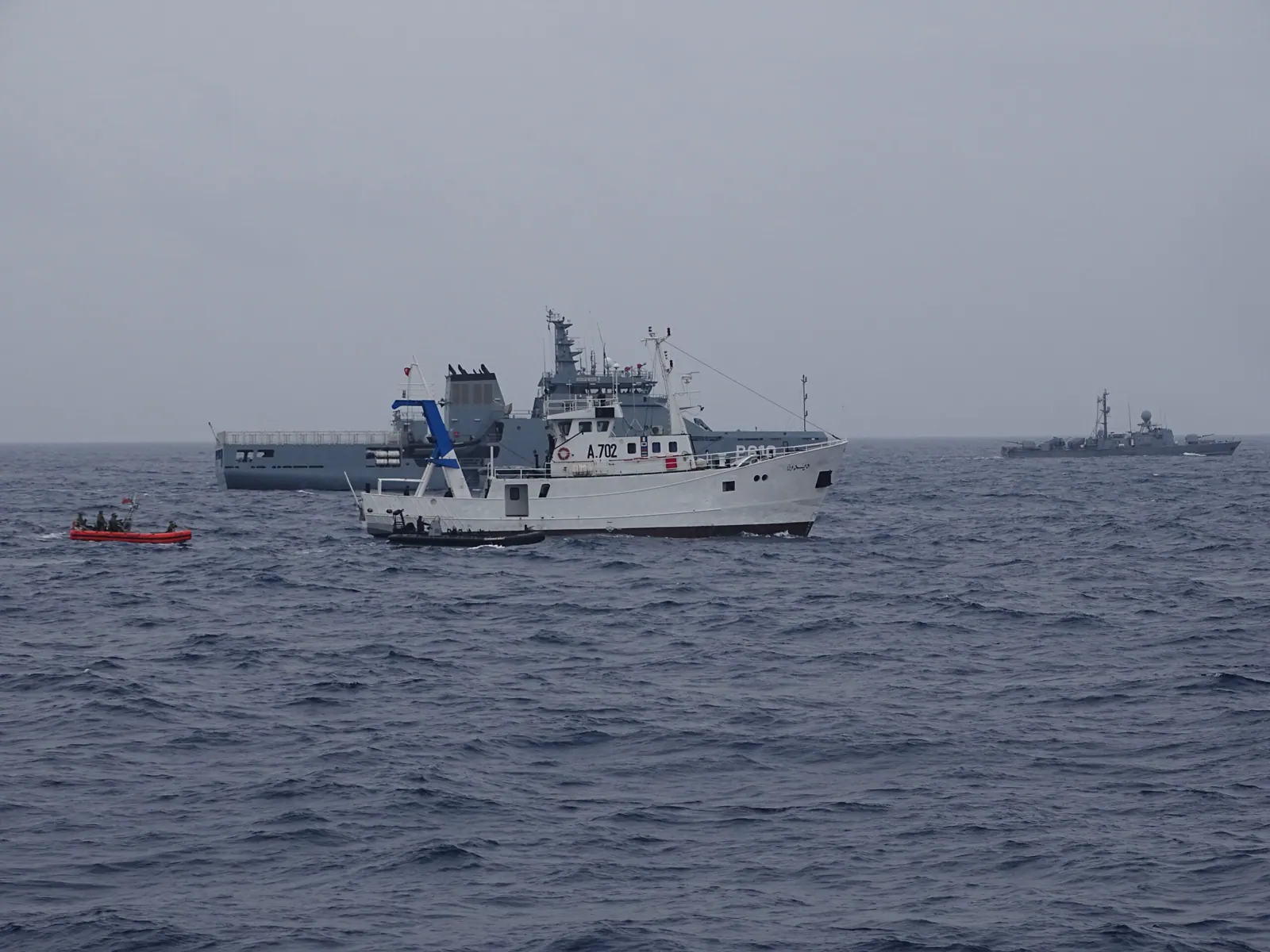
In the summer of 2023, a young man from Gafsa attempted to cross the Mediterranean on a small boat but did not make it. His story is one of thousands and is increasingly understood by Tunisian institutions through the language of border management. The European Commission announced a package for Tunisia in June 2023, including up to €900 million in proposed macro-financial assistance, €150 million in budget support, and €100 million for border management, search and rescue, anti-smuggling, and returns.
The EU and Tunisia signed a Memorandum of Understanding in July 2023, formalizing the partnership. By September, a further €105 million was allocated to migration-related programmes. By December 2023, the €150 million budget-support programme was operational. This sequence of events has produced a specific institutional outcome, which is examined through the lens of a mechanism called capacity substitution. Capacity building strengthens a state’s ability to solve its own problems, whereas capacity substitution makes a state more efficient at solving problems defined by someone else.
The EU–Tunisia Memorandum links European support to border management, anti-smuggling operations, search and rescue, and returns. These are legitimate European objectives that European institutions can define, fund, monitor, and measure. European support has equipped units, funded training, and strengthened interception capacity. However, it has not strengthened Tunisia’s capacity to address the economic conditions that generate migration, such as youth unemployment, which stood at 35.4 percent in 2023, and graduate unemployment, which was 26.6 percent.
The argument is not that European funding caused these figures, but that external funding concentrates institutional development on a specific set of functions. Those functions become better equipped, better staffed, and more internationally connected. The functions that would address the structural conditions producing migration are not developed through an equivalent institutional investment. This is what capacity substitution describes. A young unemployed person in Gafsa is unlikely to attempt to cross the Mediterranean simply because Tunisia lacks another surveillance system.
The deeper driver is the narrowing of his economic and social horizon. If institutional capacity is concentrated on managing his departure, while the capacities that would address the conditions producing it are not developed through an equivalent investment, then the state becomes more effective at managing the symptom. It remains structurally less equipped to govern the cause. This mechanism operates not only in migration but also in other domains, such as energy cooperation between the EU and Tunisia.
EU funding for renewable energy, electricity interconnection, and green hydrogen is increasingly organized around projects that also serve European energy security, such as cross-Mediterranean interconnection like the ELMED project, export capacity, and the decarbonization of European supply chains. Domestic energy challenges, including subsidy reform, grid reliability, and energy poverty, are not absent from the relationship but are not the organizing priority around which much of the external financing is structured.
The result is a similar pattern: institutional capacity is strengthened in functions that serve externally defined priorities, while capacities addressing domestic structural conditions do not necessarily receive an equivalent institutional investment. This is not unique to Tunisia but is illustrative of a broader problem: external resources can strengthen African states in functions that matter most to external partners without necessarily strengthening their capacity to define and address their own priorities.
Key points
- External funding to Tunisia focuses on border management and energy security, rather than domestic structural conditions like unemployment and energy poverty.
- Capacity substitution describes a mechanism where external funding strengthens a state’s ability to solve problems defined by external partners, rather than its own problems.
- This mechanism can have significant consequences for how a state understands its own problems and prioritizes its own needs.