Over 50 media practitioners and stakeholders recently gathered for a quarterly localization roundtable in Juba, South Sudan. The event, held under the theme “Stronger Media Partnerships for Locally Led Humanitarian Action in South Sudan,” was organized by Oxfam in partnership with the Young Women’s Christian Association (YWCA) and in collaboration with the Humanitarian System Transformation Through Local Humanitarian Leadership program. The roundtable aimed to explore ways the media can support localization efforts in the country.
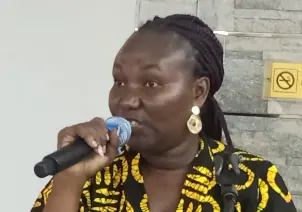
Namisio Joy Bage, Executive Director of YWCA South Sudan, emphasized that localization goes beyond merely shifting resources. It involves ensuring local actors, communities, and meaningful voices are central to decision-making, leadership, implementation, and accountability. According to Bage, women, girls, and communities must be at the center of all processes, not simply as beneficiaries, but as leaders, partners, and problem solvers equipped with valuable knowledge and solutions.
Bage highlighted the essential role of the media in shaping the narrative around localization. She encouraged responsible storytelling that avoids portraying communities merely through the lens of vulnerability and instead recognizes the resilient leadership, contributions, and solutions of the people of South Sudan. The media can play a crucial role in promoting localization by sharing stories that showcase the capabilities and strengths of local communities.
Ngbadurezare Michael Franco, Project Officer at YWCA, expressed gratitude to the participants for attending the roundtable. He emphasized that their involvement made the initiative possible and that the gathering was about working together to explore how the media can actively advance localization. Franco asked participants to consider what localization truly means and what can be achieved together as a united team.
The roundtable provided a platform for media practitioners and stakeholders to engage in open, honest, and practical discussions. Participants aimed to identify concrete ways the media can strengthen the localization agenda in South Sudan. The event recognized the significant role the media plays in reaching every corner of society and the responsibility that comes with it.
The quarterly localization roundtable is part of a broader effort to promote locally led humanitarian action in South Sudan. The event demonstrated the commitment of organizations like Oxfam and YWCA to supporting localization efforts and promoting meaningful partnerships with local communities. By working together, stakeholders can ensure that localization is a success in the country.
The collaboration between Oxfam, YWCA, and other stakeholders highlights the importance of partnerships in advancing localization. By engaging with the media and other key actors, organizations can promote a more inclusive and locally led approach to humanitarian action. This approach can help ensure that the needs and perspectives of local communities are at the forefront of decision-making and implementation.
Key points
- The quarterly localization roundtable aimed to explore ways the media can support localization efforts in South Sudan.
- Namisio Joy Bage emphasized the importance of responsible storytelling in promoting localization.
- The event demonstrated the commitment of organizations to supporting localization efforts and promoting meaningful partnerships with local communities.