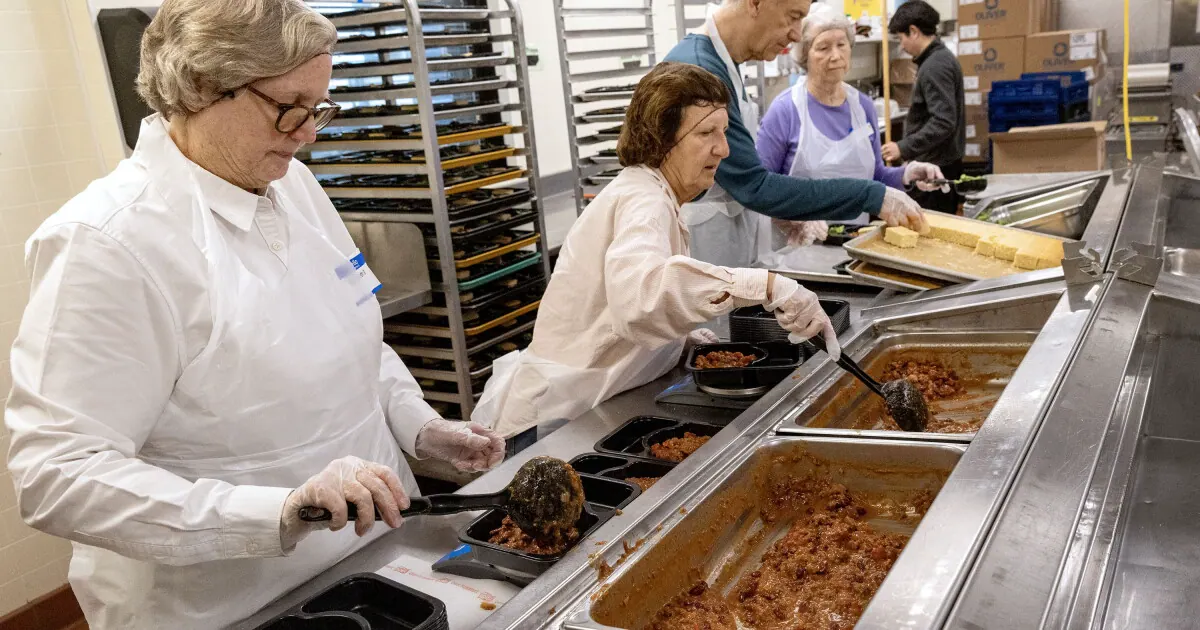
In a Boston neighborhood, a kitchen is bustling with volunteers preparing nutritious meals for Medicaid patients who struggle to shop for groceries and cook for themselves. This experiment aims to provide medically-tailored meals to those in need. One recipient, Vanessa Georges, who is in remission from throat cancer, credits these meals with helping her regain muscle mass, strength, and confidence. She also noticed a reduction in her doctor visits.
Research supports Georges' observation, with a study published in Nature Medicine finding that Massachusetts residents who received medically-tailored meals for at least three months required less medical care. The study, led by cardiologist Dariush Mozaffarian, found that these patients had 20% fewer emergency department visits and 31% fewer hospitalizations than similar patients who did not receive meals. Mozaffarian notes that this approach "actually saves the healthcare system money," which is a rare occurrence in healthcare.
The 2025 law, known as the One Big Beautiful Bill Act, slashed projected Medicaid funding by over $900 billion, leading to concerns about the future of medically-tailored meal programs. Many Republicans, including Sen. John Kennedy, believe that federal health spending is too high and riddled with fraud. As a result, states will have to make tough choices to fill funding gaps, potentially leading to program cuts, according to Amaya Diana, a policy analyst at KFF.
Despite these challenges, 13 states have received federal waivers to use Medicaid dollars to pay for meals as part of an approach known as "food is medicine." Three other programs are awaiting federal approval. However, the Trump administration has rescinded Biden-era guidance for Medicaid initiatives that address social needs, and it remains unclear how the administration will approach these programs.
Health leaders in the Trump administration, including Robert F. Kennedy Jr. and Mehmet Oz, have emphasized the importance of nutrition in healthcare. Oz noted that the healthcare system often prioritizes paying for surgeries over nutrition that could prevent hospitalizations. The Centers for Medicare & Medicaid Services is evaluating strategies, including medically tailored meals, to prevent illness and hospitalization.
The lack of federal guidance has created uncertainty for states that want to pursue nutrition programs in Medicaid, according to Katie Garfield, who studies social determinants of health at Harvard Law School's Center for Health Law and Policy Innovation. Lawmakers, including U.S. Rep. Jim McGovern, have had difficulty engaging administration officials on medically-tailored meals, despite the potential benefits of these programs.
Organizations like Community Servings in Boston are working to provide medically-tailored meals to those in need. The nonprofit prepares food with specific attention to sugar, salt, fat, vitamins, and minerals, based on a person's health needs. Researchers estimate that 10 million Americans would benefit from medically tailored meals, but only a small fraction are currently enrolled.
Key points
- Medically-tailored meal programs have shown promise in improving health and reducing healthcare costs.
- Medicaid budget cuts pose a threat to the future of these programs.
- The lack of federal guidance has created uncertainty for states that want to pursue nutrition programs in Medicaid.