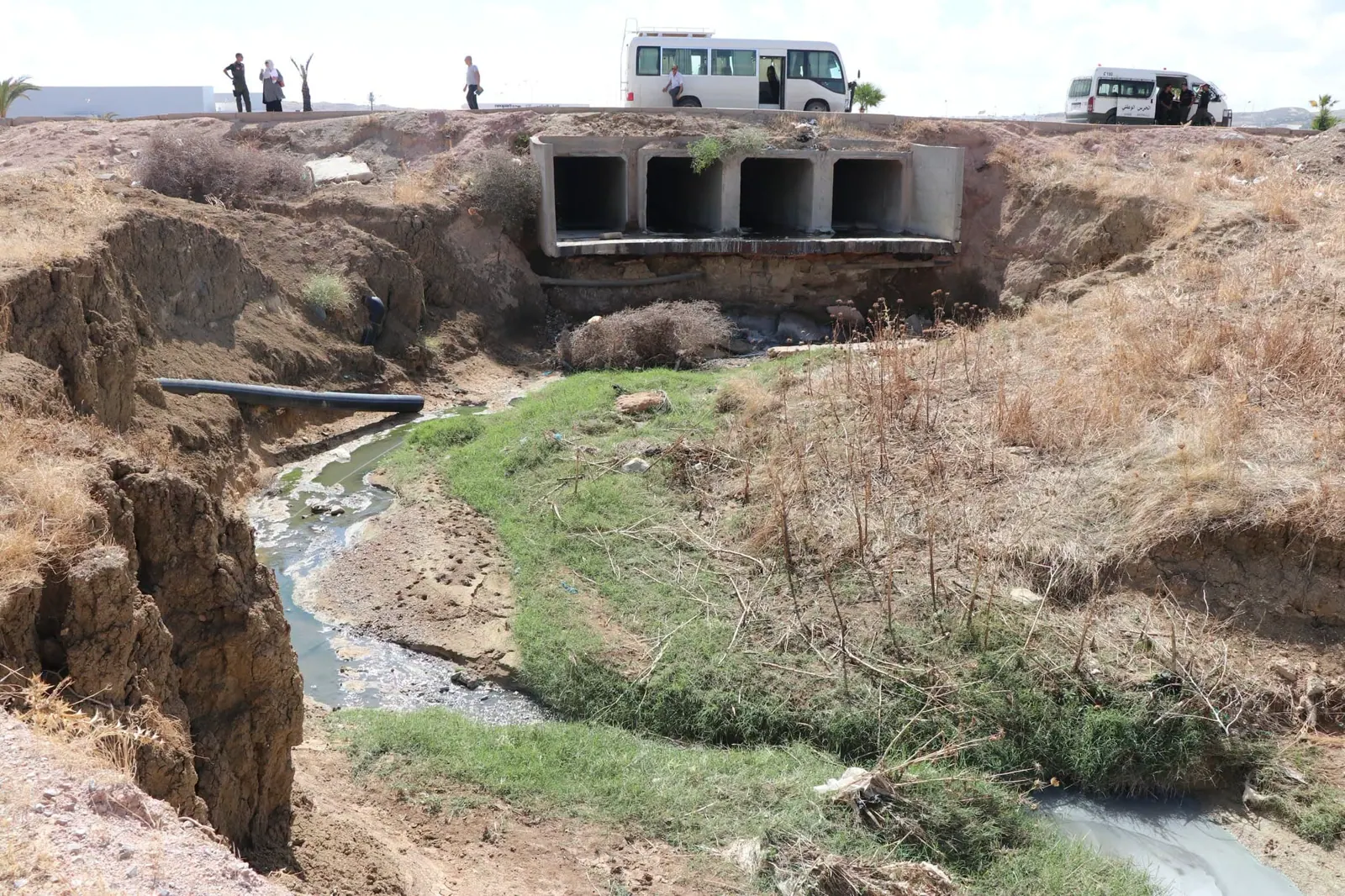
Tunisia's Ministry of Environment has reported 11 environmental infractions in La Manouba governorate, leading to a proposal for the temporary closure of three factories that failed to meet environmental standards. The operations were conducted by multidisciplinary teams comprising representatives from the Environment, Interior, Agriculture, and Health ministries. These teams inspected 18 sites in La Manouba as part of efforts to protect the Medjerda and Miliane river basins.
The inspections resulted in the detection of 11 environmental infractions, with three factories facing temporary closure proposals due to non-compliance with environmental norms. Additionally, four samples were collected from pollution sources that exceeded national limits for authorized discharges. Further control operations are planned in Jendouba and Béja governorates, which are also affected by the Medjerda basin.
In a related development, the Environment Ministry reported that control operations were carried out around the Miliane river, which spans across Ben Arous, Zaghouan, and Siliana governorates. The river, approximately 160 kilometers long, originates from Jebel Bargou in Siliana governorate and flows into the Gulf of Tunis. Its flow rate varies significantly with precipitation, reaching up to 200 cubic meters per second during flood periods.
The National Environment Protection Agency (ANPE) inspected 10 industrial facilities near the Miliane river and identified infractions. The agency has worked with facility managers to develop environmental upgrading programs, including the repair or installation of treatment plants. These efforts aim to mitigate pollution and enhance environmental compliance among industrial operators.
Several wastewater treatment projects are underway in the Miliane river basin. The Sud Miliane 2 station, with a capacity of 90,000 cubic meters per day, is 60% complete. The integrated Sud Miliane industrial station is 70% complete and expected to be operational by the end of 2026. The Khelidia station, with a capacity of 2,400 cubic meters per day, is already operational.
Additional wastewater treatment projects are in progress, including the Fahs station, which is 85% complete and expected to be finished by the end of the year. The Bir Mcharga station, with a capacity of 2,400 cubic meters per day, is 55% complete, while construction has begun in Jebel Oust, with a planned capacity of 1,750 cubic meters per day.
The Ministry of Environment emphasized its commitment to addressing pollution through strengthened controls on industrial facilities and the development of wastewater treatment infrastructure. The goal is to mitigate the impact of pollution on the environment and public health. The ministry also highlighted the El Attar wastewater valorization project, which covers several governorates, including Tunis, Ben Arous, Zaghouan, Sousse, and Sfax.
Key points
- 11 environmental infractions were identified in La Manouba governorate.
- Three factories face temporary closure proposals due to non-compliance with environmental standards.
- Several wastewater treatment projects are underway in the Miliane river basin to mitigate pollution.