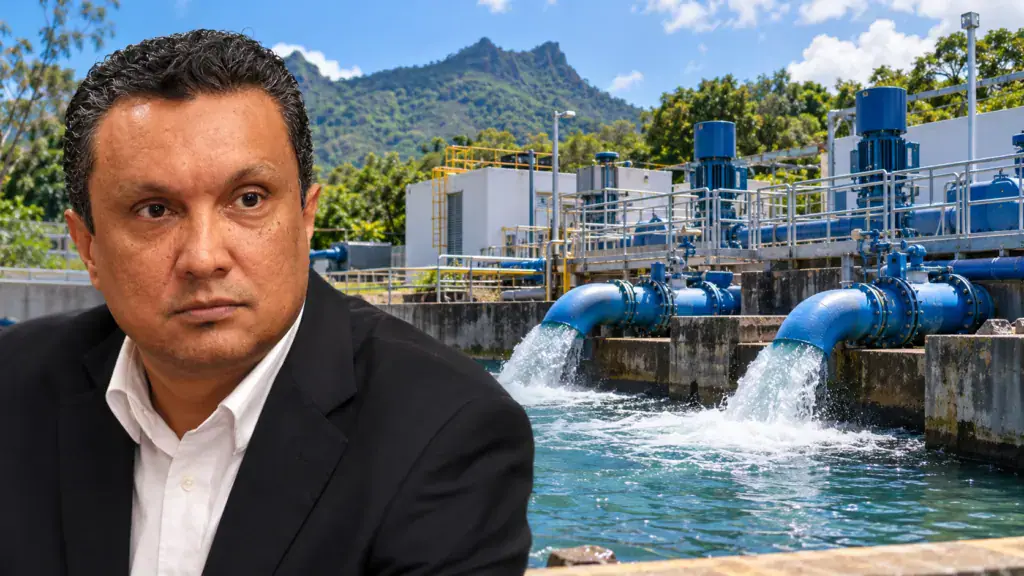
The Mauritian government has announced measures to address the ongoing water crisis, with the aim of increasing the island's water supply. Minister of Energy and Public Services, Patrick Assirvaden, visited Mare-Longue on Thursday, where he revealed plans to double the plant's capacity from 15,000 to 30,000 cubic meters of water per day. The upgrade is expected to be achieved through the installation of additional electrical equipment, allowing pumps to operate continuously.
The increased capacity at Mare-Longue will be complemented by the mobilization of new boreholes, in collaboration with the private sector, which are expected to add up to 12,000 cubic meters of water to the network. Another possibility being explored is the transfer of water from Tamarind Falls to Mare-Longue. These measures are part of a broader effort to address the water shortages affecting thousands of households across the island.
The Central Water Authority (CWA) is also working to reinforce the supply to Mare-aux-Vacoas. According to CWA Director General, Shiam Thannoo, the activation of a second pump could enable the transfer of an additional 10,000 to 14,000 cubic meters of water. These volumes are based on operational targets and do not yet reflect actual daily transfers.
Despite the announced plans, many residents continue to face disruptions to their water supply. The CWA has deployed 31 tanker trucks to respond to the most critical situations, with 15 vehicles assigned to the Upper and Lower Mare-aux-Vacoas areas. However, residents report difficulties in accessing water, even during scheduled distribution hours.
The effectiveness of the new measures will depend on the actual volumes transferred and the impact on households. The priority is to restore a predictable distribution schedule and provide clear communication on hours of supply, interruptions, and emergency measures. For families struggling with dry taps, the key indicator of success will be the return of a regular water supply.
The water crisis in Mauritius has highlighted the need for sustained investment in the island's water infrastructure. The government's efforts to address the shortages are ongoing, with a focus on both short-term solutions and long-term strategies to ensure a reliable water supply. The situation remains a challenge for residents and authorities alike.
As the situation continues to unfold, residents will be watching closely to see if the announced measures bring relief to their communities. The government's commitment to addressing the water crisis is clear, but the impact of these efforts will only be known in the coming days and weeks.
Key points
- The Mare-Longue water treatment plant is set to double its capacity to 30,000 cubic meters per day.
- The CWA plans to transfer an additional 10,000 to 14,000 cubic meters of water to Mare-aux-Vacoas.
- Despite efforts to address the crisis, thousands of households continue to face water shortages.