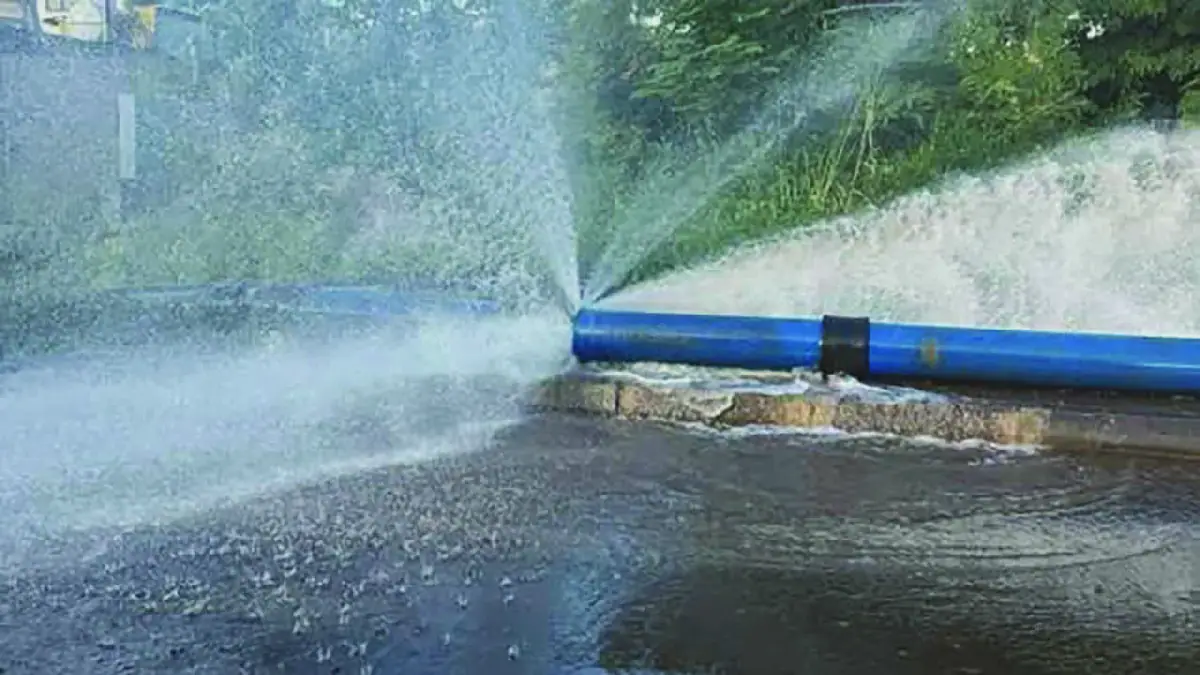
The Central Water Authority (CWA) of Mauritius has been grappling with financial losses for years, primarily due to water leaks and an aging network. CWA's Managing Director, Shiam Thannoo, recently mentioned a possible 50% increase in water tariffs for households, but clarified that it is not being considered at present. This has reignited discussions on the financial sustainability of the organization and potential reforms.
The CWA's current predicament stems from a significant gap between the cost of water production and the revenue generated from sales. Producing one cubic meter of potable water costs approximately Rs 24, while it is sold at an average price of around Rs 14. The last major revision of tariffs occurred in 2012. The CWA is responsible for treating, pumping, maintaining, and distributing water, further complicating its financial situation.
The issue of Non-Revenue Water (NRW) is central to the CWA's financial struggles. In 2025, water treatment plants produced 332.6 million cubic meters of water, but only 132.1 million cubic meters were sold. The National Audit Office reported that about 195 million cubic meters of water were not generating revenue in the 2024-2025 financial year, accounting for nearly 60% of the water produced. Aging and defective pipes are major contributors to this problem.
Experts, including Vassen Kauppaymuthoo, an oceanographer and environmental engineer, and Farook Mowlabaccus, a hydrologist and former CWA technician, stress that addressing NRW and repairing leaks should be prioritized over increasing water tariffs. They argue that a significant portion of NRW is due to physical leaks, illegal connections, and metering errors. Mowlabaccus suggests that the NRW rate should be reduced to 25% before considering further tariff hikes.
The CWA's infrastructure challenges are further highlighted by the need to replace aging pipes. According to Minister Patrick Assirvaden, replacing the approximately 1,500 km of defective pipes would cost Rs 37.5 billion. The government has allocated funds, including Rs 2.9 billion from an Indian line of credit and Rs 792 million for 2026-2027, but experts argue that more needs to be done to address the scale of the problem.
Consumer advocacy groups, such as the Association des consommateurs de l'île Maurice (Acim), represented by Jayen Chellum, emphasize that the government should take responsibility for finding solutions to the CWA's financial woes. They argue that increasing water tariffs for households, especially in the current economic climate, is not a viable option and that privatization of the CWA is not a suitable solution.
The CWA's financial sustainability and the need for infrastructure upgrades remain pressing concerns for Mauritius. With the government's support, the organization aims to improve its services, reduce water losses, and ensure a reliable water supply for the island nation's residents. The way forward will likely involve a combination of investments in infrastructure, efficiency measures, and careful consideration of water pricing strategies.
Key points
- The Central Water Authority faces significant financial challenges due to aging infrastructure and water leaks, with a substantial portion of water produced not generating revenue.
- Experts recommend prioritizing repairs and reducing Non-Revenue Water over increasing water tariffs for households.
- The government has allocated funds to address infrastructure challenges, but more needs to be done to ensure the long-term sustainability of the CWA.