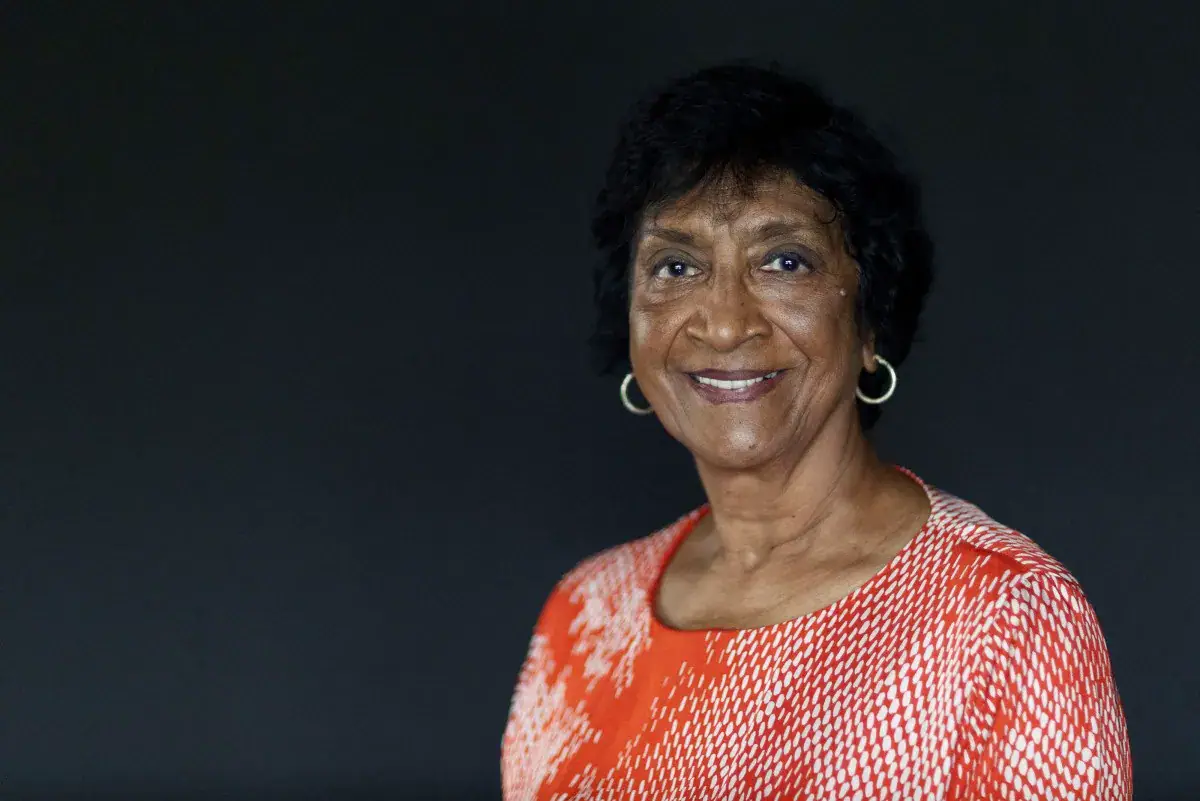
The Nobel Committee recently announced Navi Pillay as the winner of the 2026 Peace Prize, recognizing her tireless efforts in defending international law and promoting justice and accountability. Pillay, a South African icon of human rights, joins the ranks of other illustrious South African laureates like Nelson Mandela and Desmond Tutu. Her Indian heritage sets her apart, with her grandparents emigrating to South Africa in the 1890s as indentured laborers on sugar cane plantations, a fate shared by many in Mauritius and other countries.
Born on September 23, 1941, in racially segregated Durban, Pillay was raised by her Tamil parents, Narainsamy Naidoo and a housewife mother. With the help of the local Tamil community, she attended the University of Natal, earning her bachelor's degree in law. She later pursued her master's degree at Harvard Law School and made history in 1988 by becoming the first colored South African woman to obtain a doctorate in juridical science.
Upon returning to South Africa, Pillay opened the first legal practice established by a female lawyer in Natal. For three decades, she represented anti-apartheid activists, trade unionists, and victims of repression, police brutality, and torture. As one of Nelson Mandela's lawyers, she exposed human rights violations in apartheid South Africa. In 1991, Mandela appointed her as the first non-white woman to sit as a judge in the South African High Court.
Pillay's international career in human rights began in 1991 when the UN General Assembly elected her as a judge to the International Criminal Tribunal for Rwanda (ICTR). She served as its president from 1999 to 2003 and helped innovate the tribunal by recognizing rape and sexual violence as acts of genocide. Her career escalated with her appointment as a judge in 2003 to the International Criminal Court, where she shaped foundational procedures and jurisprudence.
In 2008, Pillay was appointed by the UN General Assembly as the UN High Commissioner for Human Rights, providing her with a global platform to denounce human rights abuses worldwide. As Commissioner, she advocated for marginalized populations, migrant rights, gender equality, and accountability for human rights violations in conflict zones. She investigated allegations of genocide against Tamils in Sri Lanka, particularly the Mullivaikkal massacre, and called for an international investigation into civilian deaths and war crimes.
Pillay's subsequent appointment as the Chairperson of the UN Independent Commission of Inquiry on the Occupied Palestinian Territory in 2021 led to a thorough and uncompromising inquiry. The commission concluded that several war crimes, humanitarian law breaches, and genocide had taken place against Palestinians in Gaza. She denounced the inaction of the international community, stating that the absence of action to stop genocide amounts to complicity.
Despite Mauritius sharing a historical heritage with Pillay, the country has yet to issue an official congratulatory note to this global human rights icon. It is considered a missed opportunity for Mauritius to recognize one of its distinguished daughters and celebrate her achievements, particularly on Indian Indentured Labour Day on November 2.
Key points
- Mauritius has failed to congratulate Navi Pillay on her 2026 Nobel Peace Prize win.
- Navi Pillay's Indian heritage connects her to Mauritius, a country with a shared history of indentured labor.
- Pillay's achievements include her work as a human rights lawyer, judge, and UN High Commissioner, shaping international law and promoting justice and accountability.