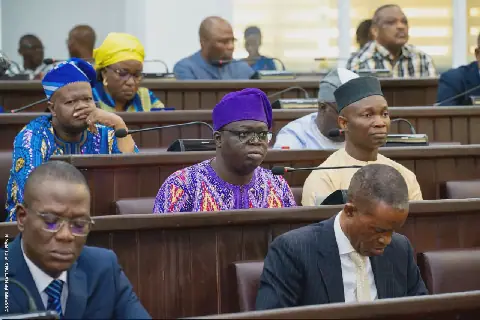
It has been two years since Mauritius' Alliance du Changement won a landslide victory with a historic score of 60-0 in the general elections. The alliance's mandate was clear: restore transparency, revive the economy, and provide prospects for the youth. However, the country's political landscape has recently witnessed unprecedented unrest and social crisis, with many questioning the alliance's ability to deliver on its promises. The situation has raised concerns about the country's stability and economic future.
The alliance's cohesion began to fray just 24 months after its formation, with several key departures. In April 2026, Paul Bérenger, along with Joanna Bérenger and Chetan Baboolall, left the alliance, citing disagreements with the Mouvement Militant (MMM). This led to the creation of the Fron Militan Progresis (FMP) in May 2026. Additionally, Véronique Leu-Govind resigned from the government in August 2026 due to an import scandal involving her husband, Gulshan Govind. These departures have weakened the government's ability to implement policies and address the country's economic challenges.
The country's financial situation has also deteriorated significantly. The public debt has reached a record high of Rs 700.6 billion, with a 19.5% increase in just two years. The debt per citizen stands at Rs 565,000, with the domestic debt accounting for 81.8% of the total. While the government claims a slight decrease in the debt-to-GDP ratio, this is largely due to a revision in the country's GDP calculation, rather than any actual reduction in debt.
The economic challenges facing Mauritius are further complicated by a decline in growth projections. The leader of the Reform Party, Roshi Bhadain, has criticized the government's downward revision of growth from 3.2% to 2.8%, warning that this could lead to a significant increase in the public deficit. With the festive season approaching, many Mauritians are feeling the pinch of economic instability, with concerns about the rising cost of living and the government's ability to manage the economy.
The current instability has significant implications for the country's households. The inability of the fragmented government to implement a coherent economic strategy has put pressure on family budgets and raised concerns about the affordability of basic necessities. As the country approaches the end of the year, many are questioning whether the Alliance du Changement can still deliver on its promises and stabilize the economy.
The situation in Mauritius has raised concerns about the country's long-term economic prospects. With a record debt and declining growth projections, the government faces significant challenges in addressing the country's economic challenges. The opposition has called for urgent action to address the country's economic instability and restore confidence in the government's ability to manage the economy.
As Mauritius looks to the future, it is clear that the country needs a coherent and effective economic strategy to address its challenges. The Alliance du Changement must work to restore stability and confidence in the government, while also implementing policies to address the country's economic challenges. Failure to do so could have significant consequences for the country's future prosperity and stability.
Key points
- Mauritius' public debt has reached a record high of Rs 700.6 billion.
- The country's economic challenges have been exacerbated by a decline in growth projections.
- The Alliance du Changement's cohesion has frayed significantly in just 24 months, with several key departures.