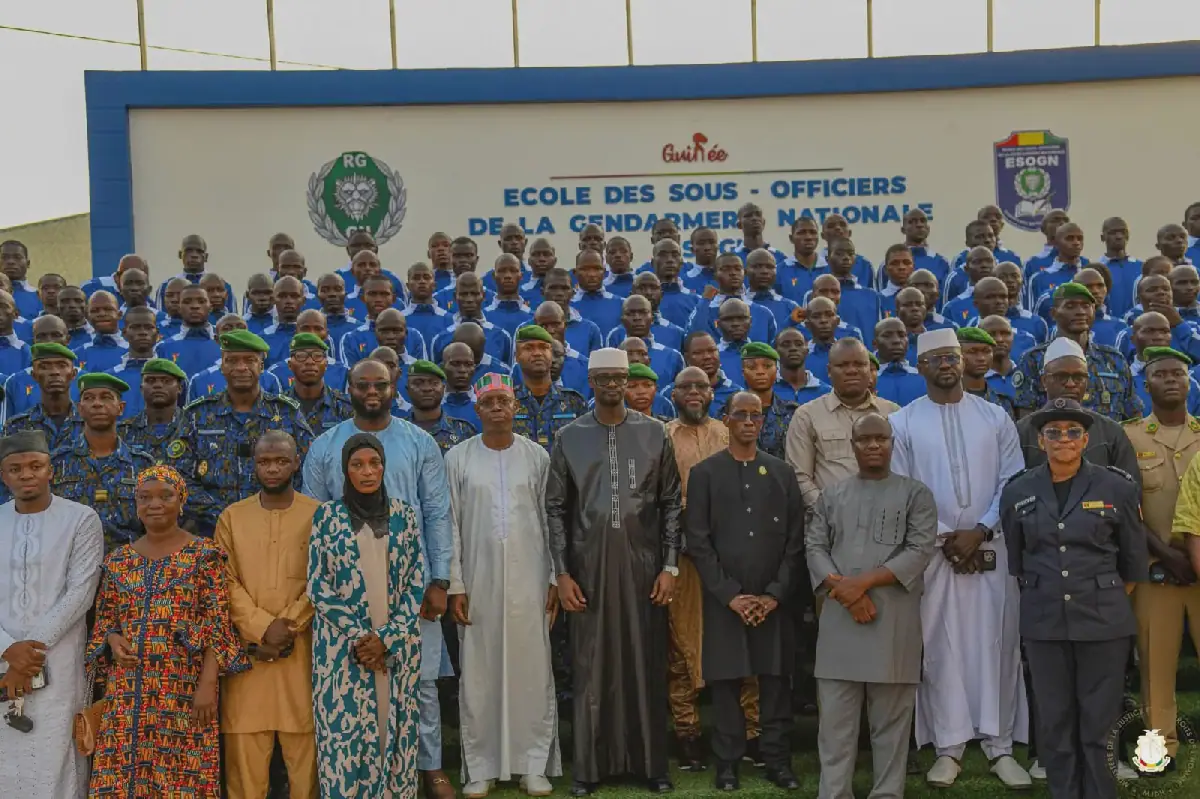
In Guinea, 520 ex-prisoners who benefited from a presidential pardon in October have completed a 30-day civic education and social reintegration program. The closing ceremony took place at the École des sous-officiers de la gendarmerie nationale de Sonfonia, with the Minister of Justice and Human Rights, Ibrahima Sory II Tounkara, in attendance. This initiative is part of a new approach to reinsertion, focusing on combining penal sanctions with redemption and social reintegration.
The presidential pardon was granted by President Mamadi Doumbouya through two successive decrees in October. According to Minister Tounkara, this measure reflects a progressive philosophy, emphasizing that punishment should be accompanied by redemption, transformation, and reintegration. The program aimed to equip the beneficiaries with essential civic knowledge and skills to facilitate their return into society.
During the 30-day program, the beneficiaries received education on civic symbols, citizens' rights and duties, respect for state authority, responsibility, commitment, discipline, self-confidence, tolerance, and probity. They also learned about offenses related to honor, drug-related crimes, theft, rape, recidivism, and evidence of recidivism. Upon completion, they received certificates of achievement, marking a new beginning in their lives.
Minister Tounkara emphasized that obtaining the certificate does not erase past actions but represents a fresh start with individual responsibility towards society. He warned the beneficiaries that they must maintain their commitment to positive change and avoid reverting to previous behaviors that led to their imprisonment. The minister stressed the importance of learning from past mistakes and not tolerating recidivism.
Ibrahima Sory Bangoura, speaking on behalf of the 520 beneficiaries, expressed gratitude to President Doumbouya for the pardon and the training initiative, which they consider a first in Guinea's history. Bangoura highlighted the valuable knowledge acquired during the program and assured that they would strive to be model citizens, upholding the trust placed in them.
The beneficiaries' pledge to become model citizens was a significant aspect of the ceremony. They acknowledged the lessons learned from their past errors and the guidance provided by experienced instructors, including gendarmes and magistrates. By completing the program, they demonstrated their commitment to positive change and reintegration into Guinean society.
The Guinean government's initiative to provide civic training to pardoned prisoners reflects a broader approach to rehabilitation and social reintegration. By focusing on education and personal development, the program aims to reduce recidivism and promote a safer, more cohesive society. The success of this initiative will likely be closely monitored, as it sets a precedent for similar programs in the future.
Key points
- The program is part of President Mamadi Doumbouya's progressive approach to penal sanctions, focusing on redemption and social reintegration.