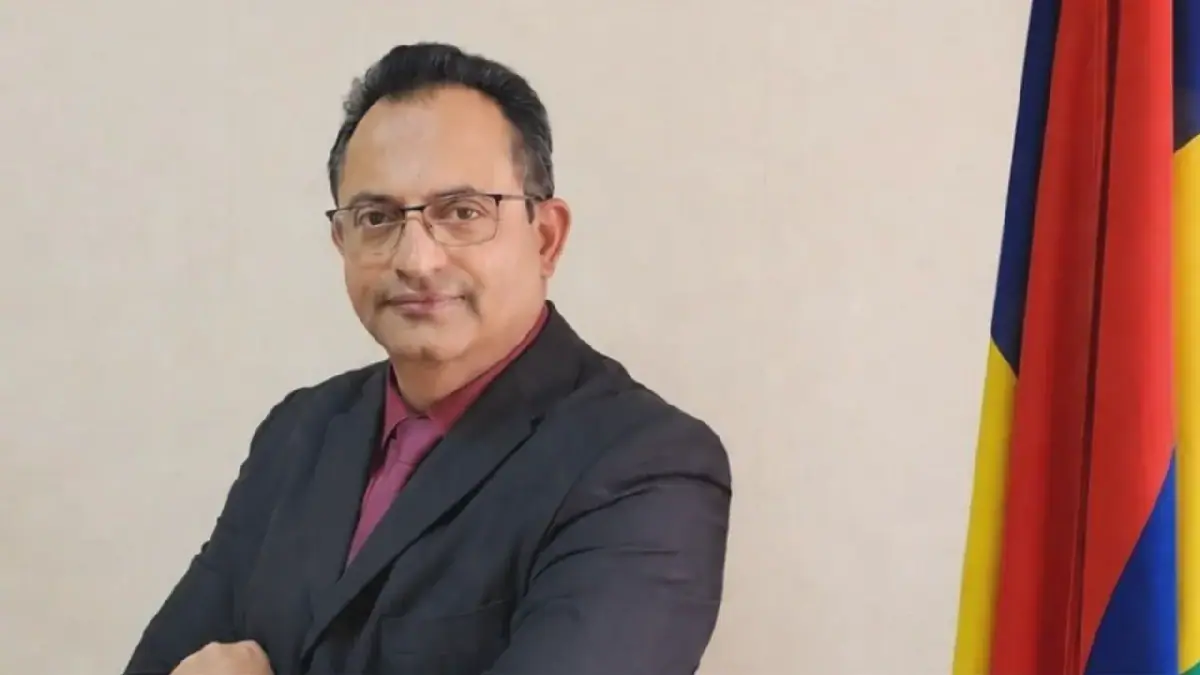
The Mauritian government has recently launched the National Initiative for Civic Education (NICE) program, aimed at promoting a sense of national belonging, social cohesion, discipline, and intercultural dialogue among young people. The program, which is currently benefiting 200 Grade 8 students, is designed to be implemented in four axes - Belong, Become, Be Ready, Serve - and consists of 22 modules. According to Yugesh Panday, Programme Manager, the program's objectives align with the Prime Minister's 2026 New Year's address and Budget 2026-2027.
Unlike previous editions in 2012 and 2013, the NICE program has a stronger institutional foundation, coordinated by the Division of Interior Affairs within the Prime Minister's Office, in collaboration with the Ministry of Education and several other ministries, bodies, and partner organizations. A key innovation is that the 2026 pilot program is designed as the first phase of a national rollout in 2027, with the curriculum integrated into the Mauritius Institute of Education (MIE) to ensure its sustainability.
The program's expected outcomes include a measurable change in civic attitudes, such as a sense of belonging, discipline, and service spirit, among participants. These outcomes will be assessed through instruments administered before and after the program, supplemented by feedback from parents and schools. The program's long-term success will be evaluated based on its institutionalization within the national curriculum, with efforts from partners starting in 2027.
A special allocation has been made in the current Budget to support the program financially, which also benefits from contributions from the private sector, including major companies such as Mauritius Telecom, SBM, and Decathlon/ER Group. The program operates through four zonal training centers for non-residential weeks and two base camps for residential weeks, with a three-tier command structure providing continuous coverage.
The direct beneficiaries of the program are 200 selected Grade 8 students, evenly distributed between public, partially funded, and private schools, including participants from Rodrigues and Agalega. The program also indirectly benefits families, schools, and eventually the entire national Grade 8 cohort when it is rolled out in 2027. Citizen participation is encouraged through various channels, including parental involvement, private sector sponsorship, and public awareness campaigns.
Potential risks to the program's success include resistance from some quarters, which could undermine its legitimacy. The program's managers emphasize the importance of clear communication and regular explanations to avoid misunderstandings and minimize negative impacts. Maintaining family support over time is also crucial, relying heavily on the work of school administrators, particularly rectors, who play a key role in securing parental collaboration.
The involvement of a Singaporean consultant in the program has raised questions, but according to Yugesh Panday, their role is limited to providing a specific perspective on the program, while the detailed curriculum design, methodology, institutional coordination, and operational implementation are handled entirely by Mauritian professionals. This approach is part of a recognized practice in international technical cooperation, aiming to strengthen rather than replace national capacities.
Key points
- The NICE program aims to promote civic education and national identity among Mauritian youth.
- The program benefits from a strong institutional foundation and private sector support.
- A Singaporean consultant is involved in the program to provide expertise, but the core implementation is led by Mauritian professionals.