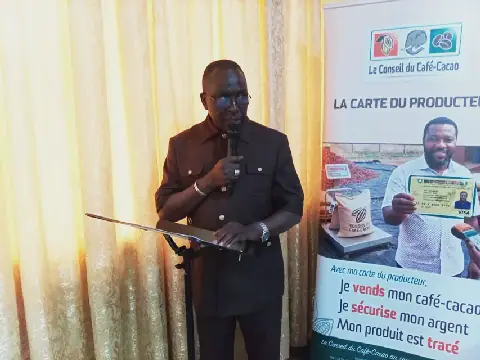
The Mauritian government has announced emergency measures to address the ongoing water crisis in the country. Public Utilities Minister Patrick Assirvaden revealed that ten new boreholes will be deployed across affected regions by the end of October to pump an extra 31,000 cubic metres of water into the network. This move aims to compensate for severe shortfalls at the La Marie treatment plant. The minister made the announcement during a press conference following a water crisis committee meeting on Tuesday, 6 October.
The water crisis has been exacerbated by critically low levels at the Mare-aux-Vacoas reservoir, which currently stands at a 35.9% filling rate. This is a significant decline compared to 88.6% at the same time last year. The reservoir supplies the La Marie station with 61,000 cubic metres of water daily, down from the normal 110,000 cubic metres. The minister warned that falling water levels at Mare-aux-Vacoas will increasingly impact the La Marie station.
To tackle the supply crisis, the government is rolling out a series of immediate infrastructure interventions. In addition to the emergency pumping exercise via the ten new boreholes, the ministry has ordered 15 containerised pressure filtration units (CPFs). Seven of these units have already been received, and once fully deployed to problem areas, they are expected to pump and supply an extra 33,000 cubic metres of water to the network.
The government is also set to install a second pipeline from the Mare-Longue reservoir, which feeds the La Marie station. This pipeline will secure an additional 15,000 cubic metres of water to help feed the plant, bypassing current supply limits. The minister confirmed that the emergency pumping exercise and pipeline installation will be carried out swiftly to inject additional water into the system in the coming weeks.
Looking beyond immediate relief, Minister Assirvaden outlined medium and long-term solutions under a “Marshall plan”. He stressed his determination to include desalination in the strategy and emphasised that Mauritius must uncover alternative ways to draw water from untraditional sources. The minister warned that the situation is bound to deteriorate in the face of climate change.
As part of these alternative measures, Minister Assirvaden highlighted the potential of treated wastewater. The Wastewater Management Authority discharges roughly 55,000 cubic metres of treated water daily, which could be utilised, notably for irrigation. The minister's proposals aim to mitigate the effects of the water crisis and ensure a sustainable solution for the future.
The water crisis committee meeting and subsequent press conference demonstrate the government's commitment to addressing the issue. With the implementation of these emergency measures and long-term solutions, the government hopes to alleviate the water shortage and ensure a stable water supply for the island's residents. The situation remains a priority for the government, with further updates expected in the coming weeks.
Key points
- The Mauritian government has ordered 15 containerised pressure filtration units to tackle the water crisis.
- Ten new boreholes will be deployed across affected regions by the end of October to pump an extra 31,000 cubic metres of water into the network.
- The government is exploring alternative sources of water, including desalination and treated wastewater.