The island nation of Mauritius is gearing up for a challenging summer as El Niño intensifies, bringing with it severe drought and heat conditions. The Meteorological Service has forecast a hotter and drier summer than usual, with the El Niño phenomenon expected to reach its peak between October and December. This has raised concerns about the country's ability to cope with the strain on its water and electricity resources.
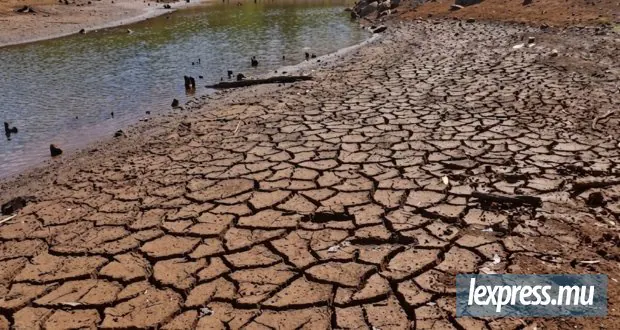
The Central Water Authority (CWA) has reported that the Mare-aux-Vacoas reservoir, the country's main water reserve, was only 37.6% full on September 27. According to CWA General Manager Shyam Thanoo, the reservoir loses approximately 0.3% of its capacity daily, which means it will reach a critical level of 20% by the end of November. This would impact around 150,000 consumers in the Plaines-Wilhems, Moka, and Rivière-Noire districts.
The CWA has implemented restrictions on water usage since June 17, which have slowed down the decline in water levels but not halted it. The Nicolière reservoir, which serves around 90,000 to 95,000 consumers, is currently around 45% full and also used for irrigation. Shyam Thanoo notes that compared to last year, there is a 30% shortfall in water levels in both Mare-aux-Vacoas and La Nicolière reservoirs.
To mitigate the crisis, the CWA is exploring various options, including regulating water withdrawals using a valve to reduce the daily decline in water levels to 0.2%. If this measure is insufficient, stricter restrictions on water distribution may be implemented. The CWA is also considering activating a filter under pressure container (CPF) to capture and treat water from the Papayes river for injection into the network.
Hydrologist Farook Mowlabaccus believes that Mauritius is already experiencing a drought, which is expected to persist. He advises the CWA to prepare for the worst-case scenario, assuming that rainfall will not occur until early February. Mowlabaccus also suggests that the CWA should consider redirecting water from Mare-Longue to supplement the dwindling levels in Mare-aux-Vacoas.
The CWA is urging residents to take steps to conserve water, including storing 250 to 500 liters of water per household and adopting practices like rainwater harvesting, as seen in Rodrigues. Shyam Thanoo emphasizes that the situation is critical and that everyone must play a role in mitigating the effects of the drought.
The looming drought and heat challenges have raised concerns about the potential impact on the country's economy, infrastructure, and daily life. As the situation continues to unfold, the government and relevant authorities will need to work together to implement effective measures to address the crisis and minimize its effects on the population.
Key points
- Mauritius faces severe drought and heat challenges due to El Niño, with water reserves dwindling and electricity demand soaring.