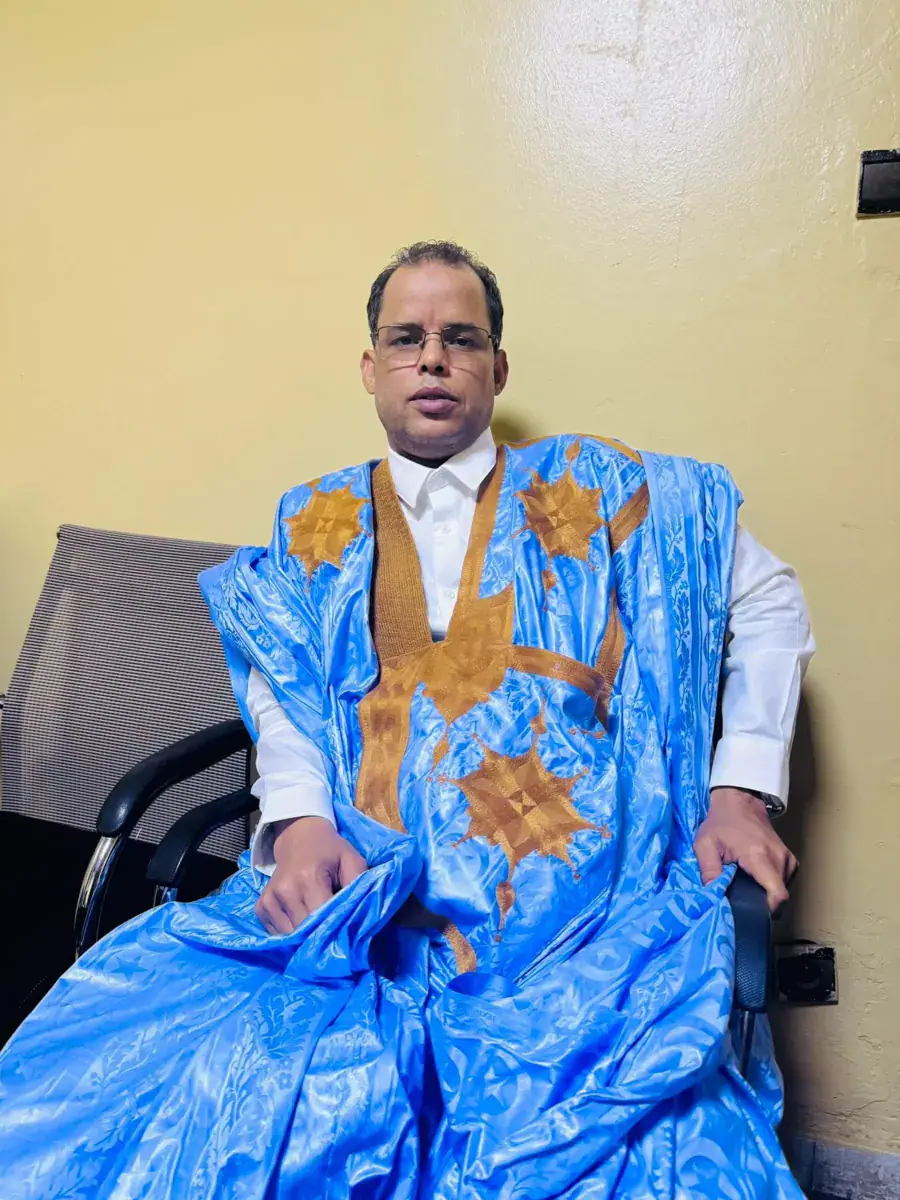
Mauritanian journalist Muhammad Amin Sidi Arrefa revealed during an interrogation that he received two financial transfers from blogger Sidi Mohamed Akmach, totaling 90,000 old ouguiyas. Akmach reportedly sent Arrefa 70,000 ouguiyas after informing him of the birth of a child, and an additional 20,000 ouguiyas to help with his son's medical treatment.
Arrefa stated that Akmach would occasionally send him written blog posts to arrange and add his name and tag to before returning them. He also collaborated with Akmach on editing critical texts during the previous presidential term. Arrefa's relationship with Akmach dates back to their childhood and education, and their communication resumed after Akmach moved to the United States and began his social media activity.
Investigators questioned Arrefa about the sources of information in Akmach's blog posts and broadcasts between 2024 and 2026. These posts discussed the presence of foreign military personnel at a base in Mauritania, the deployment of military units along the eastern border, and an energy agreement. Arrefa claimed to be unaware of the sources of this information.
Arrefa denied knowledge of the sources behind two specific blog posts published by Akmach in November 2023 and March 2024. One post addressed European cooperation with a neighboring country to combat irregular migration, while the other discussed the alleged marginalization of a particular segment of society.
The interrogation also touched on broadcasts by Hafedh Ould Loubed and Dhiaa El Hak, which allegedly contained security information and incited unrest. Arrefa stated that he has no connection to them and is unaware of the sources of their information or their motivations for publishing it.
The case, known as "Madouni Al-Kharij" (Outside Bloggers), involves Mauritania's military and the government's efforts to monitor and regulate online content. Arrefa's testimony provides insight into the connections between journalists, bloggers, and the information they share online.
The investigation into Arrefa and Akmach's activities highlights the complexities of freedom of expression and information in Mauritania. The case raises questions about the limits of online discourse and the role of journalists and bloggers in shaping public opinion.
Key points
- The journalist's testimony revealed financial transactions between him and the blogger, as well as their collaboration on online content.
- The investigation focused on the sources of information in the blogger's posts and broadcasts, which discussed sensitive topics such as military presence and energy agreements.
- The case underscores the challenges of balancing free expression with national security concerns in Mauritania.
Reporting sources
- معلومات الجيش و90 ألف أوقية.. هذا ما كشفه ولد عرفة لمحققي «مدوني الخارج» · saharamedias.net