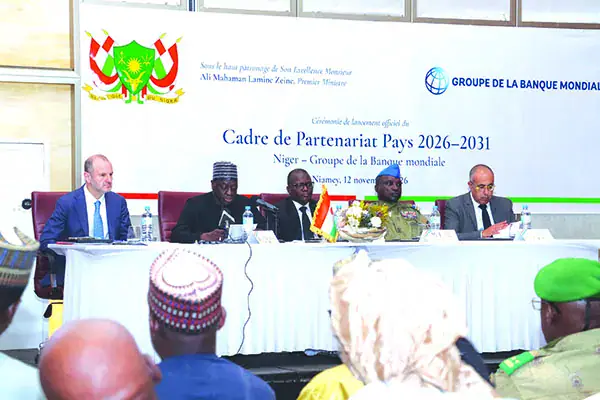
The Nigerien government and the World Bank have launched a new partnership framework for 2026-2031, aimed at supporting the country's development goals. The framework focuses on four key priorities: developing human capital, expanding access to electricity, increasing agricultural productivity, and improving budget management and financial sector development. This partnership is expected to be supported by an indicative envelope of $719.1 million from the International Development Association (IDA) for 2026-2028.
The partnership framework aims to improve education, vocational training, healthcare, nutrition, and access to water and sanitation. It also seeks to increase access to electricity, with a target of 60% coverage by 2030. Additionally, the framework focuses on enhancing agricultural productivity, promoting irrigation, land restoration, and resilient agriculture, as well as supporting the transformation of agricultural and pastoral value chains through industrialization.
A new project, the Support for the Financial Sector and Micro, Small, and Medium Enterprise Financing Project (PASFI), has been launched with a $250 million grant from the IDA. The project aims to improve financial intermediation and access to financing for micro, small, and medium-sized enterprises (MSMEs), with a focus on women and youth. The project will cover all eight regions of Niger until March 31, 2031.
The PASFI project has four complementary components: strengthening the liquidity of financial institutions, establishing a partial credit guarantee mechanism, providing technical assistance and capacity building for financial institutions and enterprises, and coordinating, managing, monitoring, and evaluating the project. The project aims to finance 6,394 MSMEs, facilitate $332.5 million in credits, and mobilize $171 million in private capital.
The Nigerien Minister of Economy and Finance, Mamane Laouali Abdou Rafa, encouraged entrepreneurs and business leaders to present solid initiatives, use resources responsibly, and honor their repayment commitments. He also emphasized the importance of transparency, speed, and result-based monitoring in implementing the project.
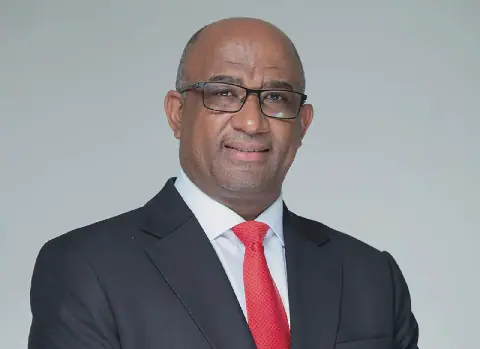
World Bank Vice President, Ousmane Diagana, highlighted that Niger is one of the youngest countries in the world, with over 500,000 young people reaching working age every year. He emphasized that the partnership framework aims to create better-quality jobs for Nigeriens, particularly youth and women, and that it is built on strong foundations rather than a list of projects.
The new partnership framework and PASFI project are expected to contribute to Niger's economic development and job creation, particularly for youth and women. The project's focus on supporting MSMEs and improving financial intermediation is seen as a key step towards promoting economic growth and reducing poverty in the country.
Key points
- The partnership framework focuses on four key priorities: human capital development, electricity access, agricultural productivity, and financial sector development.