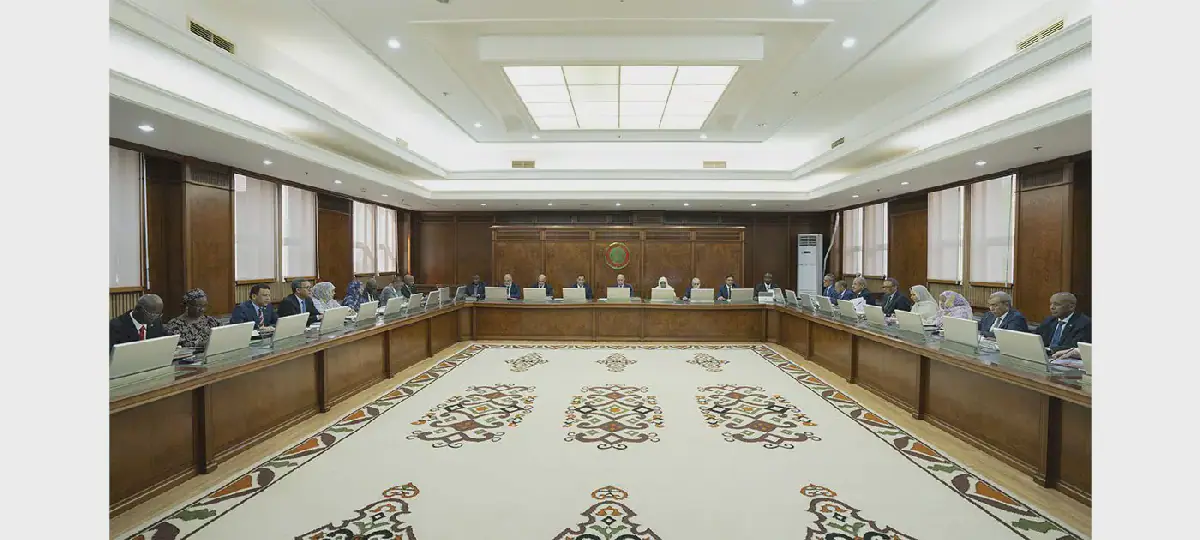
Mauritania's Council of Ministers convened on November 4, 2026, under the leadership of President Mohamed Ould Cheikh El Ghazouani. The meeting saw the approval of several draft decrees aimed at enhancing the country's regulatory framework. These include a decree to implement a new public procurement code, aligning with international best practices. The code seeks to improve the institutional framework for public procurement, promote transparency, and strengthen accountability.
The new public procurement code introduces significant improvements, including the establishment of a public procurement regulatory authority, a monitoring committee, and public procurement contracting committees. These entities will be equipped with necessary tools to effectively carry out their tasks. The code also aims to professionalize public procurement actors, enhance their responsibilities, and promote good governance. Furthermore, it seeks to reduce corruption risks through asset disclosure requirements and gradual digitalization of procurement procedures.
In addition to the public procurement code, the Council of Ministers approved a decree amending certain provisions of the customs code. The amendment aims to correct translation errors and ensure consistency with military and security terminology. The decree also seeks to harmonize human resource management, including training, evaluation, compensation, and retirement, with existing regulations for military and security personnel.
Another decree approved during the meeting establishes a special system for teachers and higher education researchers. The decree aims to unify and update the regulatory framework for these professionals, aligning with international standards. It also seeks to promote academic qualifications as a key factor in recruitment and career advancement. The decree clarifies conditions for recruitment, promotion, and professional rights and obligations for teachers and researchers.
The Council of Ministers also approved several appointments, including the president of the board of directors of the Mauritanian Hydrocarbons Company, the president and members of the board of directors of the Mauritanian Maritime Affairs Agency, and the president and members of the board of directors of the National Laboratory for Public Works. These appointments aim to strengthen the governance and management of key sectors in the country.
During the meeting, the Prime Minister presented an outline of the government's policy statement, which will be submitted to the National Assembly for review. The policy statement outlines the government's priorities and objectives for the coming period. The Minister of Foreign Affairs and Cooperation presented a report on the international situation, while the Minister of Interior and Decentralization presented a report on the domestic situation.
The cabinet meeting demonstrates the government's commitment to implementing reforms and improving governance in Mauritania. The approved decrees and policy statement are expected to have a positive impact on the country's development and stability. Key stakeholders, including civil society and the private sector, are likely to play a crucial role in the implementation and success of these initiatives.
Key points
- The Mauritanian government has approved a new public procurement code aimed at enhancing transparency and accountability.
- The government has also established a special system for teachers and higher education researchers to unify and update their regulatory framework.
- Several key appointments were made during the meeting, including the president of the Mauritanian Hydrocarbons Company.