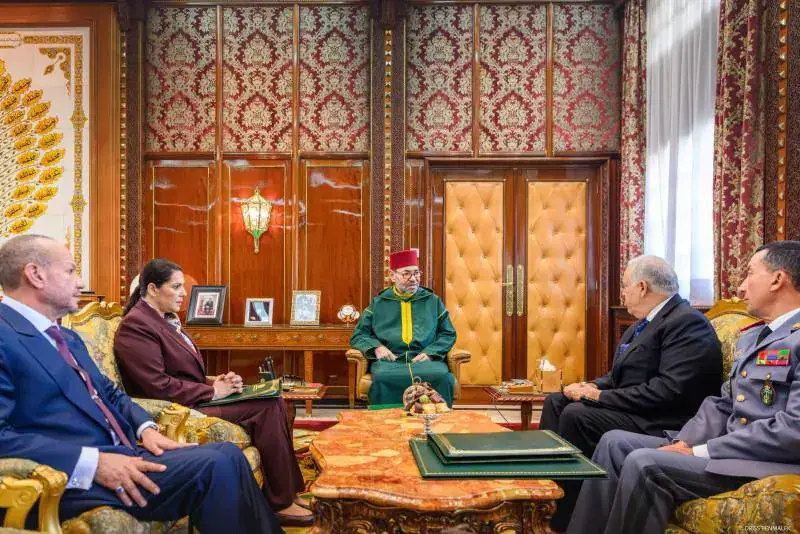
King Mohammed VI of Morocco has ordered measures to protect the country's territorial integrity, national security, and citizens' safety in the southern provinces. The monarch chaired a working meeting at the Royal Palace in Rabat to discuss the implications of the UN Security Council's failure to renew the mandate of the United Nations Mission for the Referendum in Western Sahara (MINURSO). The meeting was attended by senior officials, including Head of Government Fatima Ezzahra El Mansouri and Interior Minister Abdelouafi Laftit.
The King set three priorities for the coming period: preserving Morocco's territorial integrity and national unity, protecting national security, and ensuring citizens' safety and reassurance, particularly in the southern provinces. These instructions come at a turning point in the Western Sahara dispute, as Morocco argues that the end of MINURSO's mandate should lead to a reassessment of the UN's approach to the issue. The priorities aim to reinforce security, development, and the Autonomy Plan as the basis for the next phase.
The meeting also focused on maintaining development projects in the southern provinces, with the monarch calling for these projects to continue. Officials were instructed to closely monitor developments and remain prepared to respond to changes on the ground. The emphasis on development reflects Morocco's position that the future of the southern provinces in Western Sahara should be shaped by stability, economic progress, and the well-being of their residents.
The Royal Cabinet reaffirmed Morocco's commitment to the ceasefire, describing it as a voluntary commitment that will remain unchanged despite the end of MINURSO's mandate. The statement said the UN mission had repeatedly failed to monitor compliance with the ceasefire and establish the consequences of violations. The King tasked the MINURSO Coordination Office with coordinating and accompanying the process of liquidating and withdrawing the mission in cooperation with the United Nations.
MINURSO was established in 1991 following a ceasefire between Morocco and the Polisario Front, with a mandate that included preparing a referendum on the territory's future and monitoring the ceasefire. However, the referendum process faced major challenges, particularly over voter eligibility, and never materialized amid persistent disagreements and a lack of cooperation from the Polisario Front and Algeria.
The debate over MINURSO's future reflects a wider shift in the diplomatic process, with Morocco's Autonomy Plan gaining ground as the basis for a negotiated political solution. On October 30, the Security Council failed to adopt either of two competing draft resolutions on MINURSO, leaving the mission without a renewed mandate after October 31. The outcome represents an opportunity to move beyond a framework that has failed to deliver its original objective and toward a political process based on the realities of the dispute.
The failure of both proposals has been seen as a significant diplomatic breakthrough for Morocco, creating an opportunity to move beyond a UN framework that has remained in place for 35 years without delivering the referendum it was established to organize. Morocco is now preparing for a new phase, with a focus on stability, economic progress, and the well-being of residents in the southern provinces.
Key points
- Morocco's King Mohammed VI has instructed officials to safeguard the country's territorial integrity and national security following the expiration of the UN mission in Western Sahara, MINURSO.
- The King set three priorities for the coming period: preserving Morocco's territorial integrity and national unity, protecting national security, and ensuring citizens' safety and reassurance.
- The end of MINURSO's mandate represents an opportunity to move beyond a framework that has failed to deliver its original objective and toward a political process based on the realities of the dispute.