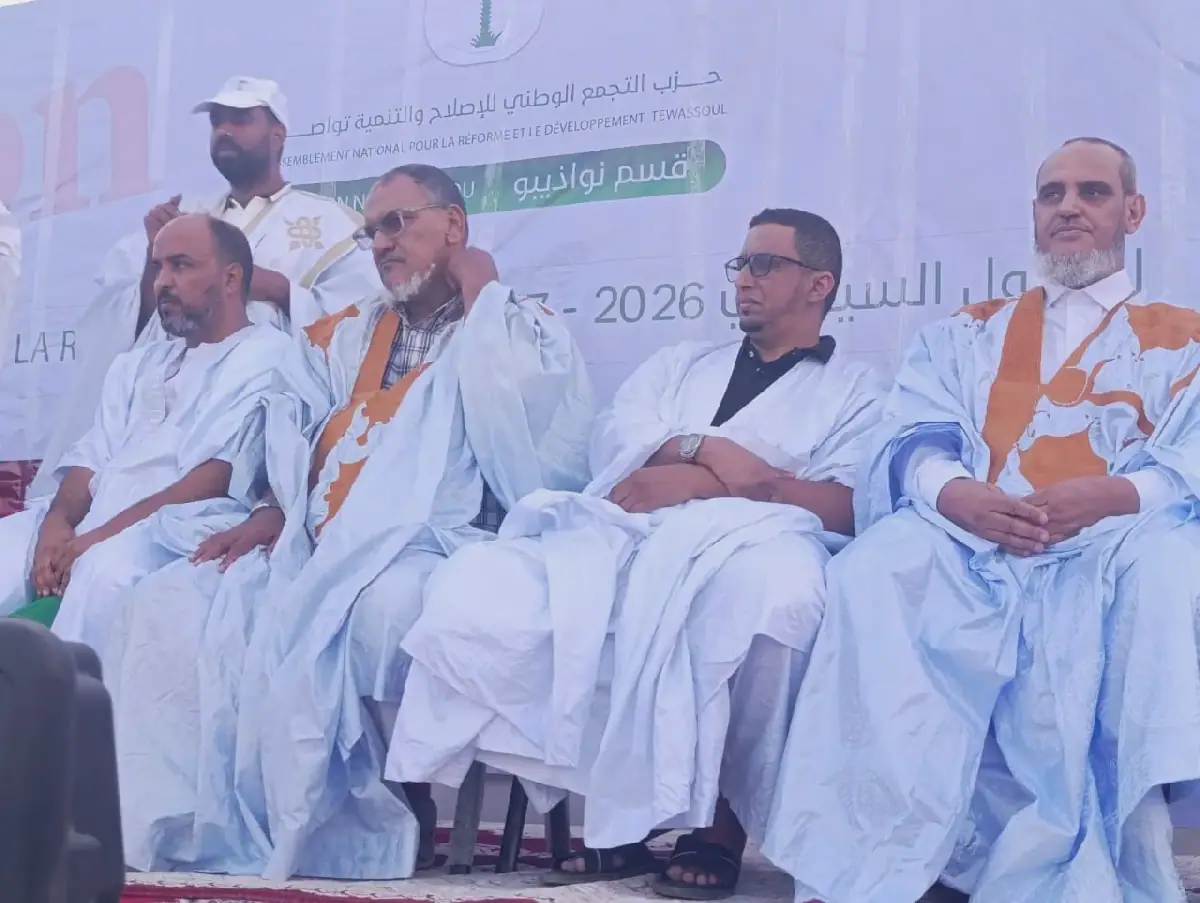
Mauritania's opposition leader, Hamadi Sidi Moukhtar, has criticized the living conditions in Nouadhibou, the country's second-largest city. In a speech to a crowd of supporters, Moukhtar said that the city is experiencing a rapid decline in services across various sectors. He cited poor access to water, electricity, healthcare, education, and sanitation as major concerns. The city's residents are also struggling with the environmental impacts of the fishing industry, including smoke pollution from fish processing.
Moukhtar, who leads the National Rally for Reform and Development (RNDR) party, also highlighted the economic difficulties faced by the city's residents. He called for increased salaries to match the rising cost of living, which he said is grinding down the population. The opposition leader expressed surprise that Nouadhibou University lacks a permanent teaching staff and relies on contract workers. He also criticized the absence of specialized courses in Islamic law, calling for their introduction in all academic institutions.
The opposition leader warned of the dangers of concentrating the country's wealth in the hands of a small elite, describing this phenomenon as "corruption." He also cautioned against authoritarianism, which he sees as a major threat to stability and social cohesion. Moukhtar listed some of the hallmarks of authoritarianism, including the monopolization of decision-making, the failure of oversight institutions, and the reduction of the state and its power to individual leaders.
Moukhtar's comments come as the country prepares for presidential elections. The opposition leader reiterated his party's rejection of a third term for the incumbent president, citing concerns about stability, social harmony, and national unity. He also expressed concern about restrictions on individual freedoms and the neglect of citizens' needs.
The city's residents are facing significant challenges, including a shortage of basic services and economic hardship. Moukhtar's speech reflects the growing frustration among the population and the need for urgent reforms. The opposition leader's call for improved services, increased salaries, and greater transparency is likely to resonate with many Mauritanians.
The Mauritanian government has not yet responded to Moukhtar's comments. However, the opposition leader's words are likely to put pressure on the authorities to address the country's challenges. The international community is also watching the situation closely, with many partners urging the government to prioritize good governance, transparency, and human rights.
The situation in Nouadhibou highlights the need for sustained efforts to address the country's development challenges. The Mauritanian government must prioritize the needs of its citizens, including access to basic services, economic opportunities, and good governance. The opposition's concerns about authoritarianism and corruption must also be addressed to ensure stability and prosperity for all Mauritanians.
Key points
- The opposition leader's comments reflect growing frustration among the population and the need for urgent reforms in Mauritania.