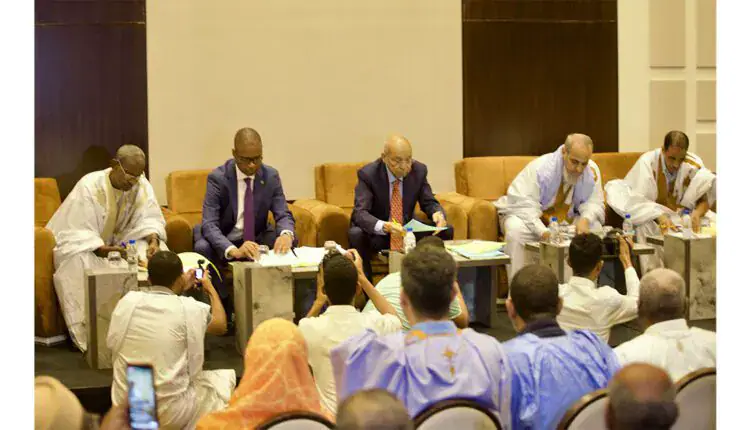
The national dialogue in Mauritania, initiated by President Ghazouani in 2024, has been making slow progress. One of the major hurdles is the issue of languages, which has been a point of contention for years. The country has four main languages: Arabic, Pulaar, Soninke, and Wolof, with Arabic being the official language. However, the use of these languages in education, administration, and public life has been a source of tension.
The current language policy in Mauritania has its roots in the country's colonial past. The French colonial legacy has left a lasting impact, with French being widely used in administration, economy, and higher education. However, the Arabization of education in the 1970s and 1980s led to tensions between Arabophone and Negro-Mauritanian communities. The language issue has become a symbol of identity and a source of conflict.
Proponents of language reform argue that recognizing the rights of speakers of Pulaar, Soninke, and Wolof to use their languages in public life is essential for their dignity and citizenship. They also argue that teaching children in their mother tongue can improve learning outcomes. Furthermore, recognizing linguistic diversity can help to promote social cohesion and reduce feelings of exclusion.
However, there are also concerns about the potential consequences of language reform. Some argue that making multiple languages official would be too costly and would require significant investment in teacher training, materials, and infrastructure. Others worry that language reform could weaken national unity or undermine the existing education system.
The issue of language has been a priority for some opposition parties, including the CAD 2029 coalition and the Alliance for Justice and Democracy. They argue that language reform is essential for promoting social justice and addressing the country's historical legacy of slavery and discrimination.
Despite the challenges, there are potential solutions that could be explored. One approach is to distinguish between the official language, which ensures national unity, and the right of individuals to use their own language without penalty. This could involve introducing national languages into primary education, providing access to public information and civil services in multiple languages, or promoting the use of mother tongues in public media.
The Académie des Langues Nationales, established in 2017, could play a key role in promoting linguistic diversity and language reform. However, it will require adequate resources and authority to be effective. The national dialogue has a narrow window to address the language issue, which has been a source of tension for years. If the dialogue fails to make progress on this issue, it risks being overshadowed by more pressing institutional concerns.
Key points
- The national dialogue in Mauritania faces challenges in addressing the issue of language, which has been a source of tension for years.
- Proponents of language reform argue that recognizing linguistic diversity is essential for promoting social cohesion and reducing feelings of exclusion.
- The Académie des Langues Nationales could play a key role in promoting linguistic diversity and language reform.
Reporting sources
- Mauritanie : le dialogue national à l’épreuve des langues · Initiatives News