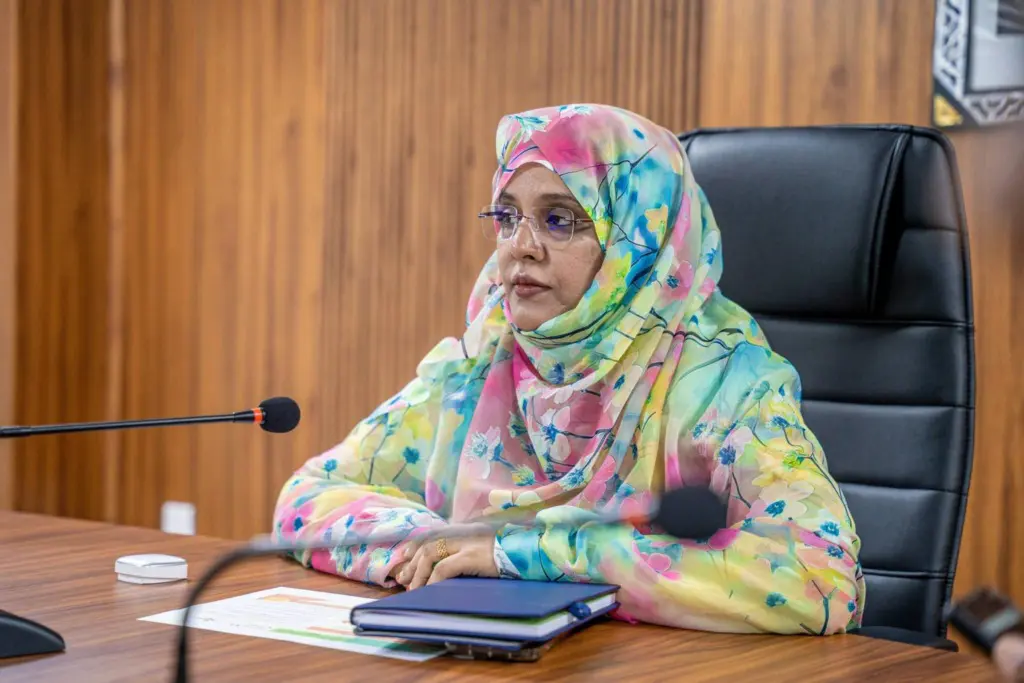
Mauritania's Minister of Education and Educational Reform, Houda Babah, has announced that the primary focus for the 2026-2027 school year will be on improving the quality of education and student outcomes. This shift in priorities comes after significant efforts to expand educational infrastructure, recruit teachers, and provide necessary equipment. The minister emphasized the need to assess the impact of educational reforms within classrooms through enhanced evaluation and monitoring tools, as well as continuous teacher training.
The ministry's plan for the upcoming school year includes several key initiatives aimed at enhancing education quality. These initiatives involve improving learning processes, developing evaluation tools, addressing shortcomings in schools, and strengthening continuous teacher training. Additionally, the ministry aims to enhance the management of human and material resources, increase the use of digitalization, and leverage data in decision-making processes.
Over the past year, the education sector has implemented several significant measures. These include the recruitment of approximately 2,283 teachers, bringing the total number of teachers recruited since 2019 to 15,729. Furthermore, 575 new classrooms were opened in 2026, with plans for an additional 3,340 classrooms to be introduced in the near future. These developments are part of a broader effort to enhance educational infrastructure.
The ministry has also made substantial efforts in supporting students. A total of 165,350 school uniforms were provided, and 1,738 scholarships were awarded to 249,461 students. The ministry launched a boarding school program and established a fund to support teacher housing. These initiatives aim to create a more supportive learning environment.
In the area of teacher training, 4,864 teachers and educational facilitators received specialized training. The ministry developed a reference guide for teacher competencies and created the "Tanwir" platform for continuous professional development. These efforts are designed to enhance the skills and knowledge of teachers.
Significant progress has been made in curriculum development and educational resources. The ministry completed the development of primary and secondary education programs in line with the framework law. A total of 1,800,600 textbooks were printed, and the network of school book distribution points was expanded. These initiatives are crucial for ensuring that students have access to quality educational materials.
The ministry also implemented various digitalization measures, including the digitization of diplomas linked to the "Hewiyeti" application, the adoption of a digital platform for promotions and transfers, and the distribution of educational materials and equipment to schools. For the upcoming school year, the ministry plans to continue its efforts to improve public education, governance, and resource management, while addressing existing challenges.
Key points
- The ministry's primary focus for the 2026-2027 school year is on improving the quality of education and student outcomes.
- Significant investments have been made in educational infrastructure, including the recruitment of 15,729 teachers since 2019 and the introduction of 575 new classrooms in 2026.
- The ministry has implemented various initiatives to support students, including providing 165,350 school uniforms and 1,738 scholarships to 249,461 students.