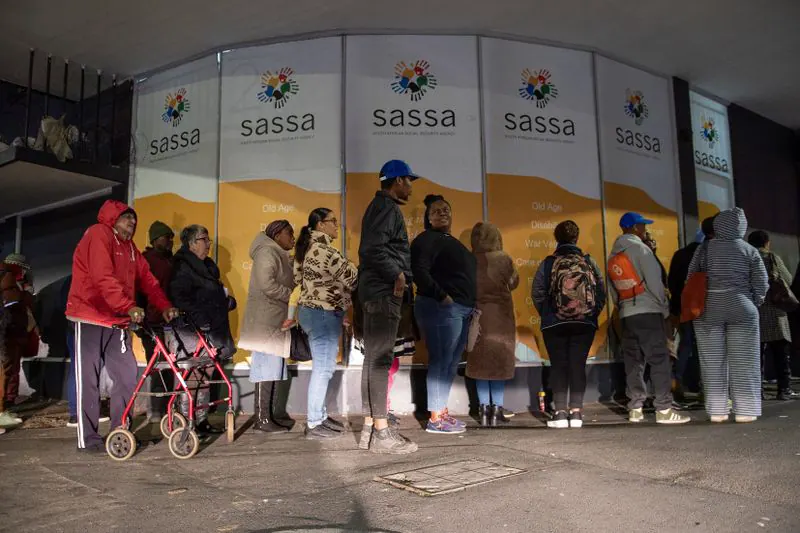
Caregivers in South Africa are struggling to provide for their families as the R580 Child Support Grant falls short of the R868 food poverty line. The grant, intended to support vulnerable children, has not kept pace with inflation, leaving many parents and caregivers with little or no work trapped in debt and hunger. Rising electricity and food costs have further eroded household stability, forcing some to rely on credit to purchase essentials like bread.
Visits to homes of grant beneficiaries in several provinces revealed the desperation experienced by caregivers trying to meet family needs on insufficient grants. Many had been frustrated in their efforts to find work, while others relied on intermittent employment that could be lost with little notice. In some households, grandparents receiving the Older Person's Grant were using a portion of the money to support their grandchildren, trying to bridge the gap created by an insufficient Child Support Grant and rampant unemployment.
The Pietermaritzburg Economic Justice and Dignity Group's Household Affordability Index reported that the average cost of a household food basket was R5,488.06 in September 2026, with a year-on-year increase of R108.64. The Child Support Grant increased by R20 in April 2026, from R560 to R580, but this has not kept pace with rising costs. Christal Adonis, a mother of three in Cape Town, receives Child Support Grants for her two older children but struggles to make ends meet.
Adonis estimated that she spent about R400 on electricity each month, with the cost of keeping the lights on increasing. To make it through the month, she sometimes buys items like bread on credit at the local tuckshop and pays them off when the next month's grant money comes in. However, this traps her in a vicious cycle of debt. She believes the grant should be higher, as the cost of living is very high and prices continue to rise.
Naomi Dlamini, a resident of Ekurhuleni, Gauteng, uses part of her Older Person's Grant to assist with care for her three grandchildren, including one with autism. She spends about R1,500 on food in the days after receiving her grant money, buying in bulk to last through as much of the month as possible. However, she struggles to make the food last, and by 15 to 16 days into the month, it is finished.
According to Kelle Howson, senior researcher at the Institute for Economic Justice, the value of the Child Support Grant has eroded since its introduction in 1998 due to a failure to provide inflationary increases every year. The Pietermaritzburg Economic Justice and Dignity Group estimates that the monthly cost of a basic nutritious diet for a child is R970.27, far above the current grant.
The erosion of the Child Support Grant has significant consequences for child stunting and malnutrition. Mervyn Abrahams, programme coordinator at PMBEJD, noted that understanding the affordability of food requires considering the relationship between income and the cost of goods or services. For those without work, relying entirely on social grants, access to food becomes even more difficult, highlighting the need for a more adequate grant.
Key points
- The R580 Child Support Grant is 33% below the R868 food poverty line.
- Caregivers are trapped in debt and hunger due to insufficient grants and rising costs.
- The value of the Child Support Grant has eroded since its introduction in 1998.