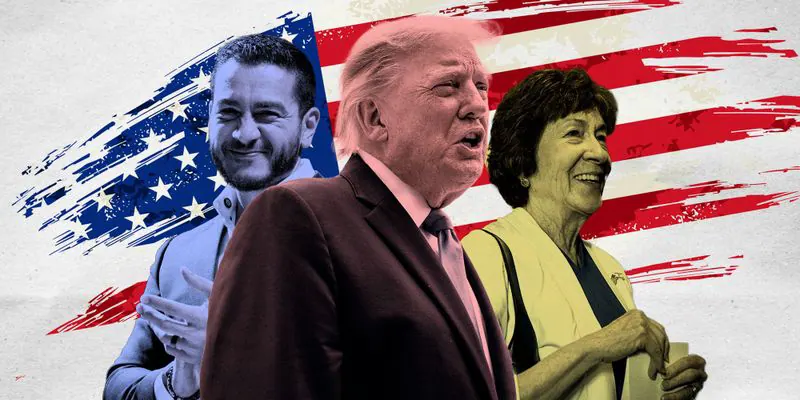
The United States is set to hold its midterm elections, a crucial event in the country's democratic process. The elections, scheduled to take place on a specific date, will see every seat in the House of Representatives and a third of the Senate up for grabs. Additionally, many state offices will be contested, potentially reshaping the country's governance landscape. The midterm elections are significant, as they occur halfway through a presidential term, and their outcome can have far-reaching implications.
The US electoral system is based on a complex framework of choices, compromises, and precedents established by the Constitution. The document, which came into effect in 1789, created separate and shared powers among the executive, legislative, and judicial branches of government. The president is elected every four years, senators serve six-year terms, and members of the House of Representatives serve two-year terms. This framework has been in place for over two centuries, with the system designed to balance power and ensure representation.
The Senate and House of Representatives have distinct roles and compositions. The Senate has 100 members, with two senators representing each state, serving six-year terms. In contrast, the House of Representatives has 435 members, with seats apportioned according to each state's population. This means that states with larger populations, such as California and Texas, have more representatives than smaller states like Wyoming and Delaware. The differences in term lengths and representation structures reflect the Founding Fathers' intent to create a system of checks and balances.
Elections in the US are conducted by individual states, which have a significant amount of autonomy in administering the process. This is due to the country's federal system, which reserves powers to the states. As a result, each state has its own rules and regulations regarding voter eligibility, registration, and voting procedures. While the national government has established some guidelines, particularly regarding campaign finance and postal system usage, states have considerable flexibility in running their elections.
Primary elections and caucuses are critical components of the US electoral process. These events, organized by parties, allow voters to select their preferred candidates for the midterm elections. Primaries involve eligible voters picking their candidate from among declared candidates within a party, while caucuses are physical meetings where party members choose candidates. The outcomes of these events can significantly influence the final lineup of candidates in the midterm elections.
The likely outcome of the midterm elections is uncertain, but many commentators and polls suggest that the Democrats may gain control of the House of Representatives. The party's prospects are buoyed by President Donald Trump's historically low polling numbers, largely due to public dissatisfaction with issues like economic performance, foreign policy, and immigration. If the Democrats win one or both houses of Congress, they will have significant influence over the legislative agenda and can hold the Trump administration accountable through hearings and subpoenas.
The midterm elections have important implications for the Trump administration's final two years in office. If the Democrats gain control of Congress, they can schedule votes on proposed legislation and hold hearings on administration policies. This could lead to a more contentious and polarized political environment, with the Democrats using their powers to scrutinize the administration's actions. Ultimately, the midterm elections will shape the country's governance landscape and have far-reaching consequences for the Trump administration and beyond.
Key points
- The US midterm elections will decide every House seat, a third of the Senate, and many state offices.
- The elections have significant implications for the Trump administration's final two years in office.
- The outcome of the midterm elections can lead to a shift in power dynamics between the Democrats and Republicans.