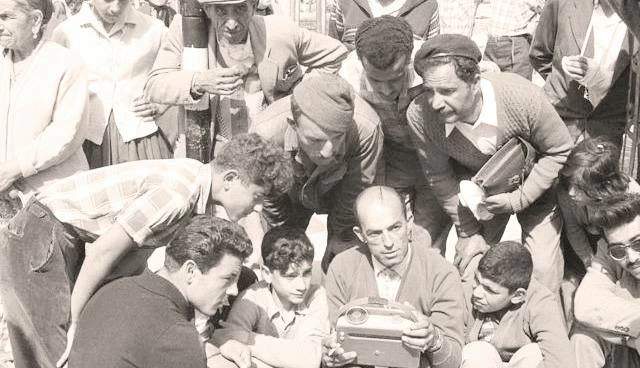
In the past, Egyptians did not need smartphones or urgent notifications to learn about major events. News traveled through various channels, including radio broadcasts from within homes, loudspeakers in streets, neighbors sharing information, and official statements that everyone awaited to confirm what was happening. During the initial hours of the October War, these simple means became a window for Egyptians to follow events, tracking developments with a mix of anticipation and anxiety.
Syd Mansour, 80, recalls the moment he learned the war had started. He was gathered with his family around the radio when the broadcast began. As the announcement started, conversation within the household ceased. "We were sitting, listening to the radio, and as soon as the statement began, we knew something big had happened, and everyone wanted to hear from the others," he says.
Rehab Mansour, 65, remembers how news of the war reached her home through neighbors. With no rapid communication tools available, news spread quickly between houses in the neighborhood. "The news came from the neighbors; one would tell another that the war had started, and soon everyone knew, and the whole street was talking about the same thing," she explains.
Ahmed El-Sayed, 63, recounts learning about the war's start through loudspeakers. The announcements and alerts reached residents in the streets, prompting people to step out and inquire about the latest developments. "We heard the voice in the street, and people started stopping and asking what had happened. After that, we learned the war had begun, and everyone tried to get information from those around them," he narrates.
Rania Sayed, 65, still remembers the first hours she and her family learned about the war. Official statements were the source everyone turned to for confirmation of the rumors people were sharing. "We heard a lot of talk from people, but we didn't believe it until the official statement was broadcast. Only then did we feel the news was confirmed and the war had really started," she notes.
These recollections highlight how different the experience of learning about significant events was in the past, far removed from the instantaneity of today's digital age. The spread of news through basic, non-digital means played a crucial role in uniting people in their quest for information and understanding of unfolding events.
The memories shared by these individuals offer a glimpse into how the Egyptian public was informed about the October War, showcasing the reliance on traditional communication methods and the collective experience of awaiting and sharing news. These stories underscore the significance of these moments in history and how they were perceived and lived through by ordinary people.
Key points
- Egyptians relied on radio, loudspeakers, and neighbors to learn about the October War.