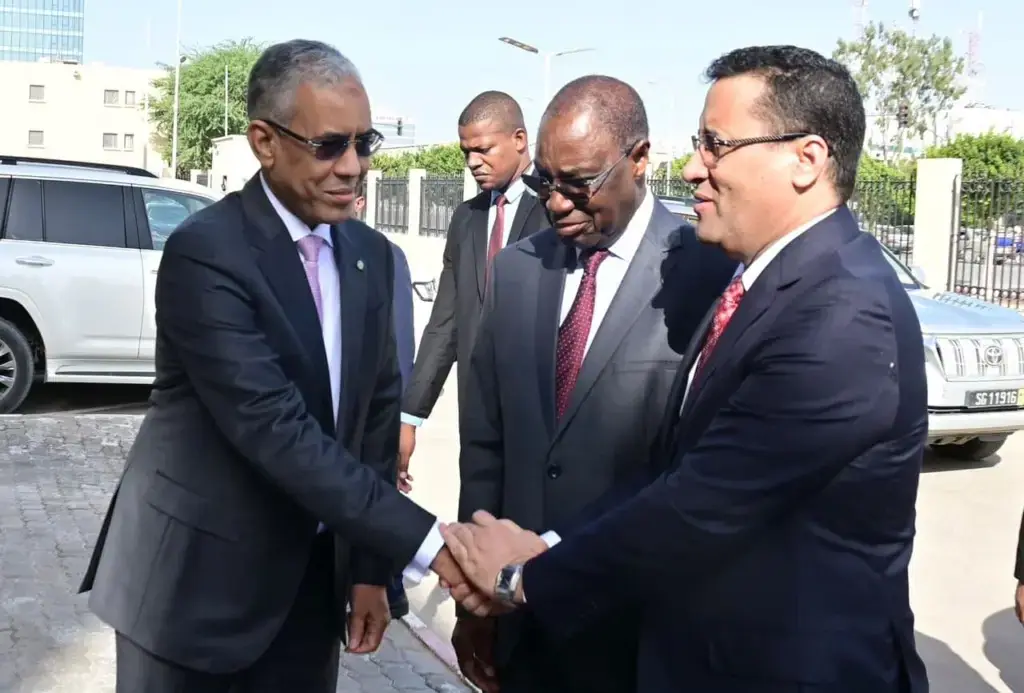
Mauritania's Prime Minister, Mokhtar Ould Diay, announced on Saturday that the country's economic growth averaged over 4% between 2019 and 2026. He forecasts this growth will continue above 4% from 2027 to 2029. The country's external debt has decreased to less than 40% of its Gross Domestic Product (GDP) this year. Ould Diay made these remarks during a speech at the National Assembly, presenting the government's program.
According to Ould Diay, Mauritania achieved significant growth rates despite international crises. The government's economic and financial policies have strengthened the economy's resilience, diversified revenue sources, and created budgetary margins. Over the past few years, the government faced structural and new challenges due to international, regional, and national circumstances. Despite these challenges, it has worked to strengthen state institutions and improve their ability to meet citizens' expectations.
Ould Diay described the past seven years as a period of reform, improved infrastructure, and better access to essential services. During this time, economic and development indicators showed positive trends. The government has focused on reinforcing social protection and reducing the cost of living, especially after the Middle East conflict. The state has financed social programs using its resources, alongside implementing what Ould Diay called the country's most significant investment program.
The Prime Minister stated that over 350,000 households received cash transfers for the first time. The government provided financial assistance to retirees and civil servants earning less than 120,000 ouguiyas. It also increased the minimum wage. In 2026, annual credits allocated to support fuel and electricity prices exceeded 80 billion ouguiyas.
Ould Diay noted that state budget allocations for salaries doubled between 2019 and 2026. There were also salary and bonus increases for armed forces and security personnel in 2025 and 2026, and for teachers this year. A housing fund for teachers was established, benefiting over 1,300 educators.
In the healthcare sector, the number of social security beneficiaries grew from 496,000 in 2019 to over 1.4 million in 2026. The National Solidarity Health Insurance Fund has had over 279,000 insured since its launch in September 2023. The government extended insurance coverage to parents and provided health coverage for over 45,000 university students.
Ould Diay mentioned that the government now provides scholarships to university students from families registered in the social registry. These students also receive free transportation to and from campus.
Key points
- Mauritania's economic growth averaged over 4% between 2019 and 2026
- The country's external debt decreased to less than 40% of GDP this year
- Over 1.4 million people benefit from social security in 2026