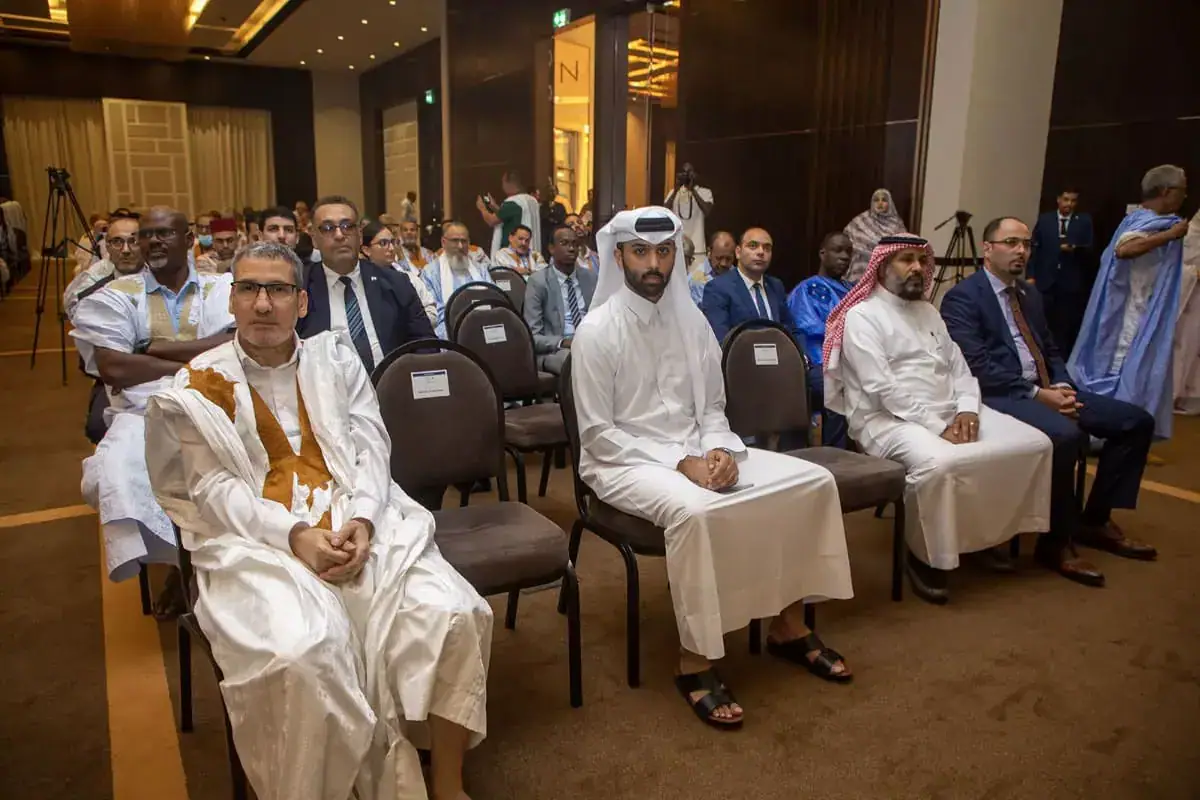
The Central Bank of Mauritania has launched the Arabic version of its book, "The History of Money in Mauritania: The Central Bank and Monetary Independence". The book, written by Professor Abd al-Wadud Ould Sheikh and Dr. Mohamed Fadl Ould Abah, and translated into Arabic by Dr. Abd al-Salam Yahya, was released at a ceremony in Nouakchott. The event was attended by the bank's governor, Mohamed Amin Ould al-Dhahabi, and several researchers, academics, and economic and banking experts.
The book spans over 500 pages, divided into three parts and 20 chapters, and combines monetary, economic, and institutional history. It features over 60 illustrations, maps, and photographs, as well as graphs, documents, and archival sources. According to the central bank, the book explores the development of Mauritania's monetary system, from early forms of exchange and payment to the introduction of the ouguiya in 1973 and its adoption as the country's official currency.
The book is the first publication by the Central Bank of Mauritania dedicated to the history of the national currency. It aims to document the country's monetary and institutional memory and provide a scientific reference for researchers and those interested in Mauritanian economic history. The book's release is part of the bank's efforts to promote awareness and understanding of the country's economic and monetary development.
At the launch ceremony, the central bank's governor discussed recent developments in currency pegging systems, noting that the value of currencies is linked to economic fundamentals. He explained that the ouguiya's exchange rate is determined based on a basket of currencies, including the dollar, euro, and yen. The governor also touched on the challenges associated with changing currencies and the related psychological associations with previous currencies.
The governor also addressed digital currencies, describing them as a new form of trading linked to consumers' financial wallets and central banks. He noted that this area is still in the experimental phase, with international experiences, such as China's, which has involved around 200 million consumers, and the European Central Bank's project. The authors and translator of the book also presented its main themes and answered questions from attendees.
The book's authors highlighted the transformations in exchange and currency systems, from bartering and commodities to precious metals, paper currencies, and digital currencies. They also discussed the implications of the monetary reform that led to the adoption of the ouguiya and the consolidation of Mauritanian monetary independence. The event was attended by several researchers, professors, and experts in economic, banking, and monetary affairs.
The launch of the Arabic version of the book is a significant step in promoting awareness and understanding of Mauritania's economic and monetary history. The book is expected to serve as a valuable resource for researchers, academics, and those interested in the country's economic development. The Central Bank of Mauritania's efforts to document and promote the country's monetary history are seen as essential in supporting economic growth and stability.
Key points
- The book provides a comprehensive history of Mauritania's monetary system and the development of its national currency, the ouguiya.
Reporting sources
- المركزي الموريتاني يطلق النسخة العربية لكتاب تاريخ العملة الوطنية · saharamedias.net