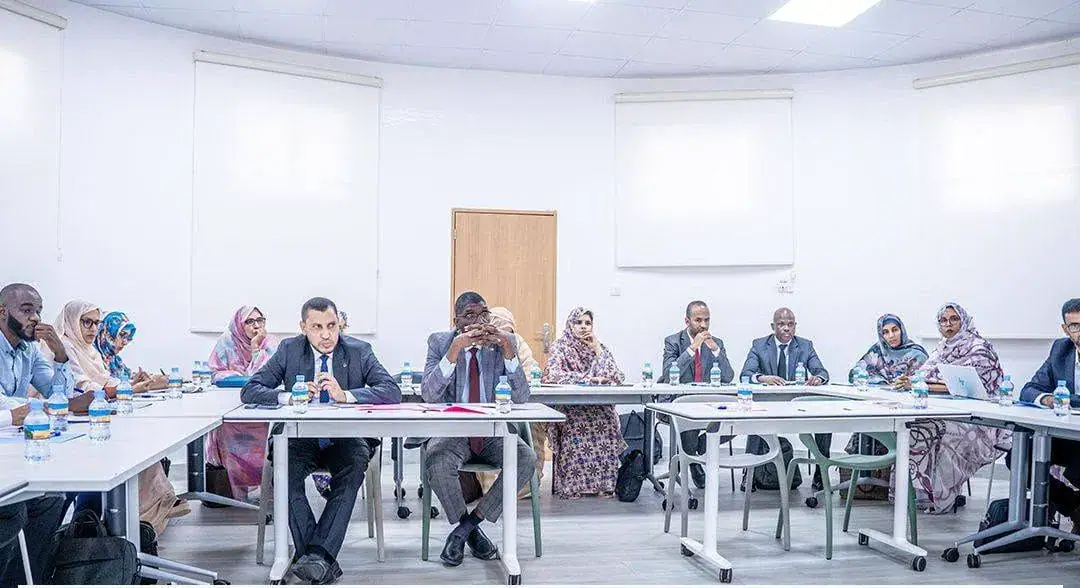
The Mauritanian Ministry of Finance recently initiated a training program aimed at enhancing the skills of top officials from various oversight bodies. The program, titled "From Means-Based Budgeting to Program-Based Budgeting: Managing Performance and Monitoring Budget Execution," kicked off on Monday under the supervision of the Director General of Budget, Ahmed Ould Ab. The training, which will run until Thursday, November 13, is part of the IDF mission to support the transition to program-based budgeting.
The training program targets senior officials and cadres from several key institutions, including the General Inspectorate of Finance, the Court of Accounts, and ministerial inspectorates. Additionally, officials from bodies responsible for financial oversight, monitoring, and evaluation will also participate. Over the course of five days, participants will engage in presentations, practical applications, and discussions on budget management, public expenditure monitoring, and performance evaluation.
The program is designed to strengthen the capacity of participants in monitoring budget execution, evaluating performance, identifying risks, and overseeing public programs. By enhancing the skills of these officials, the Ministry of Finance aims to promote transparency and good governance in the management of public resources. This initiative aligns with Mauritania's efforts to transition to program-based budgeting, which focuses on achieving specific objectives and outcomes.
The training will cover various aspects of budget management, including methods for monitoring public expenditures, evaluating results, and improving oversight and monitoring mechanisms. Through this program, the Ministry of Finance seeks to develop the capabilities of concerned officials and support the implementation of program-based budgeting. This approach is expected to improve the use of public resources and enhance accountability.
The launch of this training program reflects the Mauritanian government's commitment to enhancing transparency and good governance in public resource management. By investing in the capacity of oversight officials, the government aims to ensure that public resources are utilized efficiently and effectively. The program is also expected to contribute to the country's efforts to improve its fiscal management and promote sustainable development.
The training program is being conducted in collaboration with relevant stakeholders, including the General Inspectorate of Finance and the Court of Accounts. This cooperation underscores the importance of inter-institutional collaboration in promoting good governance and transparency in public resource management. The program's success is expected to have a positive impact on the country's fiscal management and governance.
The Ministry of Finance has emphasized its commitment to supporting the development of capacities for oversight and monitoring. Through initiatives like this training program, the ministry aims to promote a culture of transparency and accountability in public resource management. The program is a significant step towards achieving this goal and is expected to yield positive outcomes for Mauritania's governance and fiscal management.
Key points
- The training program aims to enhance the skills of top officials from oversight bodies in program budgeting and performance monitoring.
- The program targets senior officials from key institutions, including the General Inspectorate of Finance and the Court of Accounts.
- The initiative supports Mauritania's transition to program-based budgeting, promoting transparency and good governance in public resource management.