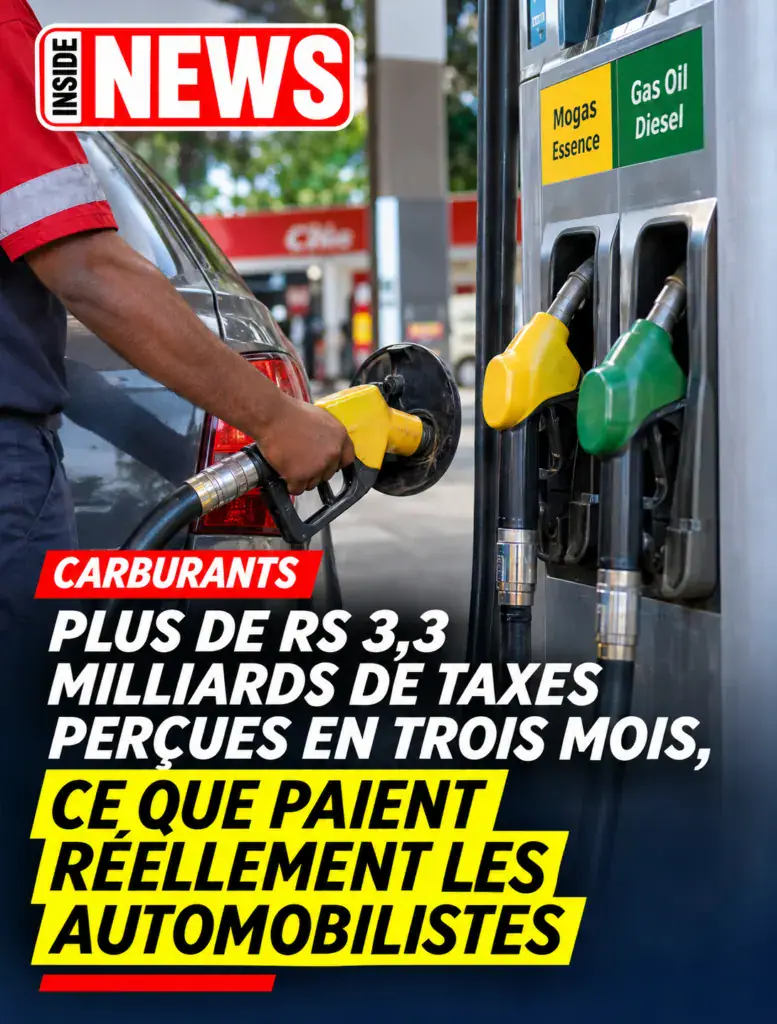
The Mauritian government collected Rs 3.306 billion in fuel taxes between July and September 2026, according to data from the State Trading Corporation. This represents a 1% increase from the same period in 2025, when the government collected Rs 3.273 billion. The taxes collected include excise duties and value-added tax on petrol and diesel. The fuel taxes continue to be a significant source of revenue for the government.
The taxes on fuel in Mauritius comprise several components, including excise duties, value-added tax, and specific contributions. For petrol, the excise duty is Rs 9.87 per liter, and the value-added tax is approximately Rs 10.13 per liter. For diesel, the excise duty is Rs 4.22 per liter, and the value-added tax is approximately Rs 10.22 per liter. These taxes represent a significant portion of the fuel price.
In addition to the excise duties and value-added tax, the fuel price in Mauritius also includes contributions for various purposes, such as financing road infrastructure, transportation, and storage of fuel at Rodrigues. Other contributions go towards financing subsidies for essential products, including cooking gas, flour, and certain types of rice.
The fuel price in Mauritius does not solely depend on the international oil price. The State Trading Corporation considers various factors, including procurement costs, maritime transportation costs, exchange rates, taxes, contributions, and the situation of the Price Stabilization Account. This account aims to limit frequent price fluctuations.
The data for the third quarter also shows a 12% decrease in expenditure on subsidies for cooking gas, flour, and long-grain white rice. This decrease does not necessarily indicate a reduction in household needs. It could be due to various factors, including purchase prices, imported volumes, and compensation mechanism parameters.
A detailed analysis of the subsidy expenditure would require a breakdown of the expenditure by product. The government has not provided a detailed explanation for the decrease in subsidy expenditure. The fuel taxes and subsidies are critical components of the government's revenue and expenditure.
The fuel tax revenue and subsidy expenditure are essential for understanding the government's financial situation. The government will likely continue to rely on fuel taxes as a significant source of revenue. The fuel price mechanism will continue to be influenced by various factors, including international oil prices and local taxes.
Key points
- The Mauritian government collected Rs 3.306 billion in fuel taxes between July and September 2026.
- The fuel price in Mauritius comprises various taxes and contributions, including excise duties, value-added tax, and specific contributions.
- The government expenditure on subsidies for essential products decreased by 12% in the third quarter.