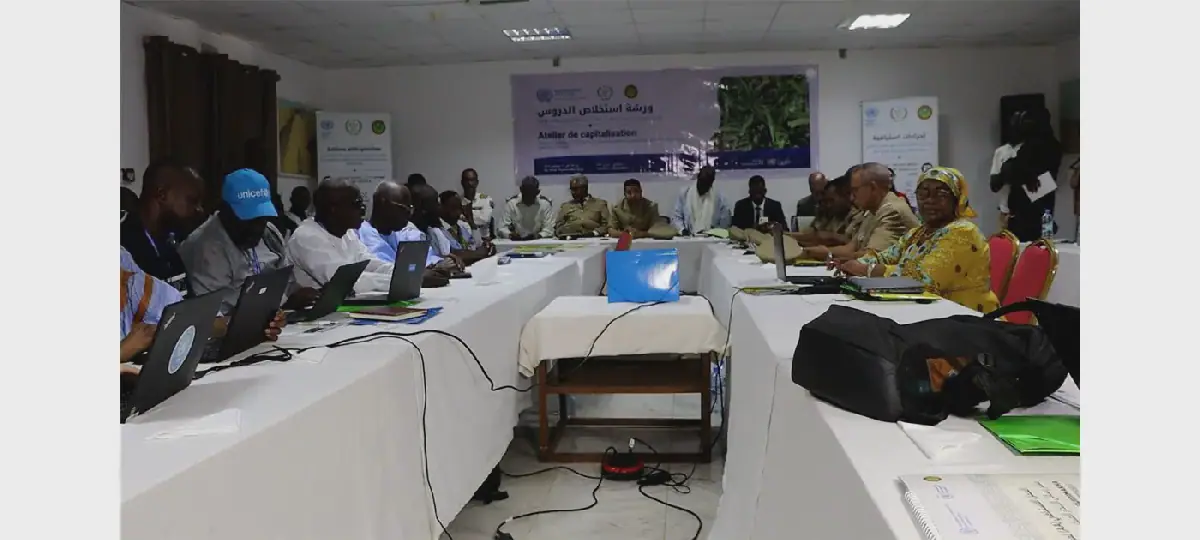
The Mauritanian government, through the National Mechanism for Prevention and Response to Food and Nutritional Crises, organized a regional workshop in the city of Selibabi on November 10, 2026. The event was supported by the United Nations' Central Emergency Response Fund and coordinated with the Food and Agriculture Organization (FAO). The workshop aimed to evaluate implemented interventions, identify lessons learned, and enhance the readiness of stakeholders to face climate-related shocks.
The workshop was attended by various stakeholders, including governors, security and military authorities, and representatives from partner organizations. The Assistant Governor of Kidi Magha, Mohamed Arabi Sid Mohamed, emphasized the importance of transitioning from post-crisis intervention to early preparedness, based on climate forecasts and indicators. This approach aims to minimize losses and protect the livelihoods of populations, particularly in areas reliant on rain-fed agriculture and livestock.
The Assistant Coordinator of the National Mechanism, Mohamed Abdourahman Maizoh, highlighted that the workshop seeks to assess and improve implemented processes, document experiences, and facilitate the exchange of expertise among stakeholders. This will enhance the quality of planning, implementation, and effectiveness of future interventions. The workshop also aims to support farmers with equipment, seeds, and financial assistance in the provinces of Selibabi, Mbou, and Ould Yenng.
The UN Resident Representative, Caroline Garcia, stressed that drought is no longer an unexpected phenomenon, given the increasing disruption of rainy seasons, delayed rainfall, and reduced precipitation. This has resulted in increased vulnerability of households. Participants at the workshop acknowledged the importance of collaboration and support from technical and financial partners, particularly the FAO and the Central Emergency Response Fund.
The Deputy President of the Kidi Magha region, Al-Telmidi Ould Al-Mustafa, and the Mayor of Selibabi, Omar Hamadi Ba, commended the organization of the workshop and praised the role of partners in supporting efforts to mitigate the effects of drought. The workshop was designed to foster a proactive approach to addressing climate-related challenges and promoting sustainable development in the region.
The event provided a platform for stakeholders to share experiences, best practices, and expertise in addressing drought and rainfall deficits. By enhancing the readiness of stakeholders and promoting early preparedness, the workshop aimed to reduce the impact of climate-related shocks on vulnerable populations. The Mauritanian government has been working to strengthen its response to climate-related challenges, with a focus on supporting farmers and protecting livelihoods.
The regional workshop concluded with a renewed commitment to enhancing proactive interventions to address drought and rainfall deficits in the Kidi Magha region. Key stakeholders emphasized the need for sustained collaboration and support to build resilience and promote sustainable development in the face of climate-related challenges.
Key points
- The workshop aimed to assess and enhance proactive interventions to address drought and rainfall deficits in Mauritania's Kidi Magha region.
Reporting sources
- كيدي ماغا: ورشة جهوية لتعزيز التدخل الاستباقي لمواجهة الجفاف ونقص الأمطار · Mauritanian Information Agency