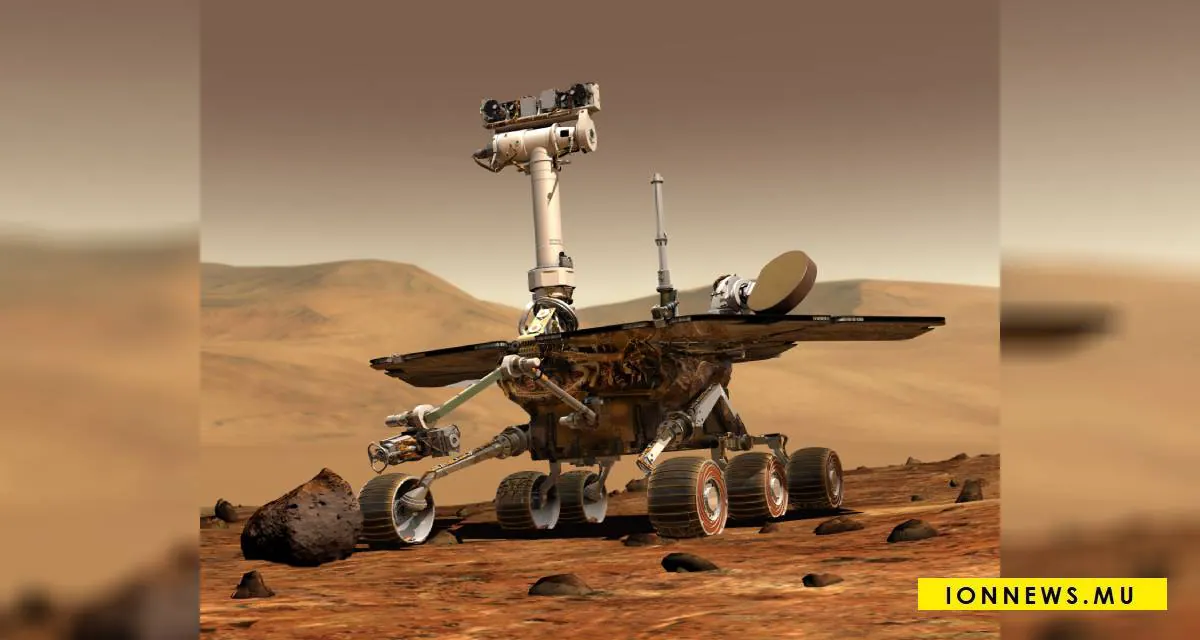
The Opportunity rover, launched by NASA in 2003 and landed on Mars in January 2004, was designed to explore the planet's surface for 90 days. However, it continued to operate for nearly 15 years, traveling over 45 kilometers and collecting a vast amount of data. The rover's primary mission was to study the Martian surface and search for signs of past water, which could have supported life.
During its extended mission, Opportunity discovered evidence of liquid water on Mars, which significantly changed scientists' understanding of the planet's history. The rover analyzed rocks and minerals formed in aqueous environments, providing crucial insights into Mars' past. These findings helped scientists better comprehend the planet's evolution and potential habitability.
Opportunity's longevity can be attributed to its solar-powered design and ability to recharge its batteries. Despite facing harsh conditions, including extreme temperatures, dust storms, and long distances on uncharted terrain, the rover continued to function. Its durability and adaptability allowed it to far exceed its expected lifespan of 90 days.
In 2018, a massive dust storm covered much of Mars, blocking sunlight from reaching Opportunity's solar panels. The rover stopped communicating with Earth, and despite months of attempts to reestablish contact, NASA officially ended its mission on February 13, 2019. At the time of its demise, Opportunity had traveled over 28 miles and operated nearly 60 times longer than planned.
The NASA Jet Propulsion Laboratory recently published a retrospective on Opportunity's mission, highlighting its remarkable achievements. The rover's success paved the way for future Mars exploration missions, including the still-active Curiosity and Perseverance rovers. These ongoing missions continue to uncover the secrets of the Martian surface and subsurface.
Opportunity's legacy extends beyond its impressive operational lifespan. The rover's discoveries have significantly contributed to the scientific community's understanding of Mars and its potential for supporting life. As researchers continue to analyze the data collected by Opportunity, they gain valuable insights into the planet's history and evolution.
Today, other rovers, such as Curiosity and Perseverance, are actively exploring Mars, building upon the foundation laid by Opportunity. While Opportunity may no longer be operational, its remarkable journey and groundbreaking discoveries have cemented its place as one of the most enduring and successful space exploration missions in history.
Key points
- Opportunity rover spent 15 years on Mars, far exceeding its initial 90-day mission.
- The rover discovered evidence of liquid water on Mars, changing scientists' understanding of the planet's history.
- Opportunity traveled over 45 kilometers and operated nearly 60 times longer than its planned lifespan.