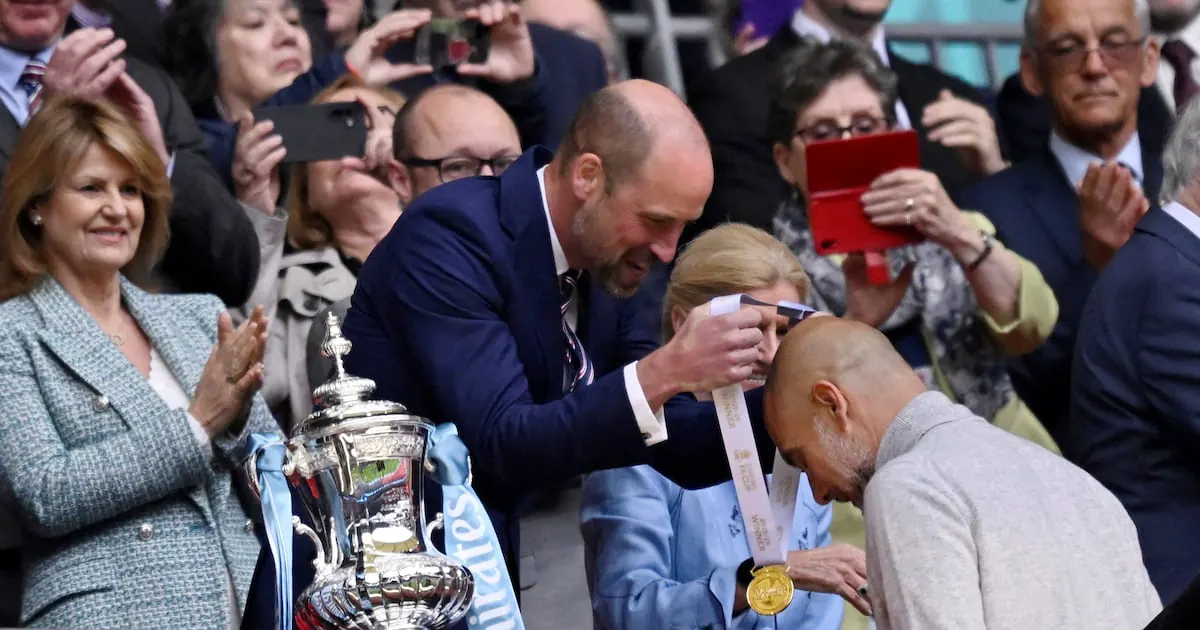
The English Premier League, a global sporting phenomenon with a vast following and massive financial turnover, is facing a crisis that could undermine its reputation and integrity. Recently, the league's trophy was at the center of a controversy when it was displayed at a British high commission reception, adorned with Manchester City FC colors. This was a nod to City's dominance in the league, having won the trophy six times in seven seasons. However, this success has been marred by allegations of financial irregularities.
Manchester City, owned by the City Football Group, which is majority-owned by the Abu Dhabi United Group and led by Sheikh Mansour bin Zayed Al Nahyan, has been accused of breaching the league's profitability and sustainability rules. An independent commission appointed by the Premier League has found City guilty of 114 out of 115 charges, including using sham contracts to artificially inflate revenue. The club's owners have been accused of "sports-washing" on a grand scale, using their wealth to influence the league and gain an unfair advantage.
The Premier League introduced profitability and sustainability rules to prevent clubs from financing their sporting ambitions through sustained losses. However, City's defenders argue that these rules were introduced under pressure from an existing oligarchy, comprising Arsenal, Liverpool, and Manchester United, which feared City's rise. This has led to allegations of anti-competitive behavior and concerns about the league's investability. The situation has also raised questions about the potential impact on the UK's relationship with the UAE, a significant investor in the country.
The Premier League is now facing a dilemma: impose a harsh penalty on City, or agree to a softer penalty to protect the product. Manchester City is preparing for a legal war of attrition, and the league's reputation is at stake. The situation has drawn parallels with Serie A's decline after corruption findings against Juventus in 2006. If the Premier League fails to address the issue effectively, it may start an irreversible decline.
The Premier League's global reach and massive financial turnover make it a significant cultural and economic phenomenon. With a projected turnover of over £7 billion for the 20 clubs that compete in the league, and a wage bill of over £4 billion, the stakes are high. The league's broadcast exports alone are worth around £1.8 billion annually, and its global following is estimated to be around 2 billion people, or 37% of the world's population.
The controversy has also drawn attention to the role of key figures, including UK Prime Minister Andy Burnham, who has been accused of having a conflict of interest due to his past relationship with Abu Dhabi. Burnham has asked people not to jump to conclusions, despite the independent commission's damning report. The situation is complex, with multiple angles and interests at play, and the Premier League's response will be crucial in determining the outcome.
The outcome of this scandal will have significant implications for the Premier League and the wider sporting world. If the league fails to address the issue effectively, it may lose its reputation as a fair and competitive competition, and its global following and revenue may suffer as a result. The situation will continue to unfold, with Manchester City's response to the charges and the Premier League's disciplinary action being closely watched by fans and stakeholders around the world.
Key points
- Manchester City faces 115 charges for financial irregularities, threatening the English Premier League's integrity and global reputation.
- The Premier League's profitability and sustainability rules were introduced to prevent clubs from financing their sporting ambitions through sustained losses.
- The scandal has raised concerns about anti-competitive behavior, the league's investability, and the potential impact on the UK's relationship with the UAE.