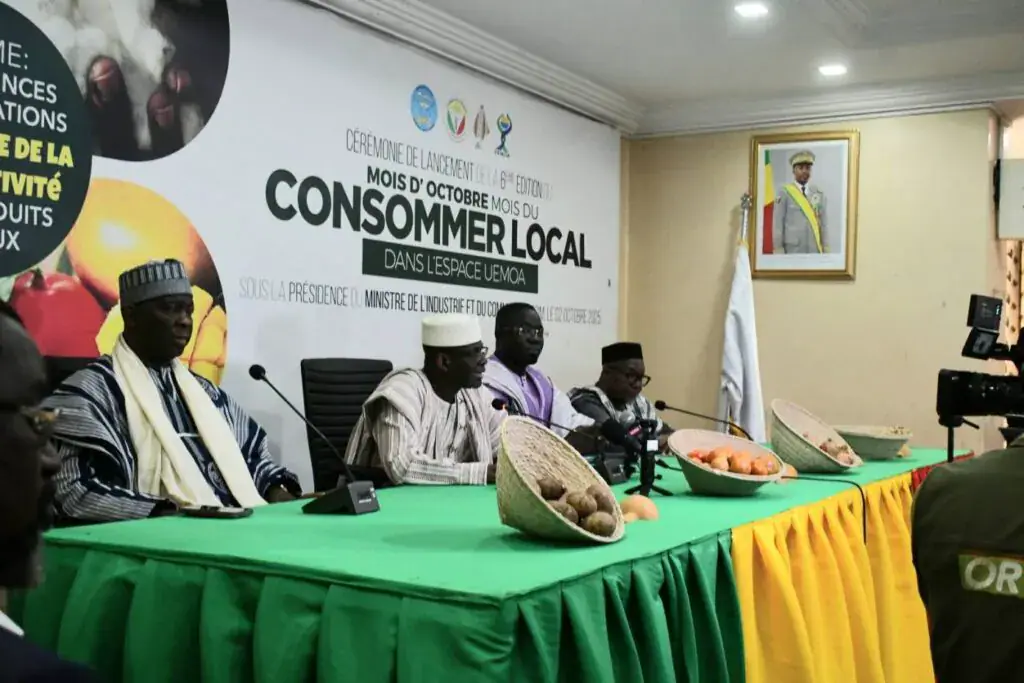
The Malian government is promoting local consumption through its annual Local Consumption Month campaign, which coincides with the Month of Solidarity and Fight Against Exclusion. The goal is to encourage citizens to buy local products, thereby boosting the country's economy and sovereignty. Mali has significant potential for growth in areas such as cotton, cereals, fruits, vegetables, and livestock. However, the country's transformation sector remains limited, with the agro-food transformation sector contributing only 6.1% to the country's GDP in 2021.
According to a report by the UNDP published in 2025, Mali's limited transformation sector results in a significant loss of value-added benefits, with a large portion of the country's agricultural products being exported in their raw form. In 2025, Mali imported agricultural products worth approximately 495 billion CFA francs, highlighting the potential for local producers and transformers to fill this gap. The country's dependence on imported goods persists, with local production struggling to meet demand.
The prices of local products have also been a challenge, with the index of consumer prices remaining stable at 109.5 in September 2026, according to the National Institute of Statistics (INSTAT). However, the prices of local products decreased by 0.2% in September, while those of imported products increased by 0.6%. Over the past year, local product prices have risen by 3.9%, compared to 2.5% for imported products.
Experts point to several factors that make local products less competitive, including quality, presentation, and distribution channels. Abdel Rahamane Sy, President of the Association of Young People for the Valorization of Cotton, emphasizes that these factors must be addressed to make local products more accessible and competitive. On the other hand, Hélène N'Diaye, President of the Solidarity Network in Peasant Agroecology, argues that local products are not inherently more expensive than imported ones.
N'Diaye's organization is promoting local markets to reduce intermediaries between producers and consumers, thereby making local products more affordable. The network also focuses on improving the transformation, presentation, and valorization of local products to attract a wider clientele. The cotton sector is a prime example of the challenges faced by Mali's local production, with around 98% of cotton produced in C-4+ countries being exported in its raw form.
The Malian government aims to transform at least 10% of its cotton production locally, thereby retaining more value-added benefits and jobs within the country. According to the World Trade Organization (WTO), this goal would help Mali to maximize its economic benefits from cotton production. However, achieving this goal will require significant investment in the country's transformation sector.
Despite the challenges, the Malian government remains committed to promoting local consumption and production. The authorities hope to make Local Consumption Month a lever for growth and economic sovereignty, and to encourage citizens to adopt a sustainable reflex of buying local products. To achieve this, the government will need to address the challenges facing local producers and transformers, including high prices, limited transformation, and restricted access to markets.
Key points
- Mali's limited transformation sector contributes only 6.1% to the country's GDP.
- The country's dependence on imported agricultural products persists, with imports totaling 495 billion CFA francs in 2025.
- The Malian government aims to transform at least 10% of its cotton production locally to retain more value-added benefits and jobs.