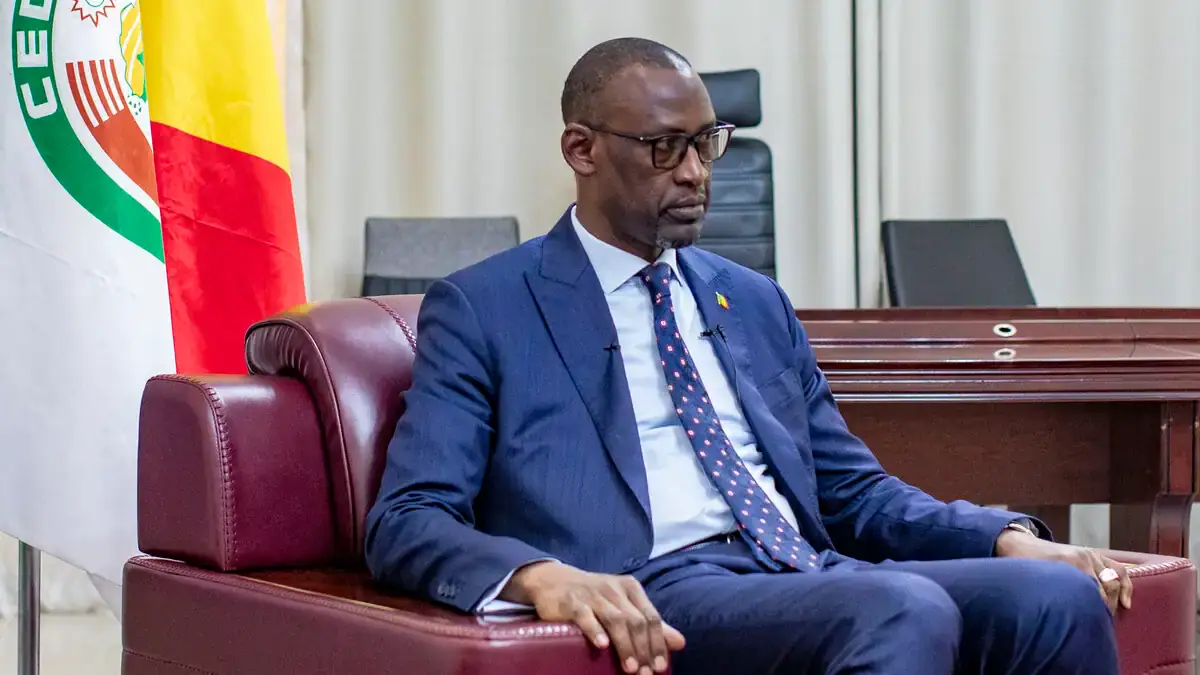
In a recent interview with African Initiative, Malian Foreign Minister Abdoulaye Diop discussed the Alliance of Sahel States' (AES) desired relationship with the Economic Community of West African States (ECOWAS). Diop emphasized the need for a harmonious and peaceful coexistence between the two entities, which he believes can be achieved through cooperation and mutual respect. This statement comes after months of tensions between the AES and ECOWAS, with the two blocs having initiated formal negotiations in October.
The rapprochement between the AES and ECOWAS began in May 2025, following consultations in Bamako. The two entities held their first formal negotiations in Dakar on October 17, 2026, resulting in the establishment of joint working groups to prepare a framework agreement. This agreement is expected to be thoroughly examined during the ECOWAS summit scheduled for December. Diop's comments suggest a willingness to collaborate and find common ground, despite the challenges that have driven a wedge between the two blocs.
According to Diop, the AES is committed to preserving the free movement of people and goods, which is essential for the well-being of citizens. He emphasized that the AES does not intend to create barriers or "walls" between its populations and those of other ECOWAS member states. Instead, the AES aims to ensure that the rights and benefits enjoyed by its citizens, which predate the ECOWAS agreement, are maintained. These rights were established during the period of independence, from 1960 onwards.
Diop highlighted the importance of a common market and the free movement of persons and goods in achieving this goal. He stressed that the interests of populations must not be threatened and that cooperation should be prioritized over confrontation. The AES and ECOWAS have a shared history, and Diop's comments suggest a desire to build on this foundation, rather than allowing differences to drive them apart.
However, Diop also acknowledged that security challenges persist, particularly in the fight against terrorism. He emphasized the need to recreate trust and establish a common understanding of the threat posed by terrorism, which he believes is often instrumentalized for political and geopolitical gain. The AES and ECOWAS must work together to develop a coordinated response to this threat, which affects the entire region.
Diop warned that terrorism is a complex issue that requires a nuanced approach, taking into account the motivations and interests of various actors. He emphasized that the response to terrorism must be guided by the needs and interests of local populations, rather than external considerations. By working together, the AES and ECOWAS can develop a more effective and sustainable approach to addressing this threat.
The proposed framework agreement between the AES and ECOWAS is expected to provide a foundation for future cooperation and collaboration. Diop's comments suggest that the AES is committed to finding a peaceful and harmonious solution to the challenges that have driven a wedge between the two blocs. The outcome of the December ECOWAS summit will be closely watched, as it may provide further insight into the prospects for cooperation between the AES and ECOWAS.
Key points
- The AES seeks to preserve the free movement of people and goods with ECOWAS.
- The AES and ECOWAS have initiated formal negotiations to establish a framework agreement.
- The two blocs aim to develop a coordinated response to the threat posed by terrorism.